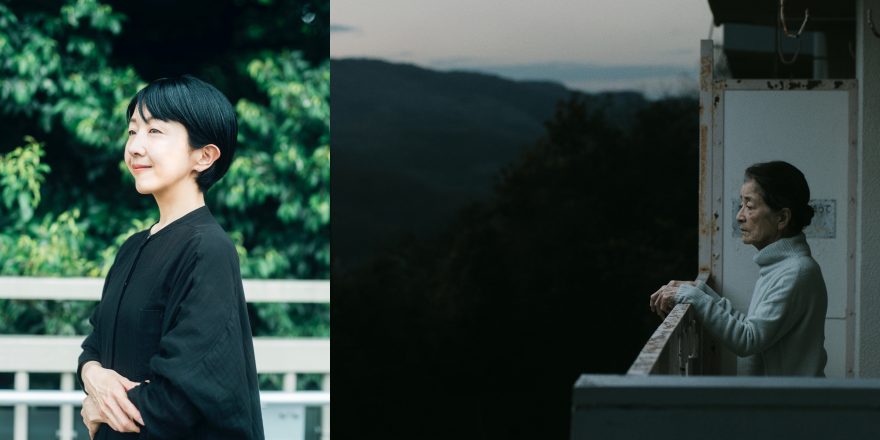


Screenwriter and director Petra Volpe’s latest feature, the acclaimed medical drama Late Shift, is in theaters from Music Box Pictures from March 20. Her feature film debut, Dreamland (2014), was nominated for four Swiss Film Awards. In 2017, Volpe gained worldwide attention with her film The Divine Order (Die göttliche Ordnung), which became a major box-office success in Switzerland. It was sold to over 30 countries and represented Switzerland in the Oscar race. Volpe also wrote the screenplay for the film Heidi, the successful SRF series Labyrinth of Peace and Golden Years (Die goldenen Jahre), which became the most successful Swiss feature film of 2022 in German-speaking Switzerland and was sold internationally, including in the USA. In addition to her Swiss projects, Volpe works as a screenwriter and director in the United States. Her fourth feature film, Frank & Louis, her English-language debut which stars Kingsley Ben-Adir and Rob Morgan, premiered at the 2026 Sundance Film Festival. Petra Volpe lives and works in Berlin and New York. (Photo by Salvatore Vinci.)
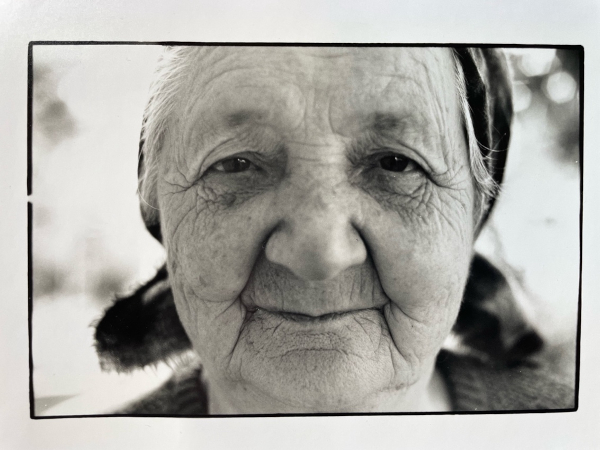
In my office in Brooklyn, two black-and-white photographs of my Italian Nonna hang on the wall. I took them in my early twenties, when I travelled to Italy specifically to photograph her. About a decade later, in film school, the first short film I ever made was a documentary about her.
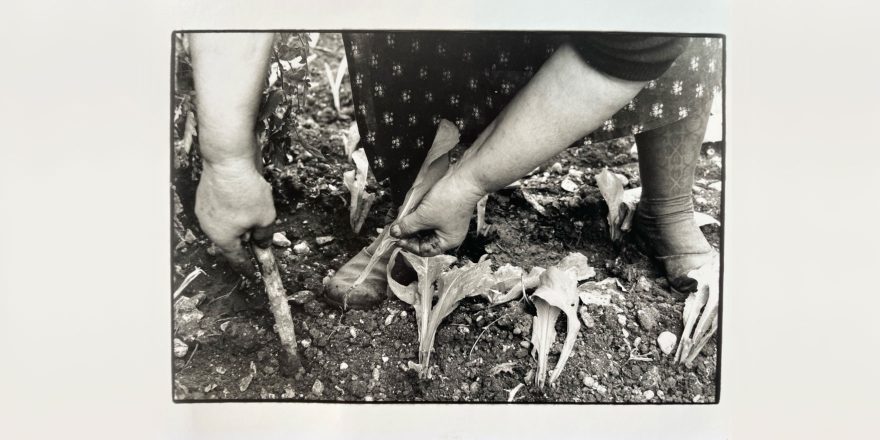
I loved my Nonna Biondina’s arms. They were big, strong and firm, the skin smooth. They told a story of hard labor: digging in the earth, harvesting, washing clothes and sheets with her bare hands, slaughtering chickens, scrubbing floors, collecting wood, cooking over fires, raising children, washing dishes, making fresh gnocchi.
She was born in 1915 in a small village in Abruzzo, at the foot of the Maiella, a vast mountain massif in central Italy. She grew up very poor and had hardly any education. Her marriage was forced and unhappy. My grandfather was a quiet and hard man. She had twins – my father and his sister. My father was small and weak, and she fought fiercely to keep him alive.
Even though she lived only 18 miles from the Adriatic Sea, she did not see a beach until she was in her forties, when my father took her. The sea frightened her. It was so foreign to her that she would only wade into the water up to her knees.
As a child, I loved to touch her arms, to pet them, but she would always shoo me away. “I’m not a cat,” she would say. She was not used to tenderness.
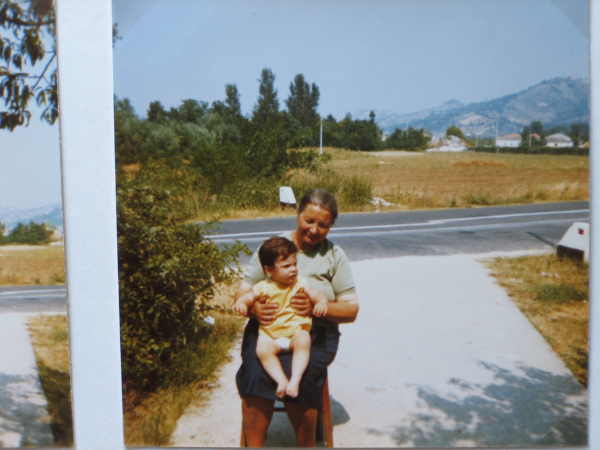
When she was 82, my parents brought her to Switzerland, because she could no longer live alone in Italy. She had never travelled far from her village, and suddenly she had to build a new life in a foreign country. She always said she felt like an uprooted tree.
My parents arranged a small patch of land for her, and she continued planting vegetables, just as she had her whole life. From that small square of soil, she produced pounds and pounds of zucchini.
My first assignment in film school was to make a portrait of someone. I chose her. We were given four rolls of 16 mm film. I arrived at my parents’ house with an elaborate plan, a script, a student cinematographer and a sound recordist.
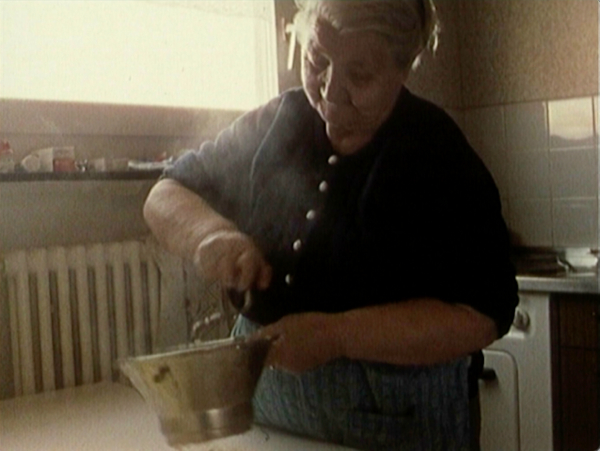
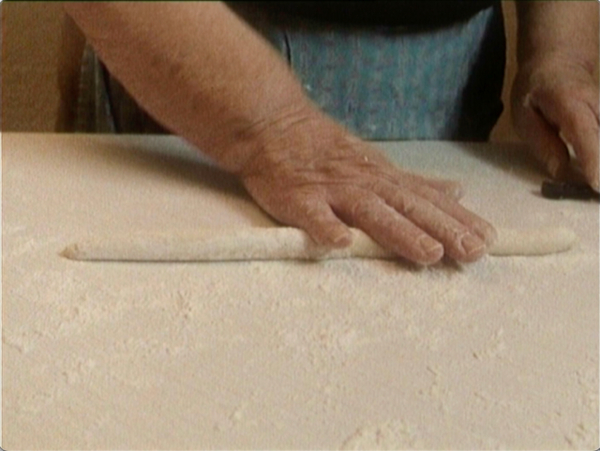
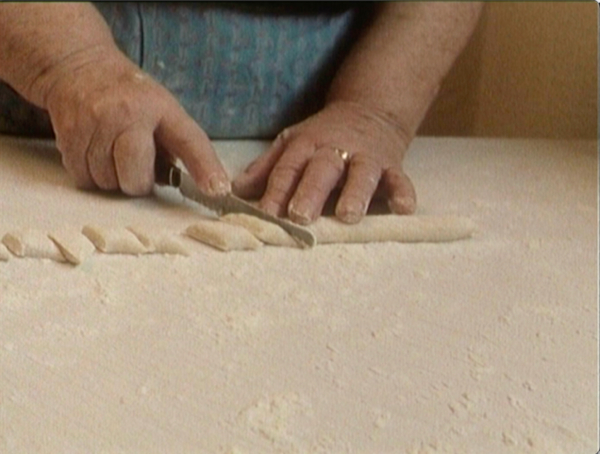
My Nonna did not understand what all the fuss was about, but she quickly took over the shoot. She decided what we were going to film and what we were not. She directed us to shoot her making gnocchi and explained, in great detail, why the gnocchi her neighbor back home made were nowhere near as good as hers.
She proudly demonstrated how she had learned to shop in a Swiss supermarket. Standing in front of endless rows of milk and cheese, she remembered the single cow she once owned –and how rich that had made her feel. She also told us how homesick she was. How she thought of home every day, grieving the fact that she would never see it again.
The film is called Mia Nonna tutto Zucchero – My Nonna Made of Sugar.
My mother always says I inherited my storytelling talent from her.
I never dreamed of becoming a filmmaker. I didn’t even know it was something one could dream of. It simply didn’t exist in the world of possibilities where I was raised.
I grew up in a working-class family. At 19, my father left his small village in Italy, escaping joblessness and poverty. It was the late ’60s, and Switzerland needed factory workers. My Swiss mother was the daughter of a baker and worked as a secretary. My Swiss grandfather was initially very unhappy when my mother showed up with her Italian boyfriend – pregnant.
As a child, I only went to the cinema a handful of times. There was a small theater in our town. In the evenings, they screened porn films; during the day, they showed Disney movies for children. Outside the cinema, they displayed promotional photos for both – side by side. I remember staring at them, fascinated.
The first film I ever saw was Snow White and the Seven Dwarfs. Later, there was a Sunday outing when we saw Greystoke: The Legend of Tarzan, Lord of the Apes with Christopher Lambert. That was about the extent of my childhood cinema experience.
At home, we watched a lot of television. My father loved comedies. We watched the Italian Don Camillo and Peppone films from the 1950s and ’60s about a Catholic priest and a communist mayor in a small town. We watched Bud Spencer and Terence Hill, Laurel and Hardy, and the French comedian Louis de Funès.
Never did I imagine that one day one of my own comedies would flicker into hundreds of thousands of households.
As a teenager, I started to feel that I wanted to do something creative. My parents suggested becoming a hairdresser or a confectioner. I tried internships in both professions and quickly discovered I wasn’t particularly talented at either.
Instead, I discovered photography. And slowly, over many years, photography led me to film.
When you are on a press tour promoting a movie, the most common question is always the same: Why did you want to tell this story?
With my latest film, Late Shift, the idea to make a movie about nursing and a nurse had been simmering and percolating in my mind and heart for more than a decade.
But on a deeper level, the motor behind making this film – or any of my films – comes from somewhere else. It is connected to my Nonna and to the world I grew up in.
Many of my films are about women doing invisible work. Work that is taken for granted. Work without glamour. Work that rarely gets celebrated.
Cinema can make these women visible. It can show the dignity of what they do. It can give them a voice.
When Nonna saw the documentary about herself in a cinema with a small audience, she kept exclaiming, “Oh Dio! Who wants to see this? Who wants to watch an old woman making gnocchi and tending her garden?”
But people did want to see it.
The film travelled to festivals and is still occasionally screened today. People learn something about how to make really good gnocchi, and they connect with a woman they have never met. A farmer from a small Italian village who could have never imagined that her story would travel the world.