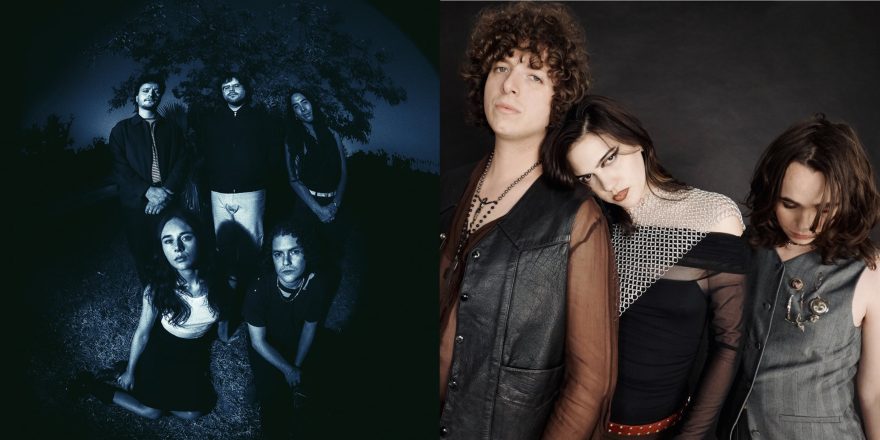


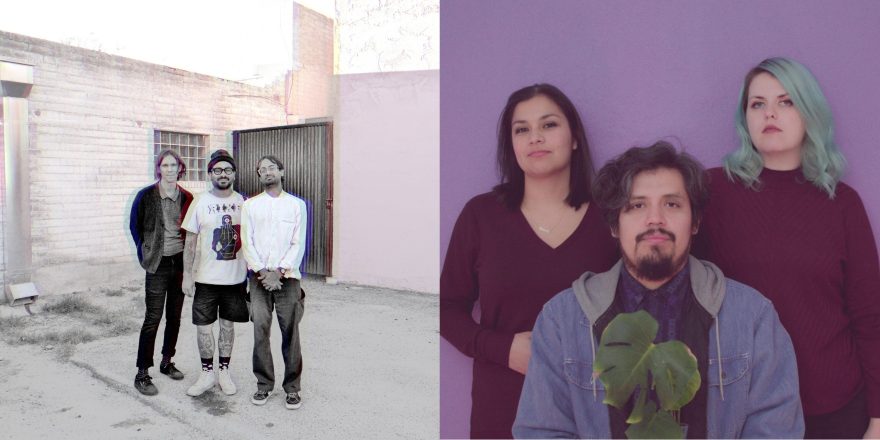
Mute Swan is a shoegaze band based in Tucson, Arizona. Their latest record, Skin Slip, is out March 6, 2026 via Hit the North.
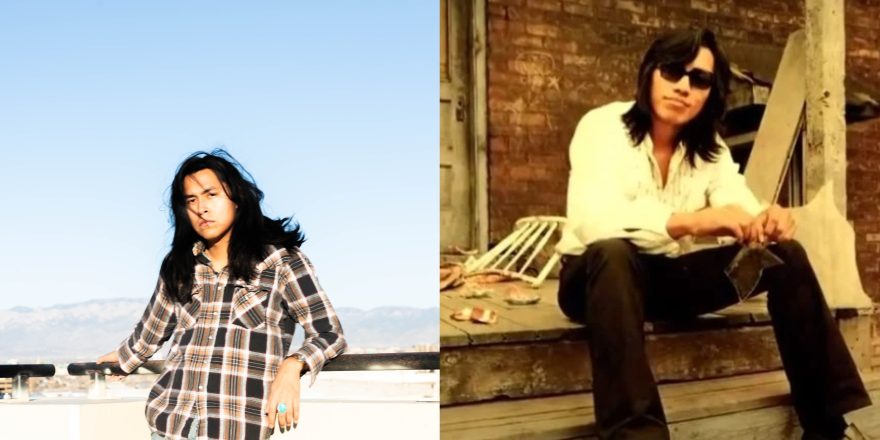
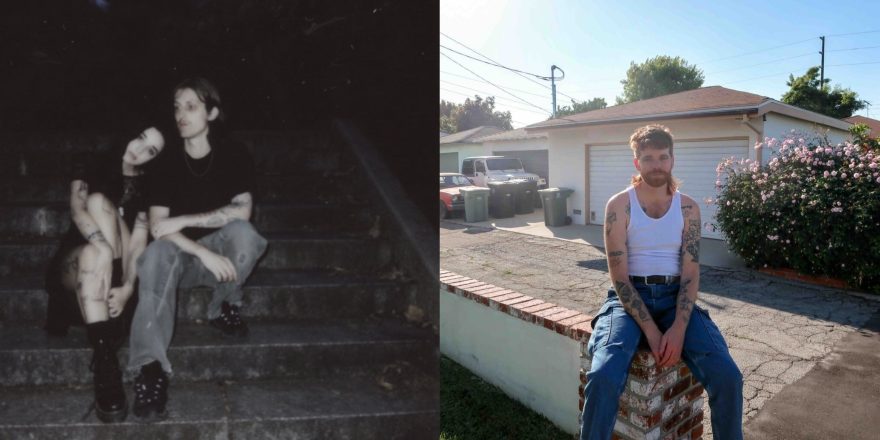
Erick Pineda is the vocalist and guitarist for the Phoenix, AZ-based band Citrus Clouds; Mike Barnett is the vocalist and guitarist for the Tucson, AZ-based band Mute Swan. The new Mute Swan record, Skin Slip, is out tomorrow on Hit the North, and to celebrate, Mike and Erick got on a call to chat about it, and much more.
— Annie Fell, Editor-in-chief, Talkhouse Music
Erick Pineda: Are you excited about the record coming out finally?
Mike Barnett: Absolutely. I’ve been very bogged down with all the stuff putting this album out. There’s so much behind the scenes that the average music listener doesn’t know goes into putting a record out. And then trying to hold down a job and keep band practices going — which, actually big milestone: yesterday, we had practice and we all felt like we’re at 100% again. We played the we played the set all the way through and were like, “Yep, that could be a show.”
Erick: Fuck yeah.
Mike: And that was a long road to get there. That felt good. Tomorrow we’re gonna film a video for the next single. We told you about that song that we took the lyrics and the drum beat from Limp Bizkit and turned it into a Mute Swan song? Did I tell you about that?
Erick: Maybe. Probably.
Mike: Well, the full story, which isn’t that long, is that I asked Gilbert [Flores, Mute Swan’s drummer] to give me a beat to write a song around, and he said, “Just use the beat from ‘Nookie.’” And I knew that he was joking, but I did it anyway.
Erick: It’s a good beat.
Mike: It’s a good ass beat.
Erick: I’ve always approached songwriting like sculpture work, where it’s like you have this big block of concrete or ice, and as you’re crafting that song, it’s like you’re just shaping it. For this new record, how did you guys go about writing these songs?
Mike: This record was actually written during lockdown. We didn’t want to take that much time off, because we didn’t want to meet up and risk giving each other COVID, so we would do Zoom meetings once or twice a week. Like a band practice, but we would pick a band to do a tribute to basically. So we would say, “This week is My Bloody Valentine,” and then Thom [Sloan, Mute guitarist] would write three songs that he was trying to sound like My Bloody Valentine, and I would bring in three songs and Prab[jit Virdee, bassist] would bring in three songs, and then we would meet on Zoom and sit there and listen to what each other wrote. Then the next week would be round two, where you had the opportunity to take somebody else’s song and add to it, or change it around, or add more stuff to your song. So one week was My Bloody Valentine, one week was Stereolab, one week was Cocteau Twins — which is what Stacie [Huttleston, Citrus Clouds’ bassist] sang on. What you end up discovering is that when you’re trying to sound like another band, you end up just sounding like yourself mostly, and it’s not as much of a rip off as you think it’s going to be.
And then I went home to Massachusetts and stayed at my parents’ house. I brought a recorder and my guitar and my pedals and wrote a few songs while I was out there. One of the songs I wrote that summer is on the album too. That’s the only exception. Then we have little bumper tracks in between, which are just 45 seconds or a minute long, and those are just polished up demos from the lockdown sessions. One of them was Prab trying to sound like My Bloody Valentine, and then I just put an overdub on it and edited it around a little bit, truncated a few little things and cut it down to a good size.
I don’t know if you heard this story, but the name of the record, Skin Slip — Angelica [Pedrego, Citrus Clouds’ drummer], while we were touring, told us that at her work — she works in criminal forensics — when they find a body but they don’t know who it is, they cut the skin off of the hand and they peel it off, and then one of the forensic people puts the skin on their hand and presses the fingertips to get the fingerprints. And that’s called a “skin slip.” I couldn’t forget that that name. A lot of the lyrics of the album ended up exploring identity and metaphysical stuff, so I thought there was a cool connection there. But, yeah, that was from Angelica.
Erick: Yeah, she’s mentioned that she’s probably seen in her career about 40,000 bodies.
Mike: Oh, my god.
Erick: Like, how do you sleep after that? How do you smile?
Mike: [Laughs.] I guess it’s just compartmentalizing. Like, This is the dead body section of my brain, and this is the loving, warm section of my brain, and this is the drumming section of my brain. Just gotta break it up into little boxes.
Erick: I have a question: How would you say the [Tucson] scene’s evolved since since when Mute Swan started?
Mike: The revitalization of downtown Tucson ended up doing away with a couple really key venues. There was this venue called The District that was like a punk bar. You could get a beer and a shot for $3 and there would be a band playing. That was a really cool spot. Then they just tripled the rent on the whole street and that went away. The other venue, right down the street from there, was the Red Room. When I first moved to Tucson 15 years ago, that was where I saw the first shows and started getting really excited about the music scene here. That’s where I first played, in an old band called Young Hunter, which exists in Portland now. But they just tripled the rent all on that street. Also, the first practice space that Mute Swan used was this old hangar building that was pretty close to downtown. It was supposed to be an art gallery and DIY venue and just general art practice space. Prab lived in a little shed that was on that property for a while, and when the very first Mute Swan meetings were occurring, it was at that property. Now that’s all been bulldozed and it’s just a big intersection.
I don’t know how the younger bands are making it happen. It’s just about finding a place where you can set up your drums and your amps, really, and rent prices are going up so a lot of those younger people are still living with their parents. I know one thing that’s happened for the good is Groundworks in Tucson opened up. This guy Logan Greene started Groundworks basically with the idea of providing a space for younger people to not only go to see shows, but they have practice spaces there.They have special showcases for people’s first show.
Erick: That’s amazing.
Mike: Yeah, it’s volunteer based, it’s a non-profit. They teach kids how to run the soundboard and all the little stuff that goes into being in a band. I feel like a lot of that idea of Logan’s was to fill the hole that was left when all the cheap practice spaces and cheap apartments went away. When I first moved here, I lived in two different spots where my rent was $250 a month. I didn’t have a car, I was just biking to work at the grocery store part time, literally two or three days a week was all I had to work to pay my rent. And that’s just gone.
Erick: I mean, that’s kind of same sentiment here, where you could get a studio for a few hundred bucks. That shit doesn’t exist anymore. I guess that’s the spirit of the musician and the artist and the rock & roller, right? You just adjust to whatever’s happening and make it work.
Mike: Absolutely. Whatever you gotta do. Being poor is definitely not an impedance. You just make it work.
I don’t know if I told you about this idea, but I’ve had the thought of putting together a compilation of this era of Arizona shoegaze-adjacent, psychedelic, loud guitar stuff. Have a Citrus Clouds track, a Mute Swan track, some of the younger ones — maybe get Glixen on there — just to encapsulate this time and this style that has been going through Arizona the last 10 years.
Erick: It is a special thing. There’s not a lot of states that have this kind of pedigree. The state’s been producing fantastic music and specifically in the genres that we exist in. So we should absolutely try to do a compilation.
Mike: Yeah, definitely. I wonder if the under-appreciation of some of the bands here, in the same way that big touring bands will skip Arizona — like, they’ll just go straight from California to Texas — if it has to do with Arizona not being perceived as a “hub.” You know what I mean? In order for an Arizona band to pop off, you have to really get out of Arizona.
Erick: I mean, it feels like you guys get a bunch of great bands and artists.
Mike: I guess it’s just certain bands that I’ve seen skip the state. But honestly, I’m counting on La Rosa [in Tucson] to change that. Here’s a big accomplishment in my mind: Interpol is playing Phoenix and Tucson. [Laughs.] A big national tour like that, usually it’s one or the other. I think that’s a good sign.
The cool thing about a compilation is that each band on the compilation is accessing all of the others’ [fan bases]. So if somebody gets it because of one band, then they’re exposed to all those other bands. It’s a no brainer for any band to jump on something like that… Also, we do have one more song that didn’t make the record that I’m also trying to find a home for. It’s not exactly finished, but it was one that we wrote with Thom. [Thom Sloan passed away in 2024.]
Erick: I had a Mute Swan sticker and I put it on my guitar. Now it’s like, whenever I play, That’s for you, Thomas.
Mike: Hell yeah. That’s really cool. We were thinking about having some kind of altar or a little like Thom tribute spot at La Rosa for the show. Maybe just a picture of him with some candles.
Erick: That’d be cool. I would imagine it’s tricky, right? How do you navigate that shit?
Mike: It has been tricky… It’s definitely a difficult narrative to navigate. I don’t want to use Thom’s death as, like, a marketing thing. You know what I mean? At the same time, it needs to be said that Thom was a huge part of this record, and that’s a huge motivating factor in getting this record out. It’s a huge part of the story. But we just have to be very careful not to let it get weird.
Erick: I mean, I think you guys have been handling it perfectly, from where I stand.
Mike: I appreciate it.
Erick: I did want to mention: I felt like my guitar playing changed after playing with you guys. Here in Phoenix, there was nobody really doing anything terribly dreamy or close to what we were doing, so when we played with you guys, it was just like, “Oh shit. We’ve been looking for you.” It felt like this natural kinship. And just watching Thomas play was fucking amazing. He was doing all this complex shit on his left hand, and then kind of balancing on his left foot and doing all this delicate flamingo shit with his right foot. All this cool pedal pedal work, and still looking cool and just effortless. And then on top of that, he’s doing all this interesting trim work and textural layering. I was just like, Fuck, he’s fantastic.
Mike: Yeah. He was a wizard. I’m glad that we found you guys, too. I think there’s more and more bands that are jumping on the dreamy train now, but at the time, it wasn’t too much…
Well, right on, man. It’s good talking to you. I will see you in March!
Erick: See you soon!
You can catch Mute Swan and Citrus Clouds tomorrow, March 7, at La Rosa in Tucson and in April at VIVA PHX.