


Lily Lady is an artist from New York City. Lily’s journalism can be found in Office and Dirty Magazine. Their latest poetry collection is NDA (Far West Press, 2024) and their feature film, Sam’s World, is available digitally on Tubi, Amazon Prime and more platforms via Factory 25. (Photo by Max Lakner.)
Remember the burp heard around the world? Followed by, “What the hell did I do? Killed them all, of course.”
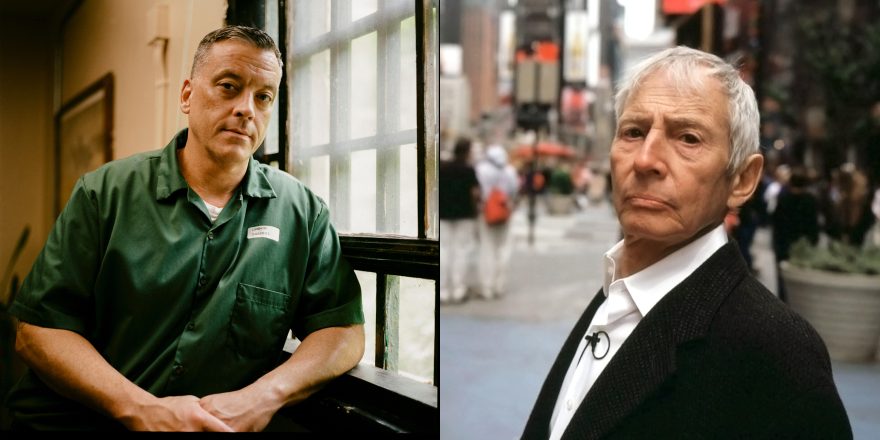
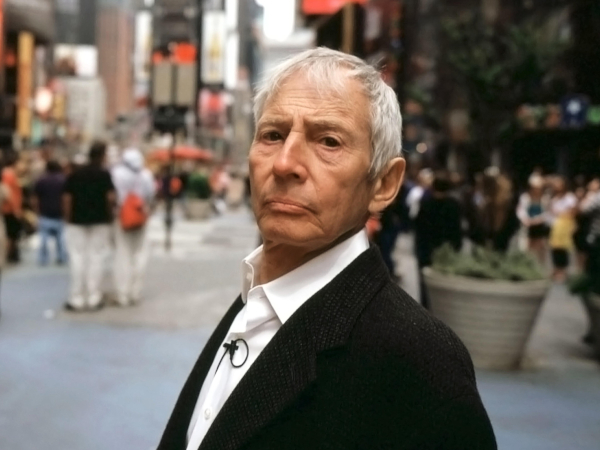
As a director, Andrew Jarecki must have immediately known he’d hit the jackpot. When his subject – real-estate heir Robert Durst – seemed to unequivocally confess to murdering his friend Susan Berman, his neighbor Morris Black and others, that moment was TV gold.
Since then, some controversy has swirled as to whether The Jinx transparently presented Durst’s confession. The issue of editing has dogged documentarians since … well, probably 1922’s Nanook of the North, widely credited as the first documentary ever made.
Whatever you think about The Jinx, it was a huge success. More importantly, it had real implications for the Durst criminal case.
Titled, “What the Hell Did I Do?” the confession episode aired on March 15, 2015. The day before, FBI agents arrested Durst on a first-degree murder warrant, using evidence presented to them directly by The Jinx’s filmmakers.
Durst died in custody of the California Department of Corrections in 2022. If his death had been televised, wouldn’t it have made a great season two finale?
As a culture, we’re hooked on true crime. A recent study shows that 84 percent of the U.S. population ages 13 and over watches, reads or listens to it. 65 percent of respondents indicated an interest in murder-related content, with 60 percent most interested in serial killers.
As The Jinx demonstrates, true crime exists within a nexus of entertainment and reality. Some of it is highbrow, some lowbrow, and all of it engages with the same ethical conundrums: How can an auteur fully represent some of the worst moments of people’s lives? Is it possible to honor the victims while not turning perpetrators into villains? Is a constant reiteration of someone’s criminality part of a larger cycle of punishment not dissimilar to incarceration?
One important voice in this ongoing cultural conversation is John J. Lennon, a journalist and currently incarcerated individual at Sing Sing Correctional Facility in New York. His forthcoming book, The Tragedy of True Crime: Four Guilty Men and the Stories That Define Us, recounts his own story and that of three other incarcerated men.
Lennon is serving a sentence of 28 years to life for murder, drug sales and gun possession. Despite entering prison with a ninth grade education, Lennon has since become a contributing editor at Esquire, published work in the New York Review of Books, The New York Times, Vulture and other prestige outlets.
Lennon’s own favorite shows? Below Deck, Summer House … the whole Bravo channel.
On true crime shows, he says, “there’s different iterations. It’s about tone, style and storytelling. When you get a corny voiceover, all these bells and whistles signal things are poorly done.”
According to Lennon, however, it’s not all trash.
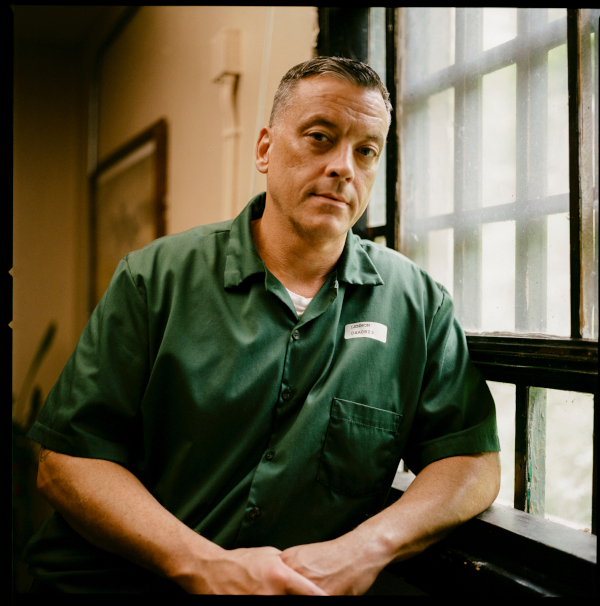
“The Preppy Murder was well done. It had a reason for existing: to analyze how the case played out in the MeToo era. There was a reason for retelling that. That’s a difference between the quality shows. They have a universal theme that justifies asking the question, To what end am I telling this tragic story?”
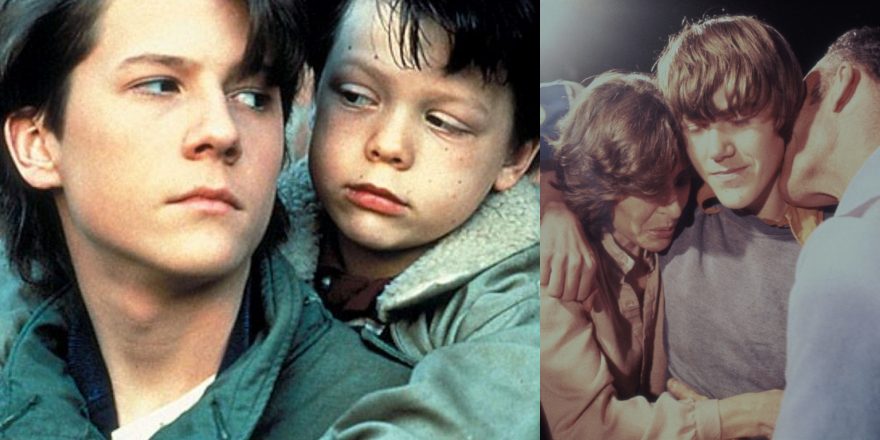
Still, Lennon saw the consequences of the show firsthand. Robert Chambers – its subject, who is also profiled in Lennon’s book – was charged in 1986 with second degree murder for the death by strangulation of Jennifer Levin in Central Park. When the show aired, Chambers stayed in his cell, with “his sheet up [for privacy] … while everyone was watching it.”
The Preppy Murder includes speculation as to whether Chambers was molested as a child.
“People don’t understand, this is a toxic, masculine environment. You’re walking down the cell block and someone’s watching a show where they’re talking about whether or not you were molested as a child? It can have an effect on the person, everybody watching that about you,” Lennon says.
Shows like The Preppy Murder often reiterate the worst moments in the victims’ and their families’ lives, forcing them to relive their traumas. And for the perpetrators, “if the idea is we’re more than the worst thing we ever did, the shows don’t help that,” Lennon states.
Why then, is everyone so obsessed?
“There’s a lot of subconscious shit going on,” according to Lennon.
“You can see someone [on these shows] and say, At least I’m not as bad as that motherfucker.”
Further, so much focus on violence can distort reality. The violent crime rate in the United States has been steadily decreasing since 1990, but listen to enough podcasts like Crime Junkie, and you’d have no idea.
“[There’s this] idea that everyone will get in this really horrible situation,” says Lennon. “If you have that running in your mind, just living in fear, I don’t know if that’s a good way to live.”
Even seemingly benign shows like the podcast My Favorite Murder treat the worst experiences of many people as fun, light cultural fare. The podcast – run by two white women in Los Angeles – has broken global download records. Its community of listeners call themselves “Murderinos.” On their site, you can buy their book Stay Sexy & Don’t Get Murdered: The Definitive How-to Guide or buy $60 sweatpants that read, ‘Fuck you, I’m married.’
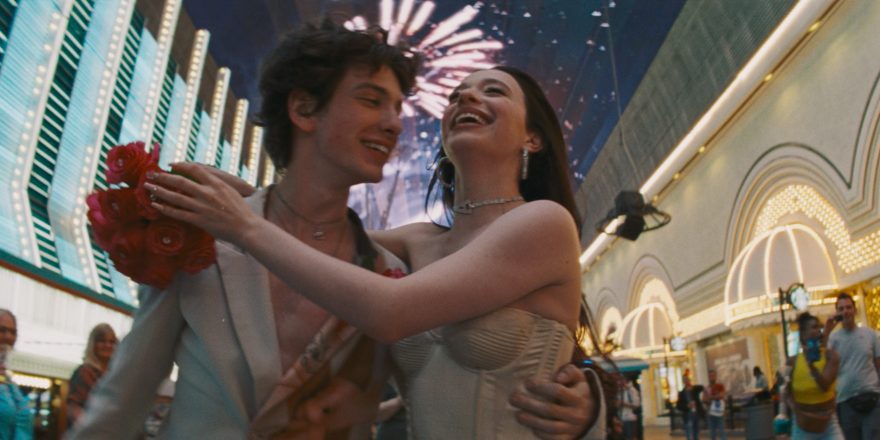
If girl-bossing your way out of murder isn’t your style, there are plenty of other true crime offerings: snapped, Murdered at First Sight, Nightmare Next Door … it’s endless. Zac Efron as Ted Bundy in Extremely Wicked, Shockingly Evil and Vile. Ryan Gosling as a pseudo-Durst in All Good Things. Murderers are varyingly depicted as sexy, inhuman and everywhere.
In the prescient 1964 book Understanding Media: The Extensions of Man, Canadian philosopher Marshall McLuhan wrote, “All media exist to invest our lives with artificial perceptions and arbitrary values.”
Which is to say, we can be agentic decision-makers in shaping our values via our media selections.
The viewing experience may be passive in its mechanics: couch, popcorn, remote in hand. But the passivity stops there. We are what we eat. And if we’re eating all this true-crime junk, we’re conditioning ourselves to think of every murderer as a one-dimensional monster, to fear walking around in our own neighborhoods, and to subconsciously project ourselves onto either victim or villain in the narrow binary presented by these shows.
But despair not, dear reader. There’s a way forward! Let’s select better options for our media diet. Let’s read more work from people like Lennon. From the Marshall Project. From documentaries that are explicit about their subjectivities and subsequent distortions.
If all values are artificial, isn’t it great knowing that we can select new ones at any given time?