

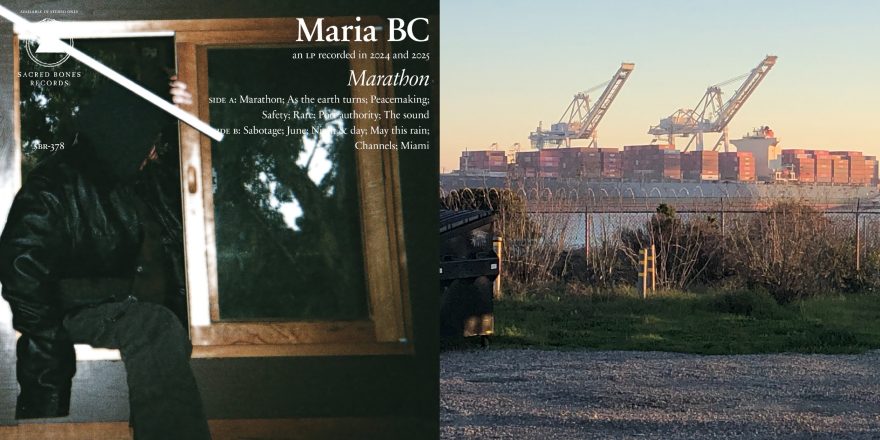

Maria BC is an ambient artist based in Oakland. Their latest record Marathon is out now on Sacred Bones.
Mood Board is our column where artists share with us a few of the things that inspired their new record. This time, the experimental-folk artist Maria BC tells us how Denis Johnson, the Port of Oakland, and more inspired their new record Marathon — out now on Sacred Bones.
— Annie Fell, Editor-in-chief, Talkhouse Music
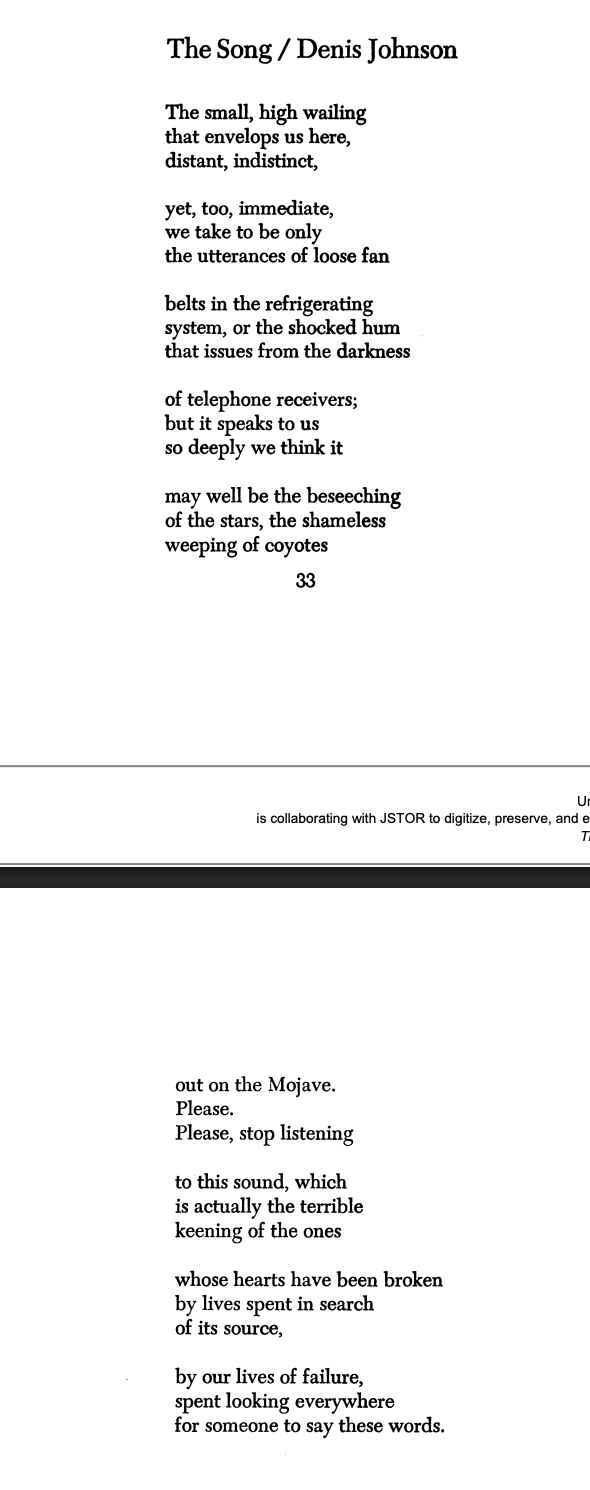
1. “The Song” by Denis Johnson
The lyrics of track seven, “The Sound,” were inspired by this Denis Johnson poem, in which the speaker mistakes the ambient sound of household appliances for the call to salvation. I love the snake-eating-its-own-tail effect at the end, the revelation that the high pitched whine he — or rather, “we” — hear but cannot place is actually the sound we make as we strain to listen. There’s music all around us, all the time, that we have to quiet ourselves to hear, the grief of ages embodied in untraceable sounds.
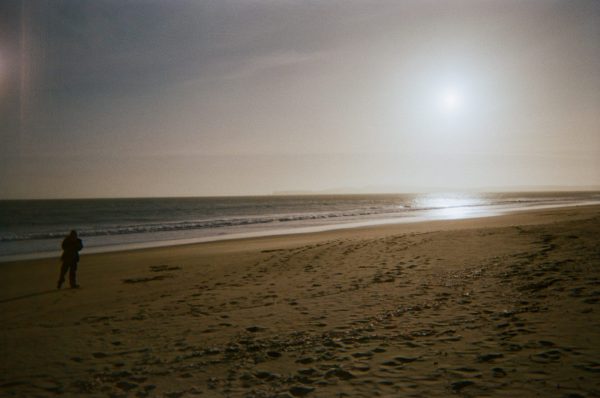
2. The beach
A place of leisure + pleasure. Time expands into some other thing. You can see the landscape change in real time. Most importantly, here is the place where artifacts of our collective unconscious are spit out at our feet. The water is always saying something.
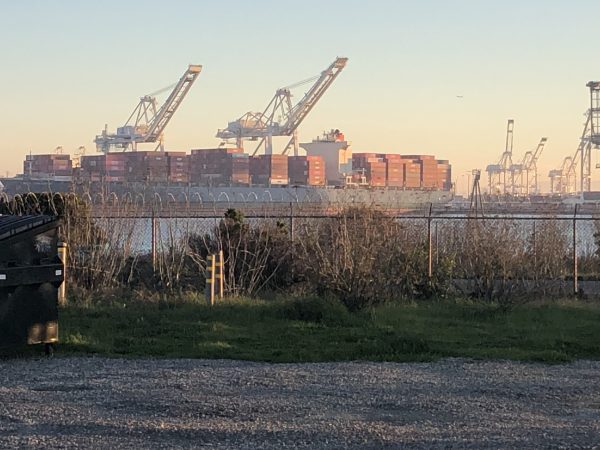
3. The Port of Oakland
I went for a lot of walks around the port of Oakland while working on this album. The sound of machinery, of motors and metal, the waves, the slow churn of everything, was sort of calming. There’s less urgency in the air — at least in my experience — than you might expect given the sensitivity of the work that goes on there, i.e. commerce, trade. You might almost forget that business-as-usual continues everywhere because business-as-usual continues there. It’s been a target for direct action for this reason; anti-Zionists, for example, have succeeded in disrupting the flow of arms to Israel by gathering there and shutting the place down. It’s a giant artery, and history flows through it surreptitiously, hidden in the stream of candy-colored shipping containers.
4. #Misanthropocene: 24 Theses by Joshua Clover & Juliana Spahr
This stream-of-conscious poem rages against capital, extraction, luxury development, consumer politics, the mass die-off of species, bourgeois self-protection and hypocrisy, etc. While my music doesn’t go to the “fuck you” place the way this poem does, it does look at the world with an eye for the grotesque and unjust, with the bleary-yet-penetrating gaze of a drunk person midway through a tirade. Misanthropecene — that is, both the poem and the titular epoch — ends with a call to arms. So it goes in “Sabotage”: “Cut ties/tear the wires out/Stop time/shut the freights down.”