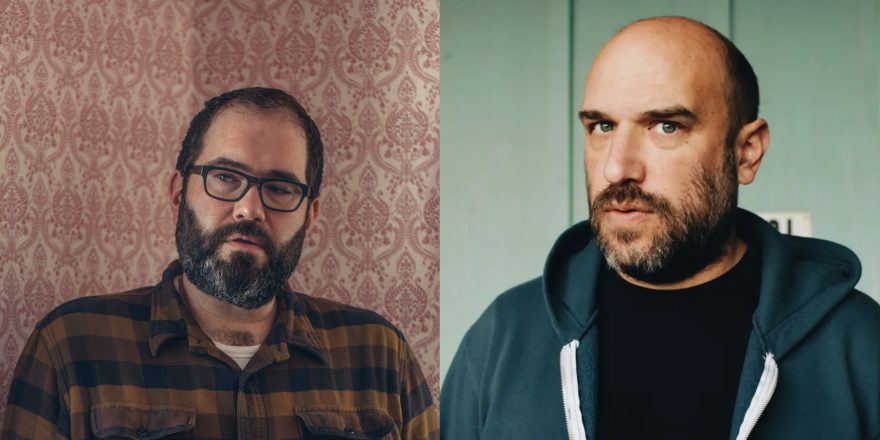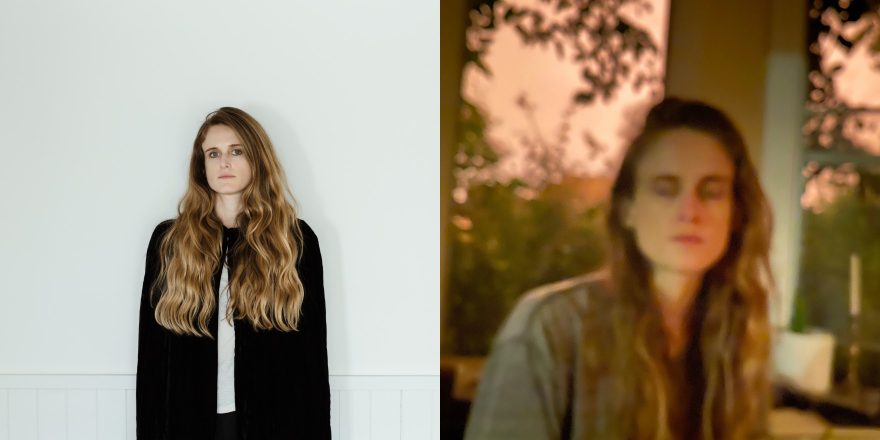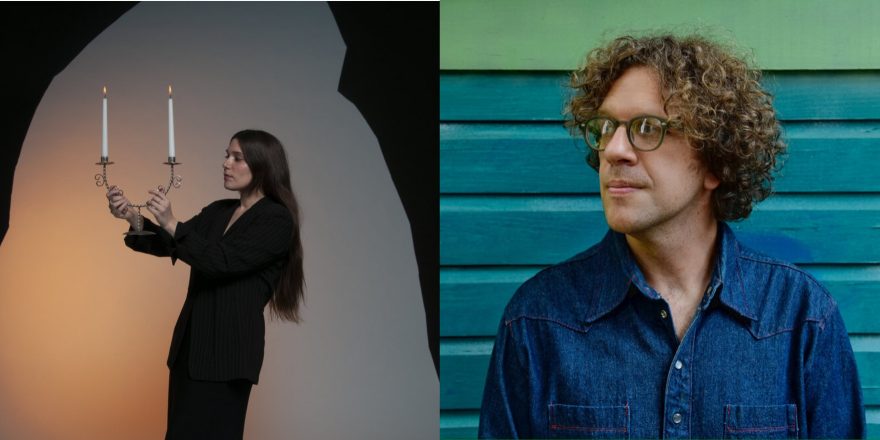


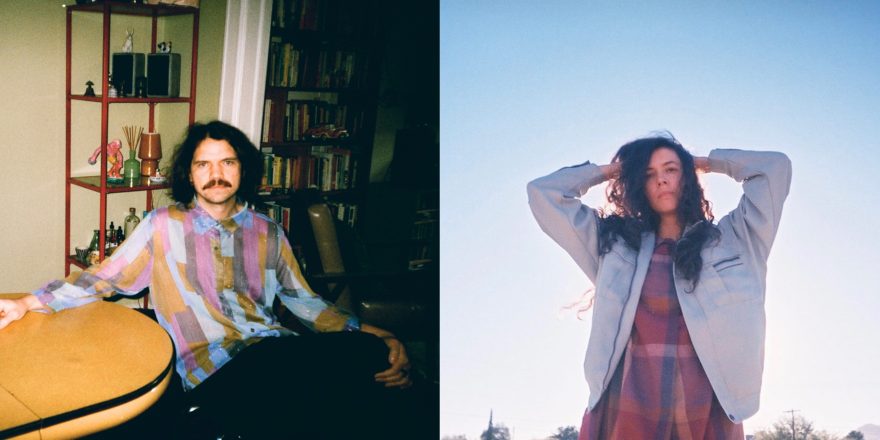
Compost Karaoke is Matt Bachmann’s fourth release with Orindal Records and his first release since becoming a licensed social worker in New York. For Bachmann, Compost Karaoke translates to “songs of change,” marking a transition from past years dominated by touring as the bassist of Mega Bog and his own music to rooting in new work. Compost Karaoke is out now.
(Photo Credit: Kady Ruth Ashcraft)
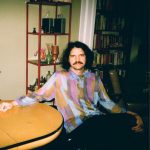
Karima Walker is a musician and interdisciplinary artist based in Phoenix; Matt Bachmann is a musician and social worker based in New York, who’s played in Mega Bog, Hand Habits, and Mutual Benefit, and performs solo under his own name. Matt’s new record, Compost Karaoke, just came out earlier this month on Orindal Records, and to celebrate the release, he and Karima got on the phone to catch up about it, and more.
— Annie Fell, Editor-in-chief, Talkhouse Music
Karima Walker: Are you biking a lot still?
Matt Bachmann: Yeah, I still bike a lot. I love to bike. It’s my favorite thing about [NYC]. If I wasn’t biking, I feel like I wouldn’t have as much fun in the city.
Karima: Yeah, I’m similar. In Tucson, I live next to a mountain, I live by a pool; it’s really easy for me to go and be active. And here [in Phoenix], I have a similar thing, where a lot of the reasons why I’m biking, why I’m doing public transit, is that it just builds in a way of moving my body. It’s intense, but I also appreciate the view. I appreciate getting this different version of a place that I’m maybe supposed to see by car.
Matt: Yeah, I feel like I always think about the different ways your brain works when you’re walking versus biking versus driving, and just how quick the scenery is moving past you. When I’m on my bike, my brain moves so much faster than when I’m walking. It’s also the one place that I feel safe to get a little angry. It’s like, all of the sudden, I’m thinking about politics. [Laughs.] I love thinking about the different ways of getting around.
Karima: Yeah. This is sort of an awkward segue, but it’s something that I’m thinking about in school — and maybe this is getting very abstract too quickly — but something about the subject in motion and how we come to know a place through a process that is inherently mobile and changing and fluid. I mean, it has to do with living in a new city, getting around, but it also feels really tied to some of these bigger questions around place and how we build stories about places.
Matt: I always felt like with your live shows and your music, you’re so rooted in place. It’s very comforting as an audience member. You’re like, Oh, wow, here’s someone who feels very embodied in their space. I was curious, does that resonate?
Karima: I’ve felt that way in music and in making sound. But with the environment I’m in now, and the kind of mentorship and support and feedback that I get, it’s sometimes mixed. I feel like sometimes, there’s a lack of clarity for people about where I’m coming from. And I don’t know if it’s being in school and just having the chance to blow open all these ways of thinking about what I do, and so there’s sort of a scattered feeling for a viewer. To ground it in something more concrete, I went on this trip this summer and I visited all these different hydrological sites in the western US. Because I’ve toured around the West, I love driving around the West, moving through the West, and I’m also really interested in how we put ourselves into these places and expect these places to hold us and our stories. My family has lived out here for just a couple generations — there’s family stories that feel legendary and mythological, and they’re also super complicated just in terms of whose land this is all happening on and the conditions for that. So the interest for me feels sort of broad and mythological, but then the question I’m getting is, “Well, what’s the case study?” I keep it generalized — I’m thinking about water generally in the West, not like, “It’s this site, it’s this place, this is where the concern is.” So I appreciate what you’re saying. [Laughs.] Long way of saying, I also wish that my professors felt that way.
Matt: [Laughs.]
Karima: I have questions for you about your record.
Matt: Ask away.
Karima: You talked about really pulling from a community, working with friends. Can you talk about that process of bringing people in?
Matt: I think it came out of, we were playing live and [Derek Baron] plays flute, and my friend Jeff [Tobias] plays saxophone and, when we started, my friend Will [Murdoch] was playing bass clarinet. So I was like [to Derek], “Do you want to write these three-part things?” Kind of like melodies for some of these repetitive pieces. And they were just like, “Yeah, totally. That sounds awesome.” We started emailing things back and forth, and every time they’d email something, I loved it, because they have a sensibility that’s really different than mine, and it was like, Woah, I would have never done this. No notes on any of them, we just played them exactly as they did it, and it was really fun.
Then Will moved, and then me, Jeff, and Derek were playing a lot as a trio, and this record kept fermenting in some ways because I just didn’t have much time to work on it. But as we kept playing as a trio, it was like, Oh, wow, we’re kind of creating a sound together. And then just Jeff having a lot of ideas — I remember the song “Compost Karaoke” initially didn’t have that middle synth break. That one, the direction I always gave to everyone who was playing on it was just, “I always think of this song like I’m biking home from Midtown after work and it’s kind of crazy.” And he was like, “It would be cool if you had a part that was like when you go over the bridge.” It’s like the sun setting and you’re going over the bridge before you get back to Brooklyn. I was like, “Oh, that’s a cool idea.”
Karima: So these are people that you’ve been playing with for a really long time.
Matt: Yeah. I grew up with Derek. James [Krivchenia] played on it. And Jeff is someone from the old Mega Bog days — we met in Mega Bog. After COVID, too, I was like, I really want to play with people. I think also, a cool thing about getting older — I don’t know if you feel this with collaborating, but I’ve gotten a little better at knowing how to collaborate. The thing I always have learned is it always seems to work better when you make sure it’s the right fit, and then you just don’t give basically any [direction]. I like to not give a ton of direction because if I trust the person and if they feel really free and empowered to do their thing and they have their voice really come through, then it’s way better than me trying to make them sound like me, which never seems to work so well.
Karima: I really love that. I’m imagining it’s like you’re front loading the collaboration with years of being around people, knowing you’ve built musical pieces and spaces together before. And it feels like what you’re describing is actually collaborating, versus this sort of pseudo-collaboration where it’s like, “I love the idea of working with people, but I really just want this person to maybe…” Maybe there’s a ventriloquism. Which isn’t necessarily bad, it’s just a different end. Versus, it’s more based in a relationship that exists already, and there’s a living alongside people that comes from that.
Matt: Totally. I mean, I just really like playing with my friends. It feels so much more comfortable. I love playing with Derek, because Derek’s a great drummer and I don’t have great time. And as time has progressed, I actually really love that my time is very human and very wavy — and they’re also pretty wavy. It’s really beautiful when we’re playing live and watching them ride my wave. They’ve gotten so good at doing it, which is cool. So with them, I feel really comfortable with this thing that my whole life I haven’t felt very comfortable with, I’ve been very ashamed of.
Karima: So were you playing jazz with these friends a long time ago? Was it was DIY?
Matt: DIY for me started with Mega Bog, going on tours and understanding, Oh, there’s a whole community of people that are all around this country doing this thing. When did you start touring? When did you start connecting with people in that way?
Karima: I didn’t start really playing music until I was halfway through my 20s. It was something I really wanted to do, but it took me a really long time to feel like I could do it — which is kind of a theme in my life more generally. But so it wasn’t until my late 20s, I was in a band called Human Behavior, and they were kind of a folk punk, dark, choral… There were eight of us in the band, and Andres Parada — it was his project he’d been doing for a while. And that was where I first went on a tour with people. I think we went out to LA and San Diego and Santa Ana. We had a cluster of shows, and it was so fun. That was the beginning of it for me.
A couple years later, I started touring my own work, and that was mostly solo. So I was booking these shows, cold calling places. After doing a couple tours with Human Behavior, it was like, OK, I know five people on the West Coast and maybe one of them will help me put this show together. [Laughs.] I was just sleeping in my car. But it was really fun. Touring can be so hard, but I’ve been missing it since I’ve been in school
Matt: Does it feel like something you’re going to come back to after school?
Karima: Absolutely, yeah. I think that was one of the secret reasons for going to school, getting to step away from something so I could come back to it with a reset, or an appreciation for it.
Matt: Also, it seems like you’re just doing such cool work at school, and like you could bring a new perspective to it. Does that resonate? Or does it feel like different buckets for you?
Karima: Right now, the buckets feel different. I’ve continued doing a little bit of video and sound work, but I’ve been doing a bunch of material-based things, so they don’t feel super integrated yet into the musical world. Thematically, there’s a through line that makes sense to me, but I haven’t figured out if I want everything to all get mixed together. I think it will happen anyway, without trying to force it; I think that things will connect maybe down the line. They probably already are connected, I just can’t see it from under it. So I don’t really know what’s going on… And I think when the connections are obvious to me, sometimes I over draw them out. I don’t leave room for anyone else to be part of it. So as uncomfortable as it is, it’s maybe a good place to be.
Matt: I’ve been thinking about that more and more lately — being uncomfortable seems kind of like the point of being alive. To talk about Derek again: Derek and their partner Emily have this phrase, “the meaningful struggle.” “What’s your meaningful struggle?,” is a better way of thinking of something than, “What’s your job?” I feel like things are really complex, and the more we try to simplify them, the stupider we are for doing it. [Laughs.]
Karima: Yeah. I’m curious, the season of life you’re in right now — I know you finished this program, there’s some big life changes, and this record that’s had this really long trajectory of it coming out…
Matt: Yeah. I’d say for me, doing the social work stuff — which right now, I’m mostly doing therapy work, I’m working at an agency in the city — it’s so tied to the music. The idea with both of them is just, how present can you be? And how can you not have the answer, and how can you be comfortable not having the answer? Because when I’m doing therapy work and I’m trying to get us somewhere and I’m trying to hold on to an idea too tightly, it’s just like, Oh, god, what am I doing? This is so stupid. And that’s the same thing with music, in a way. When I’m trying to hold too tight or control what’s happening, it doesn’t really happen. So it’s just like, how present can I be?
And they’re both real listening based. They’re like two sides of the same coin for me. Actually, my own therapist said this, and I really liked it: She was like, “Music’s a non-negotiable for you. If you don’t play music, you’re really unhappy and you’re not going to be a good person, so you should make sure you do that.” It’s like, “OK, cool. It’s not a selfish and egotistical thing, it’s actually the thing that I need to do to recharge my batteries to be able to be a person, who’s hopefully OK to be around.” The way my schedule works now, I just wake up an hour earlier each morning to play piano before going to work every day. That helps me feel really grounded, really connected. And it’s an interesting thing because the last month, I was writing a lot of music, and it’d be so funny to be so deep in the writing process and be like, “Well, I gotta go.” But it’s kind of cool because then I’m on my bike and I’m hearing the thing in my head. I actually kind of like it. It’s been a cool process.
Karima: Oh, I love that. It’s so beautiful to hear you talk about this creative practice where you are constantly kind of putting yourself in this position of not knowing. That’s a really rich place to spend your time. It reminds me of the things that I have missed and really love about songwriting. I don’t know if it’s because I’m in a program where you’re being asked to move through an institution with something to show, but I feel sometimes I’m being told two separate things of, “Yes, figure it out as you make it!” And then I feel like I’m also being told, “You need to be accountable to all the meaning that’s wrapped up in something at every step of the way.” Maybe I’m just exaggerating it, but it’s what it feels like. You have to push back, almost save some of the privacy in the process.
Matt: I hear that a lot with visual artists, of this meaning and this knowing. And it’s like, have you ever started a record knowing the meaning? [Laughs.]
Karima: [Laughs.] So, this is something that feels like a real tension: When I am going into the process of writing a song or building a collection, a body of work in music, I’m not thinking about innovation or being a thought leader. I’m not like, I’m on the cutting edge… But I’m in this field that’s called Expanded Arts, and I think culturally, visual artists, for a long time, society looks to artists to show us the future and tell us what’s going to happen. We’re supposed to have all the answers And I’m like, “No, I’m just like everyone else.” Is it possible to make work from a place of more of this complexity? I don’t know either. And yet, I think it’s still important to be part of a conversation, even if I’m not doing something groundbreaking.
Matt: I feel like — oh, god, it’s making me mad. I feel like I’m on my bike right now. [Laughs.] It’s a stupid expectation of an artist to have all the answers. I’m thinking of you remaking that quilt — that was really moving to me, because I was like, that take a lot of time and it seems like you’re really searching for something and it seems really connected to you and your family. There’s a sadness, there’s loss somehow, and then there’s this time. I’m like, Wow, I’m so thankful that Karima is taking the time to do this and I’m so curious what she’s going to learn from doing that. And it’s like, How are ways that I can build time in my life to think about my lineage and connect to myself, my roots, and my places? So in a way, it’s the same sort of thing where I’m looking to the artist for direction, but it’s not really an answer. It’s more like seeing them question makes me wonder what questions I should be asking as well.
Karima: Yeah. I think it’s funny because that piece has been really hard for me to know how to bring into my program. I’ve been working on it almost the whole time I’ve been here. I haven’t really known how to share it in a critique or how to show it. Because it feels like so much of the work is this process of these things you’re talking about, like wrestling with a loss; reaching for something that’s gone in a lot of ways, but there are these remnants. And there’s this simultaneous comfort in the time spent with this project, and also there is something that feels like it’s kind of fabricated. I’m reconstructing something that doesn’t exist. There’s a lot of sadness about a relationship that didn’t exist to a certain extent. I’m dealing with the absence of something, but I’m still deeply comforted by the process of reaching for something. And that feels like probably one of the most important things I could be doing as a person, and I really don’t have any idea how it fits into the world of showing work and putting it in a room somewhere for people to look at. Because I see how some of these conversations get pushed into different places — and maybe I’m trying to really control it as I bring it into the world. If I bring it into the world. Maybe it’s like I want to protect it. I think that’s part of it, too.
You go on tour this later this week, right?
Matt: Yeah.
Karima: I loved hearing the songs in this new arrangement. I was like, Oh, I remember these…
Matt: From when we were on tour!
Karima: Yeah! And I loved hearing them in this new configuration. Are you going to be touring with more people on this tour? Or are you going to go back to maybe a more spare interpretation?
Matt: This tour at this point, getting older, it’s like whoever can do it. It’s a little spare on this tour. There’s no percussion. The record is like, Wow, it’s so alive! And when it’s live, it’s also alive, but I think it’s a little more ornate live and a little less jazz.
Karima: Yeah. I love how dynamic it is. I get really lost in jazz sometimes. It’s like I’m hearing this other language through the door, and I’m like, What’s going on? And I felt like there was this really beautiful balance in how dynamic the record was. You were talking about beginning with these piano pieces that went out to your collaborators and these cycles: Yes, there’s this propulsive percussive element, but the looping — it’s so grounding and comforting. I felt like I had my guide. For someone who feels sort of outside of jazz knowledge, I felt like I’m getting I’m invited through it, and that was because of those cycling rhythms.
Matt: Yeah, repetition is very important to me, so pretty much all the songs — there’s maybe one or two or three that aren’t just repeating something over and over, but the rest of them are just a thing over and over and over again. I like that.
Karima: Yeah. And remembering, too, when you were performing those songs with Kyle [Boston], they have their own energy that keeps the movement present. But also, because of the spareness, there was a precarity sometimes that worked really well.
Matt: That’s such a cool word to use for that. That is how it feels sometimes. It’s cool that you talk about the sparseness with Kyle — it’s been really cool to start playing with horns since Kyle’s moved back to Florida. I feel like when it was me and Kyle, it was so much about texture. Kyle, the way he plays — which is so incredible — but it is a lot of looping as well, and there’s always sound happening. It’s been really interesting going to horn because all of a sudden, it feels like an air conditioner got turned off. Not in a good or bad way, it’s just a different way. If the air conditioner was doing something really cool and then all of a sudden you turned off, you’re like, Woah, this is really bare and empty all of a sudden. But then it’s way more melodic, too, and it’s a lot less precarious in some ways.
I’ve been playing more just piano live, and it’s just crazy: acoustic instruments are just so much more human. They respond to your touch so much more, and it’s so much easier. Playing with horns, they’re just so much easier to modulate. Whereas electronics — I wonder how you feel about this — trying to get electronics to behave can be hard.
Karima: Yeah. It’s great because it appeases some of my perfectionism, where I’m just like, OK, here’s where I can freak out about things being so precise. But, man, hearing you talk — I’m just imagining more of you up there. There’s a relationship that’s happening that’s more complex, there are more pieces moving. You can have these spaces, it feels really different. I’ve thought about this with my own performances. Sometimes I feel like I get on a train and I can’t get off ‘til the end. I’ve even been experimenting with total silence or completely cutting things during the set and seeing how long you can suspend this absence. I feel like it’s the plate spinning or something. I think it’s really suited the skill set that I bring to music, which isn’t classical, traditional, trained at all. I think especially coming out of school, it’d be so nice to just let shit kind of fall apart more and let go of some of the control.
(Photo Credit: left, Kady Ruth Ashcraft)