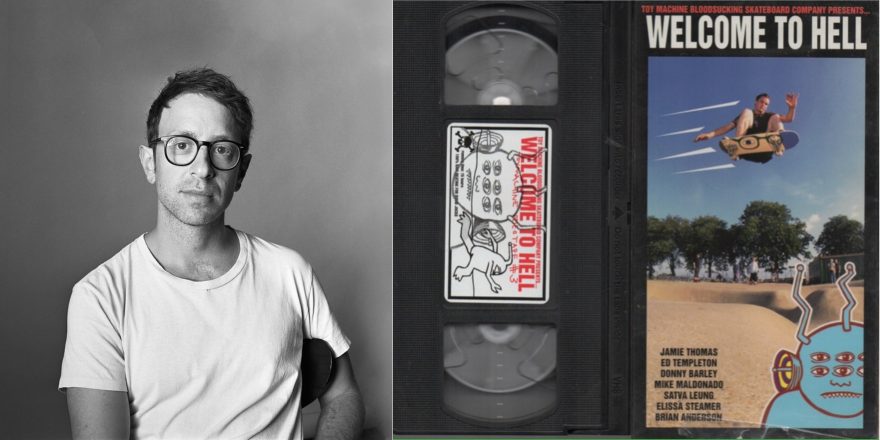



Joseph Shabason is a Toronto-based saxophonist. His new record, Welcome To Hell, is out now via Western Vinyl.
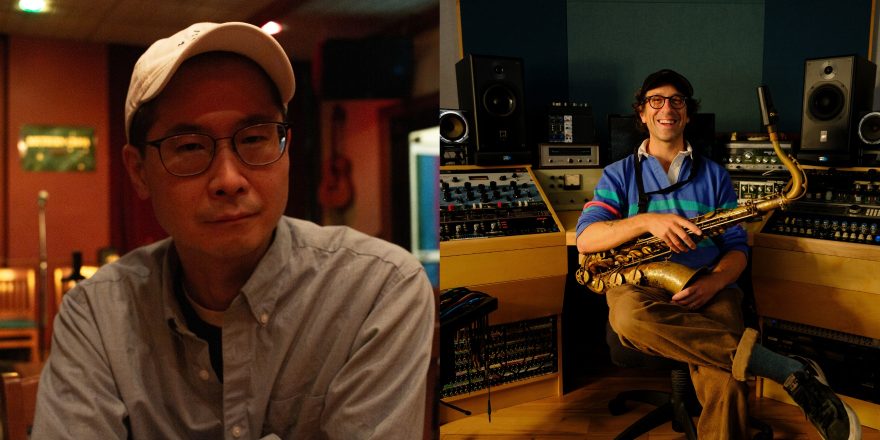
Joseph Shabason is a multi-instrumentalist, composer, and producer based in Toronto; Masahiro Takahashi is Japanese musician and composer, also based in Toronto. Joseph co-produced and engineered Masahiro’s new record In Another, which is out today on Telephone Explosion, and features contributions from fellow Toronto artists like Dorothea Paas, Thom Gill, Chris A. Cummings, and many more. To celebrate the release, the collaborators got on Zoom to catch up about the recording process, and much more.
— Annie Fell, Editor-in-chief, Talkhouse Music
Joseph Shabason: Hi, Masa.
Masahiro Takahashi: Hello, Joseph.
Joseph: So, I have an album question for you: How do you feel about the record in the demo phase versus where it ended up? And what about the whole process surprised you? Because I think that a lot changed, but I’m curious how you feel about it now that all is said and done.
Masahiro: I should just explain that Joseph was involved from beginning to the end, from listening to demos, through the recording, mixing, mastering. It was a very interesting experience for me. Usually I make music by myself, mostly, and even when I involve people, it’s pretty controlled. But this time, I just prepared a lead sheet for the recording, how improvisers can arrange continuously. There are lots of surprises that changed what I was picturing. But that’s the charm of having people involved, and trusting the people involved. I’d say 50% was my control and 50% was something I didn’t expect.
Joseph: Did you find that hard to relinquish control?
Masahiro: That’s a really good question. Yeah, it’s hard. [Laughs.]
Joseph: [Laughs.] What part of it? Tell me!
Masahiro: I think the more you work with me, the more you find that I have this control freak aspect. It’s my Japaneseness.
Joseph: Is that a Japanese thing? The need to control?
Masahiro: You know, when you work at company or office, we have lots of meetings before doing something, and we kind of picture, “We’re going to make this something like this,” and we just try to align to the first idea. But I’ve found in North American culture, especially with improvisers, it’s a different approach. It’s like, “OK, let’s get together and just start and see what’s going on.” I’ve started getting used to it. I have to adjust myself to enjoy unexpected chances. That’s a pretty good thing to know, too.
Joseph: I mean, it’s interesting, because I feel like when you open yourself up to it, it allows the music to take on a life of its own. Also, it forces you to sort of subvert your own ego, right? It’s the idea of ownership over music. And at least for me, I always liked the idea of handing it off and being like, “OK, let’s see what else it can become outside of the context of just my own ideas.” It’s definitely very hard to do and an acquired skill, but I feel like this record was very much a product of that in a way that I think was really beautiful.
Masahiro: Yeah. All these collaborators’ experiences and lives are in it, which is great. Everyone brings what they developed in the past 30 years or 40 years. So lots of personalities are combined, and what I do is organize it to align to my vision. But each element has a feel of all these different characters. It’s like a village.
Joseph: Yeah, totally. And they all have so much experience in the studio as well that I feel like, more than younger players, they’re able to use the studio as an instrument. You’re able to elevate the compositions to a crazy extent.
Masahiro: Yeah I love it. Which part of the process did you find the most exciting?
Joseph: These days I get so excited to do the mix, because you hear a song in a raw state, and the whole time I’m picturing, OK, that’s what this is going to do, and I’m going to move this here, and this can be swirling around in this way. It’s almost like I’m waiting to get the opportunity to really show what I think it’s supposed to sound like in my head. But then also, just being in the studio with the other players is the most exciting, because they’re all such old good friends. Everyone loves to crack jokes and eat good food and enjoys being together, and it’s fun to see what’s going to happen. Also, just to know that you’re going to spend a bunch of days in a row with your close friends and get to make music together — especially now that everyone is so much busier and older. So everybody in one room together, when that’s actually actually able to happen, feels like such a treat to me.
Masahiro: Yeah. I mentioned during recording, there’s a book I refer to written by Haruomi Hosono, published in the ‘80s. He is sharing his knowledge about how to be a producer, and he mentions that the concept is important and the team is important and budget and promotion — these basic things. But I read it and was like, Oh, I have this concept. I gotta think of a team. And I’ve been very inspired by the musicians in Toronto, like the people you work with. What I like about you guys is you’re very versatile. You guys have a very wide range of skills not only as players, but also as listeners. And you have lots of studio and producing skill. So I was like, “OK, the next one, I want to work with you.”
Joseph: Do you know what Owen Pallett calls that crew of musicians?
Masahiro: The Wrecking Crowd.
Joseph: Yeah. I thought it was so funny and appropriate.
Masahiro: I’m very happy to work with the Wrecking Crowd.
Joseph: I’m glad. It was really fun. I was gonna ask — you and I work in very different ways. I think you’re much more meticulous than me, you want to go over everything. And I think I work so much more on impulse, like, “Let’s try this. That’s not working, let’s do this.” Just quick, quick, quick and being nimble. Did you ever find it frustrating to have to get into that mindset where I would force you outside of that zone that you’re more comfortable in? Was that hard?
Masahiro: Yeah, it was. [Laughs.] I think one thing that maybe takes one day for you takes one month for me, because I want to explore all the options before deciding. But it’s always good to work out of my comfort zone.
Joseph: There’s pros and cons to both styles. I also just think, for better or for worse, it doesn’t matter. Like, it really does matter, while at the same time, it doesn’t fucking matter. After a certain point, it’s only for you. And I think it’s important if you need to feel good about it. All those kinds of tiny changes, for me, I’m just like, “Ah, whatever. It doesn’t matter. It’s fine.” But I think if you don’t make those tiny changes and then forever have regret, that’s also terrible. More and more these days, I err on the side of being like, “Whatever. It’s fine.” But I think it’s born out of necessity, where I’m kind of like, “You know what? As long as it’s mostly communicated the way that I want, I feel OK about it.”
Masahiro: Yeah, I find that communication is the most important. I want to hear what you think — “This sounds good because blah blah, this sounds bad because blah blah” — and then we find the best part. That’s very healthy to me.
Joseph: Yeah. Fun process, man. It was wild.
Masahiro: Sorry — I know I went crazy.
Joseph: You did go crazy! I loved it. It was very funny to see. But at a certain point, I was like, “Masa, you’ve lost your mind. You’ve gone totally insane.”
Masahiro: [Laughs.] Eventually, Sandro [Perri, who mastered the record] became my artistic counselor. Like, “Don’t worry, be happy! It sounds great!”
Joseph: He’s good at that. It’s funny, the first record I ever made under my own name, I was so self-conscious. I had no confidence. I didn’t know what I was doing. And then I played it for Sandro, and he became my artist counselor, too. He was like, “Oh, no, this is great. Just let it go, it’s all good.” I’m very grateful for his ability to play that role in people’s lives, certainly in my life, because without that encouragement from him, I don’t know if I would have had the confidence to send it out to people and start making records myself.
Here’s a question: Do you hope to play this music in Japan? Do you want to go back to Japan and play it?
Masahiro: I’d love to, but I don’t know how.
Joseph: Do you have Japanese band?
Masahiro: I have a couple of people in mind…
Joseph: I think it’d be great. I also think the people in Japan would be very receptive to the music in general. It seems like for a lot of the sensibilities that I see happening there musically, this record in particular will be right up their alley.
Have you been thinking about how you would want to tour this record? Because there’s so many players on it. How do you think you would do it live?
Masahiro: Yeah, I want to do a release party. Vocals are a big element of this album — Chris [A. Cummings], Dorothea Paas. Such gorgeous harmonies. So it could be nice to do a long set, or two sets with a little bit longer arrangement and then a more improvisational [section]…
Joseph: I think that’s the way to do it. I think as soon as you try to recreate the album exactly, it can be great but it also becomes more rigid and difficult. Trying to keep it in an improvisational realm and in the spirit of what the song feels like, but not necessarily the same [as what’s on the record], is fun. Especially with those players.
Masahiro: Yeah… I’m excited for this release, and I’m also excited about the Toronto music scene. Also, I’m gonna start a monthly residency again at Tranzac. I’m picturing more mixed collaboration, like electronic musicians and improvisers. People who have never played together, or people who have never met. Maybe that could be my role—
Joseph: Bringing people together.
Masahiro: Yeah.
Joseph: It’s gonna be great. I’m excited for your residencies and I’m excited for this album to come out.
Masahiro: Thank you so much! I dreamed of working with you guys, so I’m very happy.
Joseph: I’m so happy that we were able to do it. It was a joy, and I think everyone had so much fun. I’m excited for everyone to hear this album.
Masahiro: Thanks so much for making it together.
Joseph: My pleasure.