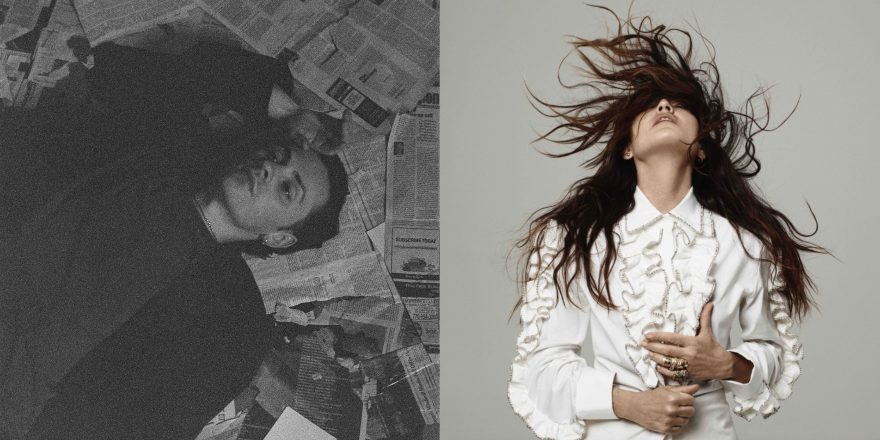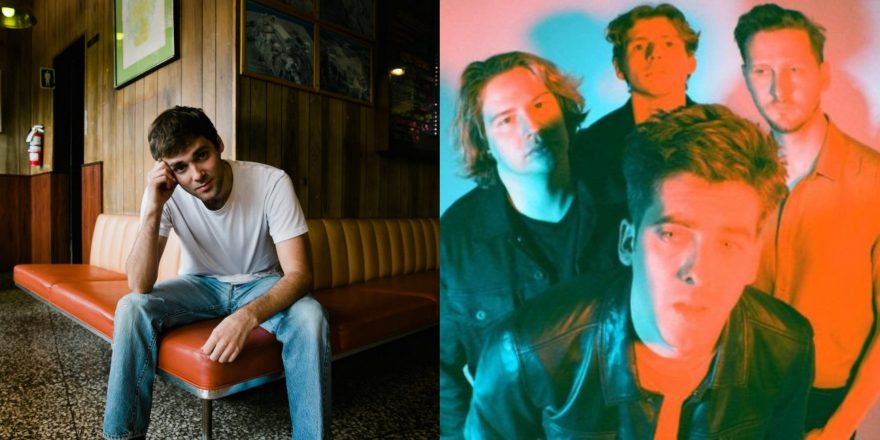


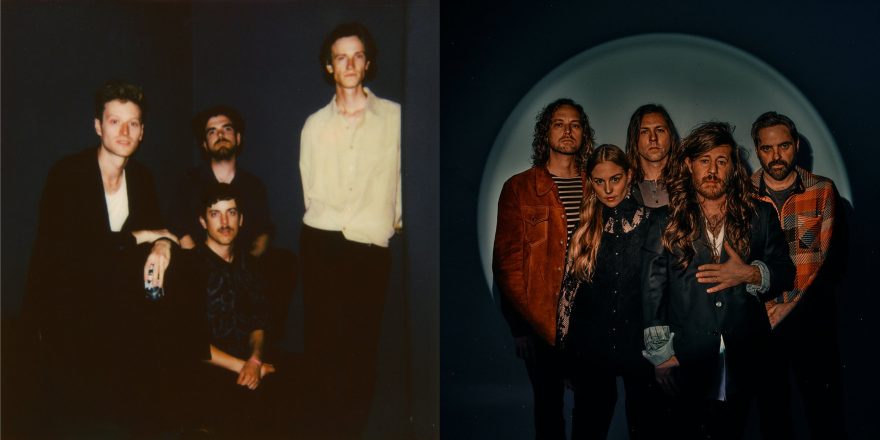

Other Lives is an American band formed in Stillwater, Oklahoma by multi-instrumentalists Jesse Tabish, Jonathon Mooney, and Josh Onstott. Their latest record, Volume V, is out now on Play It Again Sam.
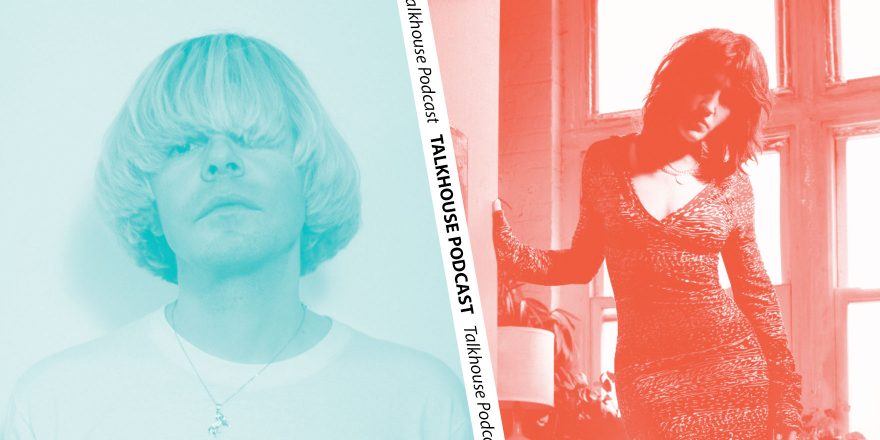
Edmund Kenny fronts the Berlin-based indie electronic band Kerala Dust, whose latest record An Echo of Love came out back in August; Jesse Tabish is a multi-instrumentalist who leads the Stillwater, Oklahoma band Other Lives. The new Other Lives record, Volume V, came out earlier this month, so to celebrate both releases, the artists got on a Zoom call to catch up about it. If you’re in the US, you can catch Kerala Dust on tour starting November 5 in Washington DC.
— Annie Fell, Editor-in-chief, Talkhouse Music
Edmund Kenny: Where are you right now?
Jesse Tabish: I’m in Cleveland, Ohio.
Edmund: Is that where you’re from?
Jesse: No, we moved here about nine months ago.
Edmund: I’ve never been to Ohio.
Jesse: It’s nice. It’s growing on us, I’ll say that. And where are you? Are you in Berlin?
Edmund: No, I’m in Valencia, Spain. We’re on a tour until the end of the year, basically, so I’m just between hotel rooms.
Jesse: How’s the tour going?
Edmund: Really good. We’re on date 20, so we’re very played in at this point, and the reception’s been really good. It’s interesting — I think around date 20, you start to get ideas for where you might want to go next with the set as well.
Jesse: Yeah. It’s like the third week, your body and mind are like, OK, this is what we’re doing now. This is who I am forever, and you gel as a band, you can play around a little bit more.
Edmund: Totally. It’s so funny how much looser it becomes after three weeks. I think when you start a tour, the parts that you’ve all rehearsed, they’re very sacred and you don’t want to stray from the path. And then everything becomes looser and looser, and you find the cracks, which is always a nice spot.
Jesse: Yeah, it’s that muscle memory. It’s kind of the sweet spot of, you’ve rehearsed and rehearsed, but then you can just really do the thing and enjoy it and not have the jitters.
Edmund: I really wanted to ask about the way that you guys translate the orchestral nature of what you do, that really expansive cinematic scope, to a stage from a recording.
Jesse: That’s always been kind of a big problem for us. At one time we were like, “We need three violinists and a saxophone player!” Obviously that wasn’t monetarily possible. So, Jon [Mooney] kind of programs the whole show, and a lot of it is live looping. For instance, he’ll do a trumpet bit at minute one, but then that same trumpet comes in at minute three, but he’s able to be doing something else. So it’s a lot of that. And you have to get it right the first time, because you’ll be stuck with it halfway down the song. We use some backing tracks, but all the backing tracks are performed. It’s not like a trumpet’s just coming out of nowhere, or tambourine or something. But it gives a little bit of cloud behind it.
What about yourself? Do you guys do live tracking or looping, or do you have tracks?
Edmund: Well, two of us run Ableton, actually. I sit down with Tim [Gardner], who also runs Ableton, for a good week before we start a new tour, and we just figure out what’s in the song that can be either sampled or sometimes just left out. It’s kind of tough because you haven’t even played it live yet, but you start making these value judgments on different parts on what’s needed and what isn’t. Then often we lay it out across a little controller, so we’ve got a couple loops, like a tambourine loop. Often we try and get it down to a one bar loop. And if it’s a more extensive part, then we might sample it and he’ll actually play it on a keyboard. We’ve done quite a lot of that in the past. And then on this album, sometimes it was even like, “Well, this is a bell synthesizer, but what if it’s played on guitar?”
Jesse: That is so important — I think you can get overly nitpicky about, “Oh, well, this is a bassoon.” Well, nobody gives a shit. But if it’s a key element of the melody, sometimes there’s this performance quality that’s going to come across great on a big ooh or a big vocal or something. It’s more physical, instead of, “Oh, get that nice little trill on the bassoon.”
Edmund: Yeah. There’s one guy in the audience and the part’s being played on a guitar, and they’re like, “That’s not a sousaphone! It was a sousaphone on the record!”
Jesse: [Laughs.] And I know he’s German.
Edmund: [Laughs.] Yeah.
Jesse: It was such a funny show — in 2015, this guy came up to me and he was just like, [in a German accent] “You look very tired, and the bass was very loud. But thank you.”
Edmund: [Laughs.] The merch desk is an interesting place for constructive criticism after a show. Also because you’re so in a rush from one person to the next, and also wanting to have an interaction with people that’s actually genuine. And then, I don’t know, the 18th person comes up and they offer this deep piece of constructive criticism that you’re just so not in the space for. It would be nice at midday, but it’s 11 PM and you just played the show.
Jesse: Do you guys do that after every show, go and say hello to fans and all that?
Edmund: We try to. It gets difficult if it’s a bigger show, just because then it becomes really quite intense and stressful, and I find it quite difficult emotionally. The smaller shows are the nicest, because you meet a portion of the room and you kind of feel like you’re connected. I actually feel strange if it’s one of those venues where you just go backstage and it’s dead silent and you don’t have any kind of interaction with the people that were in that room. We had that the other day at a show, and I was like, “Man, this is weird. It’s almost like we didn’t just play a show.”
Jesse: I know. I find it really cathartic, in a way, actually hearing from the people what they think and talking to them. I’ve had a lot of really emotional interactions with fans. It gives me a good feeling, but it can be overwhelming. I’ve been there, and then I’ll, like, nick a whole bottle of wine.
Edmund: I’ve made a “don’t drink after shows” rule for myself, because I just end up doing exactly that. [Laughs.]
Jesse: [Laughs.] Well, I was going to ask you — I’ve been listening to your music the last few days, and I really love it. That’s a tough crossover, I think, to blend these two worlds and actually get a good tune. A lot of people try to do that, but I think you do it so well, and without it being this three minute pop song. The thing that I find so interesting in electronic music is that there is an expansiveness — you can do a seven minute track, because there’s a hypnotic thing. But I was just wondering, where do you see the song in there? Do you write the song first, or does it start out with an electronic element and you’re writing within that?
Edmund: Thank you very much, first off. I think most often, it does start with some form of loops. The groove kind of comes first. So those loops, even if there’s chords in there, it’ll be about the structure overall and the feel and also certain sounds. So in some ways, it almost starts out with rhythm and sound design being the two most important things, and creating a sense of an inhabitable world in a song. That, I think is, is where then the romanticism comes from, that I start to develop a romantic attachment to that little organism that’s being created, that’s full of possibility. And then I start to feel, at least rhythmically, the lyrics are sort of placing themselves. I often start just mumbling to myself, and then the words come out of that. I think it’s more interesting the times where that doesn’t happen, and you’ve got some sounds that you love together and you’re getting them in a place that is starting to feel like, I can get some vocals over this, and it just doesn’t fucking happen for days. I can never explain why some things work and others others don’t. But the song usually comes over a longer period of time organically from some form of a loop.
How about you? I’m really interested about how orchestral a lot of your stuff is, which is a world that I don’t know that well.
Jesse: Thank you very much, I appreciate that. You know, I was smiling while you were talking about your process because it’s so similar to how I approach it. I’m starting with instrumental music almost always. I rarely will have lyrics and a song and then add to it. I will usually just start with a drone, an organ note, and just start kind of free form painting, if you will, over it. And then, you know how these things kind of just magically click together. I like these places because it, like you said, it allows you to kind of dream over this thing. And sometimes I just end up leaving it instrumental, but there’s always this feeling that I want to put a song to it. I think it’s just maybe this traditionalism in me. So a lot of the same things that you were saying — a mumble or a little thing will come out and I go, I think I’m onto something. And after that, it’s kind of a chase. But you know as well as I do, you cannot force that song in there. It has to come naturally. So that’s always the thing I’m searching over.
And as far as the orchestral stuff, it’s the world that I love. I love the elements of putting three or four different kind of instruments and seeing how they can make different inversions and different shapes. So that’s kind of my color palette. But it’s really coming from the very similar place that you were talking about.
Edmund: Yeah. Man, love inversions. [Laughs.] It’s a funny moment when a song starts to tell you what it wants. That’s the best case: You get to a certain point with an idea, and then the idea starts to talk to you about where it should go, rather than you just being in this sort of monologue.
Jesse: Totally. I’ve done the thing where you sit down with a guitar and you write the traditional song, and that has a [place]. But I think, what you’re talking about, when you have that — when you have a palette already, a colorful world — it’s like listening to instrumental music, you kind of participate with it. It’s not like this hard narrative. You get to kind of dream in a world. And I think coming from that palette, it informs you where to take it.
Edmund: Yeah. And it’s funny because sometimes you want to get a song over the line, and then you start forcing something over the top of it, whether it’s a certain frequency or a certain instrument. You’re like, “I really want to get some guitar over this thing.” And it’s like it’s just going, “No, no, no!” I mean, sometimes those songs do make it to the finish. But it’s a lovely thing when it’s like a dialogue with a song. Especially when you’re on your own.
Jesse: Yeah. Do you guys go to a proper studio? Do you have meetings with your band of like, “These are the 10 songs,” or is it more organic?
Edmund: It’s such a case-by-case thing. I mean, drums we usually do in studio. If you’ve got a day or two off on tour, it can be a really good thing to go do drums over a sketch and nail that down. But instruments, I do find I need to be home and potentially working with Tim, who plays keys, or Laurie [Howarth], who plays guitar. For some reason, that feels like something that needs to be done in the comfort and safety of my home studio.
Jesse: So you record at home, basically?
Edmund: Mostly, yeah. But I’m thinking at the moment — I’ve never had a treated room as a studio before, and obviously it’s something that engineers scream about.
Jesse: Oh, my god. [Laughs.] The bane of my existence.
Edmund: How about you? Are you at home?
Jesse: Yeah, same thing. And if I do drums at the house, it always ends up, like, not lo-fi enough to be cool and not hi-fi enough — it’s like this middle ground where it sounds like a home recording. So yeah, I guess for that isolation, that kind of black box is always good for drums. But the rest of it is at-home arranging on a keyboard, that kind of stuff. I’ve done the man behind the glass kind of recording, and I really hated it, because you’re in headphones, they’re in headphones, and you can’t really get a sense of the space and what you’re doing. So we’ve always for the last 10 years had kind of an open room where you’re doing things in the room and you can just go right to the desk and listen back.
Edmund: We’ve done quite a few sketching sessions where we’ve just gone in with a blank sheet. Which, we did a couple in the States, and the engineers were so confused that this band showed up with nothing, and we all just set up random bits of gear in a room and sort of just started recording things.
Jesse: His nightmare.
Edmund: Yeah, you always want to be in the room. It’s so weird doing the talkback through the through the mic, and it feels like you’re sort of telling someone to do something rather than having a creative conversation. It’s very old school, I guess.
Jesse: Yeah. That kind of stuff I think works well for a well-rehearsed band. It’s like, “This is the band and we’re going to capture it.” But I think if you’re doing the kind of recordings we’re doing, where you need a lot of time, there’s a lot of layering, I think it’s really hard to really get your vision across with the man behind the glass. It seems very economical and functional, like, “Alright, you got the guitar part.” Well, sometimes you need to really sit with that and find your own tones.
Edmund: I remember, just as I was working on the first demos of what then became the first Kerala Dust songs, a friend of mine was friends with the guitarist of a really famous UK band, and we had dinner with him. I was saying to him that I didn’t like recording studios, and he really didn’t know why I was saying this, and then I felt like an idiot. I was like, Oh, I’m this friggin’ nobody and I’ve just told this hyper-well-known guitarist that—
Jesse: Basically that you don’t like his records.
Edmund: I don’t know how he took it, but he sort of frowned and made a face like I was being an idiot. But I still stick by it that they’re really sterile environments.
Jesse: I agree. You know, the engineer is kind of this unsung hero, and I have a place in my heart for them. But they’re kind of scientists, and there’s this kind of formula of how to do things, and sometimes it works but most of the time I find it boring. Because they’re taught in a certain way of, “You gotta cut these certain frequencies…” I’m always battling. I’m like, “I want more reverb. And they’re like, “Well, this is going to be cloudy in the mix.” And they’re probably right, but I want to get in there and feel it and have it to myself to judge it. But, you know, they’re doing their job.
Edmund: You want to almost get in a space where it’s a purely romantic connection to what’s happening, rather than a kind of technical, logical connection. Which I guess is maybe what’s hard in a studio — the clock’s ticking and you need to be more functional than maybe you would be at home if you’ve just got the day or the week or the month to work.
Jesse: Since we only have two minutes, I just want to say thank you so much for chatting.
Edmund: Thank you, too. And I really love your latest album as well. We had it on in the van yesterday. There’s a scope to not only the instrumentation but also the lyrics that I feel is kind of… It’s never overbearingly cinematic — it doesn’t start to go in, like, Hans Zimmer territory. It always paints this very concise picture that I think as a listener you can immediately grab hold of and feel that space somehow. It’s got a lot of clarity of intention to it that really grabbed me.
Jesse: Thank you so much. I really mean this when I say this: I don’t think I’ve ever heard a band like yours. And I think that’s really hard to say in 2025. I think you’ve really carved out a world that is totally unique and totally genuine.
Edmund: Thank you very much, Jesse!