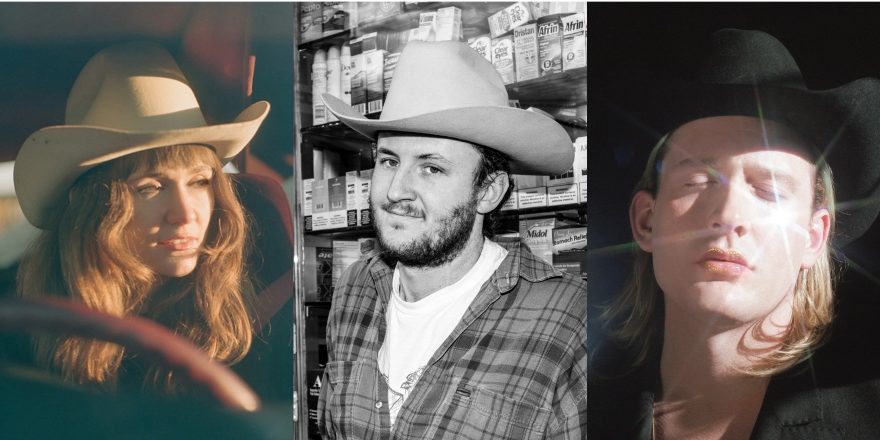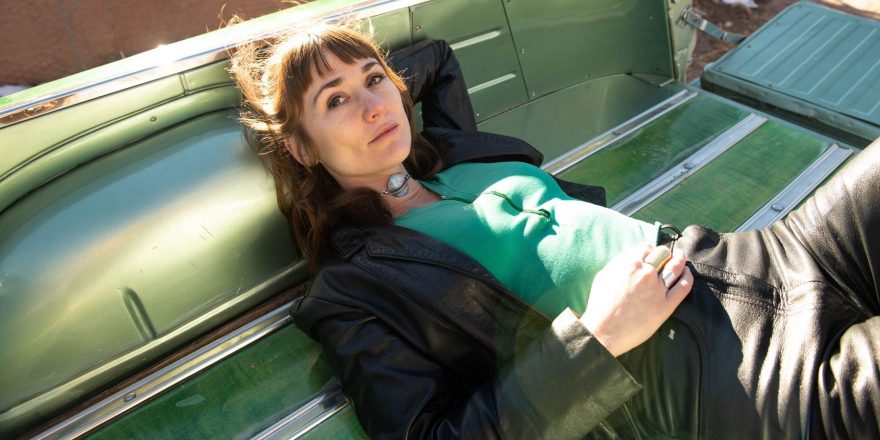



Inspired by the honest writing and timeless melodies of American greats such as Hank Williams Sr. and Joni Mitchell, Esther Rose’s songwriting has been called “The happiest saddest music.” Her 2017 debut, This Time Last Night, caught fire as her listeners tuned-in to a storied chronology of this soulful, heart-worn artist. Her latest record, Safe to Run, is out April 21, 2023 on New West Records.
(Photo Credit: Rett Rogers)
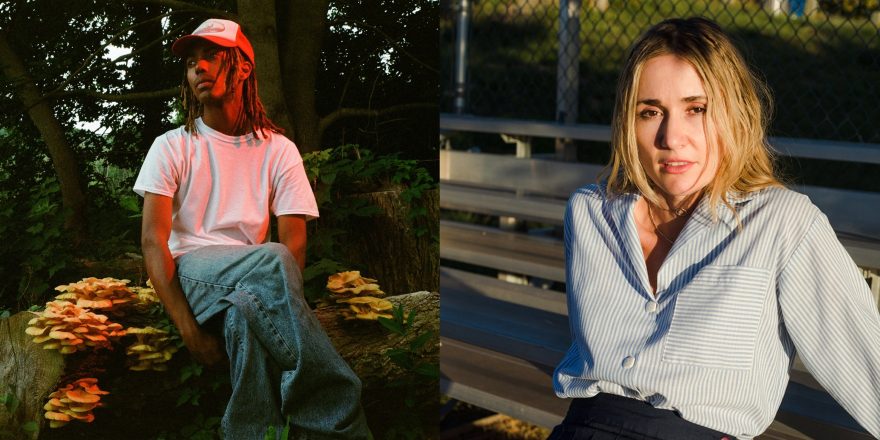
Zion Battle is a North Carolina-based songwriter who performs as Katzin; Esther Rose is a singer-songwriter based in Santa Fe. The debut Katzin record, Buckaroo, came out earlier this month on Mexican Summer, so to celebrate, the two artists got on a Zoom call and caught up about it.
— Annie Fell, Editor-in-chief, Talkhouse Music
Zion Battle: I have a couple of questions.
Esther Rose: Me too! [Laughs.] I prepared.
Zion: This is crazy for me — I’m such a big fan of you and I have been for several years. This is like a full circle moment to be able to chat.
Esther: Well, I just love chatting process and songwriting, and any chance to meet somebody new. And your album rocks.
Zion: Thank you.
Esther: How are you feeling, a few days after release?
Zion: I feel crazy. I had to wait years to put this out. There were two years of, it was done and I knew about it but I couldn’t put it out, because we got signed to a record label which puts it on someone else’s timeline.
Esther: Yes. If you’re used to putting out things on your own — which you were before then, right? Mexican Summer is your first label?
Zion: Yeah.
Esther: It feels crazy. I think when I first signed with Father/Daughter, they only wanted six months of lead time, and I was like, “What do you mean?” Like, how could I wait six months? So, two years — well done.
Zion: Yeah, it was two years of [feeling like] you’re somewhere else creatively, or wanting to be. It’s kind of psychological warfare…
Esther: I just listened to your whole discography and I was wondering how you picture “Getaway” — which is such a bop and so catchy, dance pop music — versus this indie rock record that you just put out, and now you’re saying you’re already someplace else musically. Where are you musically now?
Zion: I guess three or four years ago, somebody told me to listen to the Anthology of American Folk Music, and it kind of redirected everything for me. It just reshaped how I viewed all the other music that I like — the popular music, the rock music — I feel like it all came from that, and I wanted to merge those things. That was where the attempt came from, and I’m inspired to go further down that road.
Esther: There’s influences of folk music. I heard the banjo in one song.
Zion: That was my friend Max [Morgen] on the banjo.
Esther: Isn’t that funny how when you start to listen to the first recorded music, like from the ‘20s and ‘30s, you start to put all the pieces together of how everything comes from that?
Zion: Absolutely. What was your journey towards folk music? Did you have to find it in popular music, or vice versa?
Esther: My mom had this tape cassette catalog of folk music from around the world, but it was all instrumental folk music, and that was something that we listened to a lot. That was really formative. But then similarly, I feel like everybody has to discover that folk music, early music, blues, and jazz on their own. I had the touchstones of Nirvana covering Leadbelly and then finding Leadbelly, and listening to Bob Dylan and then finding Woody Guthrie. Every artist has to discover it on their own timeline. I wouldn’t say it was the most prevalent thing growing up.
Zion: What kind of music were your parents into?
Esther: I grew up pretty close to Detroit, so we had a really great hip hop and R&B station on the radio that I would tape all the hit songs off of — this is the early ‘90s. And I listened to The Chicks, I listened to Mary Chapin Carpenter, a lot of ‘90s country. I know all that stuff front to back. And then there was a lot of gospel, a lot of the Beatles. I’d say the Beatles are probably the bedrock of my songwriting structure. Keep it under three minutes, stick to the point, give me a hook.
My dad is really into music. He loves gospel, Aretha Franklin, soul. He is very passionate, but not a musical person. And then my mother is a musical person, could play piano, play a little guitar. I was remembering something recently that was really sweet: Me and my sisters all had a songbook from an early age and we would write our songs in it, or songs that we were singing in church, in our religious groups. And I still have a songbook! That’s a tradition that they definitely instilled with me that I think is really sweet. I would write my songs that I wanted to sing, if I wrote them myself or was learning them to sing them in church type situations. I say “church type situations” because it was a very alternative religious upbringing. Which, it sounds like you had some of that too — I was reading that your father’s a theologian?
Zion: Yeah, definitely can relate, growing up in churches and the musical presence of that. Music is how religion circulates in a way, so I think subconsciously you pick up on the importance of it…
That songbook that you were talking about — growing up, did you write lyrics out? Like songs were not your songs?
Esther: Exactly, just writing other people’s songs in my little book. I have never been very good at interpreting other people’s songs or covering them. I’ve always just wanted to write my own song. That’s why I started writing songs — I was learning guitar, and I just wasn’t that interested in… I mean, I’ll learn a cover every now and then, just to learn something new and if I want to internalize the greatness of a great song. But it felt really natural and easy to create my own songs. And looking back, I see that it isn’t actually that easy or natural to write songs. It’s a special thing that we do, and I’ve come to realize that more and more as I get older. To write a song, to finish it, to like it, to record it, and then to share it with other people is pretty miraculous.
Zion: You can fall off the wagon at any point in that process, or you can get caught up on little things and not move forward. It is miraculous, because you have to pass all these checkpoints with yourself. And then as you progress, it becomes more and more narrow. You get better at knowing what you want and your standards get higher.
But I’m wondering if growing up writing other people’s lyrics had any impact on you. Are there any specific lyricists or hymns or Christian things that influenced your lyricism?
Esther: Well, I didn’t grow up Christian; I grew up part of this Punjabi religion, and also Jewish. So there’s a combination there of gorgeous songs in minor keys from both of those cultures that definitely created a confluence of… yearning, perhaps? I think a lot of the songs that I was writing in my journal or learning, many years went by and at a certain point I looked back at those songs that I was really, really enjoying when I was in my late 20s and understood why they were so good. But my songwriter brain didn’t turn on for a long time. I didn’t really start writing until I was 27, 28. So it took a lot of simmering of life for my taste and style to finally to reflect that in my own music.
That’s why I wanted to talk to you — I mean, of course we’re from different generations, but how do you arrive at 20 and have such a clear artistic vision? How are you able to draw that out? Is it a lot of encouragement or support?
Zion: It’s definitely both of those. I’m fortunate enough to have a liberal Christian dad who’s always like, “Music, that’s a real thing that you can do and I respect it.” My grandma was a music teacher; he grew up watching her teach piano at their house, and that’s what put food on the table. So when I look back at my family and their attitudes towards music, I think that placed me in a place of potential as far as when I did discover I wanted to make music. Which, I started playing guitar at 13, but I didn’t really care about music. I thought music was nice, but I wanted to just be good at something. My sisters were all good at things, and I wanted to be good at sports, but I wasn’t really good enough there, so I started playing the guitar and wanting to figure out what it means to be proficient at this instrument. And as I started to feel the fretboard, I started to understand the depth, and it started to make me more interested in music. I got to explore this thing that I actually didn’t really know about — I mean, I knew about Frank Sinatra and Michael Jackson — but now I can actually know how to make that chord. And then that set off the writing thing, and then I figured out, Actually, I don’t want to listen anymore, I want to create.
As far as the vision thing, I didn’t let myself even try to make an album until I felt like that was there and I had a message and a sound, a sonic direction.
Esther: God, I love that. Hearing that you are really connecting with your instrument in that way and that it became so profound, I definitely relate to that. Although I feel like at some point, I had to make a choice of, OK, my strengths are as a songwriter and lyricist and melodies and composition and I’m never going to be a lead guitar player. I had to reckon with that, because of course I want to have it all, but it takes so much time that you spend with your instrument to gain that proficiency. And every time I make the time, it’s always to write. So I’m letting that be OK. We don’t have time to get good at everything in this life. You really have to pick, and what you pick becomes what you’re good at. I feel that now more than ever, that urgency of using my strengths and knowing what my strengths are.
Zion: I want to talk about your music. This Time Last Night is one of my favorite albums.
Esther: Yay! [Laughs.]
Zion: [Laughs.] What was something unique or special about the process of making it that you couldn’t recreate even if you tried?
Esther: Well, I’d say two things, the first thing being, I was really relating to what you’re saying about how you waited to make your first album until you had a clear vision and you knew where the music was coming from. That was a huge part of This Time Last Night, really feeling inside me for the first time, Here is this body of work and I know exactly how to sing it. But then the second part of that is working with these really exceptional musicians in New Orleans, their ability to create these really dynamic musical moments with the pedal steel, with the lap steel and the fiddle. We tracked that in three days straight to tape. We just went in every day from I think probably 12 to 6 — not even eight hour days. We just got the takes. And that really informed the way that I work now, which is going for the magic take and recording live and trying to get as much of the song that I can in the room with everyone.
Zion: I must admit, I went to this music school for a bit and I had this one teacher who I would nerd out about records with, and I brought your album in just because it blew me away, the live recording and the way it sounds. I’m not going to ask for your secrets, but I remember thinking if I ever had the opportunity to ask you about this album… I mean, I just did, but I don’t want to get too technical about, like, what microphones you use or anything. [Laughs.]
Esther: We can nerd out! I don’t have any secrets. I love to hear that you resonate with the sound. Also, with the Anthology of American Folk Music, there’s a through line there, which is the way that we recorded was with a two-track tape machine. We could split it, so we got five mics going into a two-track. My vocal is also my guitar, so there’s full bleed through all the instruments. We’re all in one room, no isolation, no chamber, nothing. I think when you find an engineer who can mix it all going in to the tape live, then you have what you have and it’s kind of done after you tape it. You might want to add an instrument or two, but there’s something so simple about that process that it leaves it all up to what’s happening in the room. And so you learn to not do too many takes. Then what it instills in the players is this deep listening to each other, this knowing when you’re getting the take. It’s a magic feeling.
I also want to learn how to record the other way, which is to put it all in a grid. I want to be able to generate that same feeling in those contexts. I’m wondering, is that how you record, with just layering and going to click?
Zion: We used a digital audio workstation, and only now with my label and their studio and all these things developing, I have access to tape machines and things that some of my favorite records were recorded on. We wanted to create something kind of new age, so we used Logic and the click and certain placeholders. But then we recorded my live band, who is an integral part of how I develop and workshop my songs, and it was kind of this marriage on every level between the new and the old ways — as far as I’m interpreting it as somebody who is born in 2005.
Esther: I think the thing with tape and the various ways that we record, whether it’s digital or analog, is knowing that a lot of the sound is determined by limitations, but it’s not just that. It’s the way in which you work in those environments.
Zion: Like, can you adapt to the medium?
Esther: Well, more like what you’re creating with your band could be the same thing in both situations. It’s not about what is picking up your sound. Although we like to think that it’s all in the gear, it’s not. Some of it is, of course, but a lot of it isn’t.
Zion: I agree. And that’s why we have bands to play with.
Esther: You were talking about your collaborator — is this Max the person that you wrote a lot of the songs with?
Zion: I think he co-wrote two of the songs. But he produced every track on the album.
Esther: He’s someone you work closely and work well with?
Zion: Yeah. All of these collaborators, it’s like they were sent by god or something. They’re just there one day. I was going to ask you, how do you choose a band member?
Esther: I think of myself as a serial collaborator. My producer, Ross Farbe, we’ve made three albums together and I want to make another one with him. I think there’s something for me that really responds to the depth of knowing someone. When you know someone for a long time, you’re both continuing on your journeys and you pick up all these new skills, so every time you work together, there’s something new coming from both of you. There gets to be a moment where you can kind of be in each other’s brains and make laser fast decisions that serve the music and spend less time dilly-dallying. I’ve got my god-sent angels, like you said. I go a lot on personality. I like people who are fun and weird and don’t take it too seriously. I try to surround myself with people that really love music and making music.
Zion: Yeah, there’s a sincerity that I look for. But also, you need to be able to be silly and be something that brings life. Because I’ve worked with different types of people, but I think having a sense of humor throughout the process — not in a way that interrupts the process, obviously. But it’s hard to interrupt the process when you’re so sincere about it.
Esther: Yeah. It’s got to be fun. In the end, it’s the most serious fun you’ve ever had.
Zion: It’s serious fun, I agree.
Well, thank you. This has been amazing.
Esther: Yeah! I can’t wait to meet you in Durham. I’ll put you on the guest list.
Zion: I’ll be there!