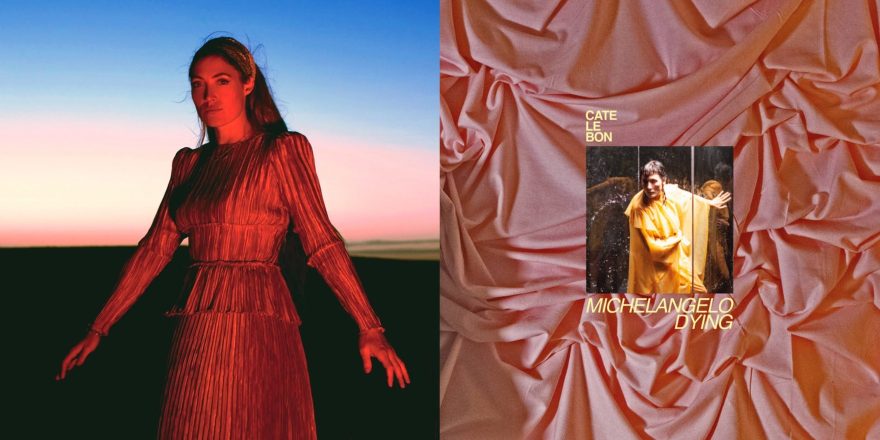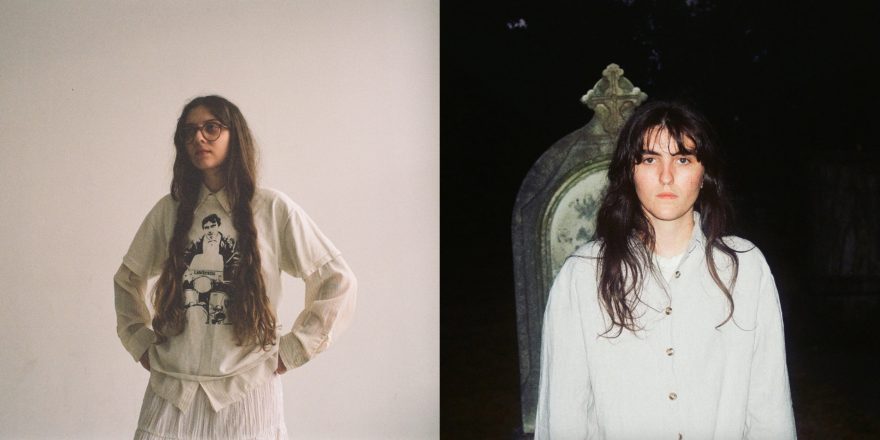


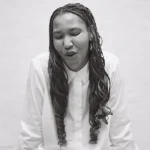
North Carolina-born and LA-raised Jordan Patterson is a 23-year-old singer-songwriter/producer creating catharsis from a folk and alternative landscape. Blunt, raw, and decisive, Patterson is creating a world within her self-recorded and produced songs. Her connection to the unfinished represents no better reflection of who she is as an artist, “in progress.” Her latest record, The Hermit, is out now on Ozella’s Child.
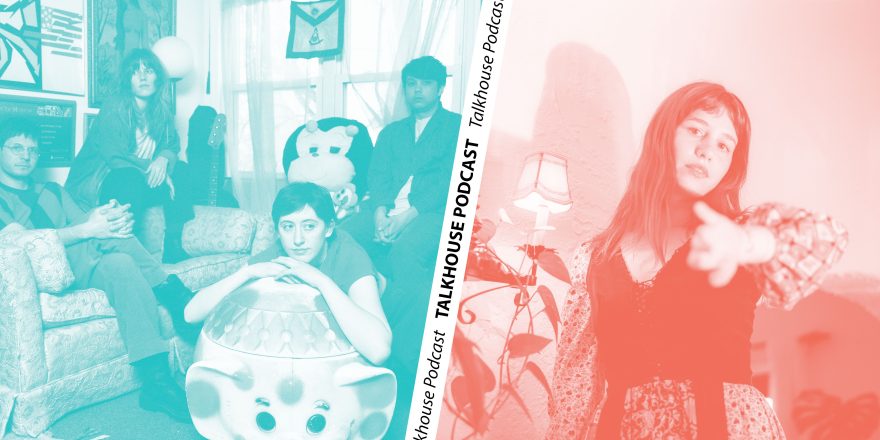
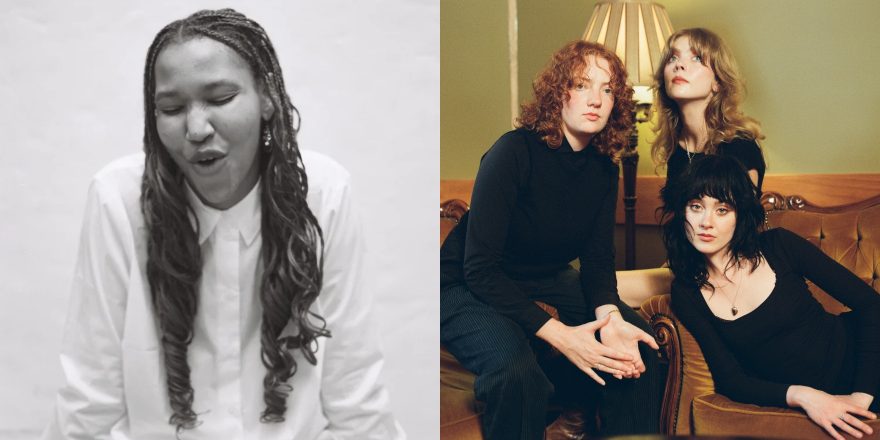
Grace Sinclair, Jeanie Pilkington, and Heide Peverelle are Folk Bitch Trio, an indie-folk band based in Melbourne; Jordan Patterson is a singer-songwriter from LA. Jordan’s new record, The Hermit, was released back in the fall (via Ozella’s Child), and to celebrate, she and FBT got on Zoom before the holidays to chat about it, and much more.
— Annie Fell, Editor-in-chief, Talkhouse Music
Jordan Patterson: How was your show [in LA]?
Jeanie Pilkington: It was… good? I mean, we’re talking to another musician — we can candidly say it was not a great show for us. We had some technical issues at the start, and then I think because of that, kind of struggled to tap in with each other. We had a completely sober crowd because we were at a venue without a bar. And then just kind of struggled to get into the flow state of really feeling the music. And then second to last song, someone had a seizure and we had to stop the show and get the house lights on. It was very awful, obviously, for the person who had a seizure, and then it just took a long time for the right help to get there because it wasn’t a proper venue. It was a bit of a shit show. It was still good, but kind of an incredibly vulnerable position to be in. I don’t know if you’ve ever experienced anyone passing out at your show or anything, but it’s happened to us a lot. It’s really hard when you’re up there on stage and you have to come back from that and deal with it.
Jordan: That’s honestly really surprising that that happens at y’all’s shows. I guess I only have one experience to go off of, but the crowd was so calm and attentive.
Gracie Sinclair: That’s where the problem lies.
Jeanie: Yeah, we think that might be what does it.
Jordan: Really?
Gracie: Yeah, because you’re standing upright, standing still, and you’re not moving, dancing. Or even, our crowds are so attentive that they’re not really talking to their friends or engaging with other things. And you might go into a bit of a tunnel, and then before you know it, pass out. I think it happens a lot for a lot of artists that have music that doesn’t inspire dancing or talking.
Jordan: It only happened to me once and the girl was really drunk and she hadn’t eaten, apparently. I was playing by myself, and all the other bands were pretty rowdy, pretty loud. I felt so bad. I felt so out of place. And there really is no perfect way to go about it, you just have to do it the best way you can.
Gracie: It’s just how to tap into, what’s the sensitive, correct thing to do? In our case, we finished the show, and I think that’s the right thing to do because you want to leave on a good note. And she was safe. The ambulance came and it was OK.
Jordan: That’s good… I remember I went to go see MJ Lenderman at the Fonda, and this guy passed out. Everyone on stage was hammered, passing around a bottle of Jack, and then this guy passes out. Obviously the band stops, and everybody’s like, “Move out the way!” He gets escorted out and he’s fine — and then that guy ends up coming back into the show. Everyone was smashed, and I think MJ said something like, “Man, the show must go on…” I was just like, What is happening? I think that’s part of the reason why I can’t really drink that much before a show, because I’ll start talking to the audience like they’re my homie. [Laughs.] And I don’t think that’s always fully necessary.
Jeanie: We’re pretty much rocking sober on stage every time.
Heide Peverelle: That’s a recent thing.
Jeanie: Which, I’m not gonna lie — it can be less fun and it can be more difficult to forge a connection, but I feel we’re in the swing of it now where it’s a better show. I’m like, Wow, I’m such a better guitar player when I’m not pissed on stage. But, yeah, I always find it really interesting going to shows and seeing people drinking on stage and having a bit of a party. Sometimes I’m jealous when it’s a rock band. We can’t do that because our show is so based on it being good and polished and us singing very in tune with each other. It always boggles my mind going to these huge shows and the people up there are just so drunk. It looks pretty fun.
Heide: I mean, we’ve definitely done that. Early on in our career, we would get drunk and just play. But now I’m thinking about it and I’m like, Why did we do that? Why do people do that? I mean, it’s so much fun but if you think about it, it’s like you’re going to work.
Gracie: I think now we have a little bit more weight of responsibility knowing that it’s our shows that people have paid to see us do a good job. And there’s definitely room for being silly and making the crowd your homies a little bit. But, yeah, being profesh — more important now. And, you know, there’ll definitely be times when we’re on stage partying, but still…
Heide: What is it like connecting with other artists in LA and collaborating? How does that go?
Jordan: Most of the shows that I’ve done in the past couple years have been with my close friends. Besides the tour that I’m going on later this week, pretty much every show I’ve done has been in support, or my friends have been in support of the shows that I’ve done… I think I’m just a townie at the end of the day. [Laughs.] Just because my hometown is LA, it doesn’t make me any less of a townie. So within that space, I feel very comfortable because it feels like family. My whole band have come through recommendations of friends that I’ve grown up with. That’s been really beautiful. On a business side and on a personal side, most of the people in my life in music have come from my friends. So I feel really blessed in that respect.
But also, when people talk about “the music community in LA,” that’s not what they’re talking about. They’re talking about something that I feel like when I do enter, I am very uncomfortable. It’s so different and most of it is male-dominated. And honestly, up until this year, the end of last year, I never really thought twice about it. I grew up with a lot of male friends, and I was very used to it and I didn’t see any sort of problem with it. Then when I started going into sessions and people were asking me, “Do you play an instrument?” — when I produced the whole songs that they have heard — It’s just like, Oh, they view me as less of a musician than some of my male friends. I asked [my friend], “Do they ask you if you produced this, if you had a hand in playing any of the instruments, if you wrote it?” They don’t ask those questions because they assume that the answer to all of them is yes. And I think that’s something I’ve noticed in more of my newer relationships in the music spaces, that I’m not assumed to be as much of an artist as some of my male counterparts. LA is very rich and diverse in the kind of music that comes out of here, but I think the light is only shed on a fraction of it.
Gracie: It seems so starkly clear to me, in our experience of being in LA, being in America, but also being at home, [the difference between] the music community that is the money-making aspect of the music industry and then meeting people one-on-one who are the actual artists. Like when we met you — it’s like the people that you’re actually going to hang out with and create things with versus the people that you meet through the branches of the music industry. And then it’s also really clear, I think, when you meet someone who works in the music industry frame, like a producer or something, and you’re like, “Oh, no, you’re a real one.”
Heide: Or the opposite — I feel like we’ve met with producers and you can tell that they wish that they weren’t up there and that they were down here in the artist world, but they are so deep in the industry that it’s kind of too late. They’ve lost a bit of soul.
Gracie: And that’s really grim.
Jeanie: Yeah. I feel like women in music, their spidey senses just become so tapped in. We meet people and immediately know whether they are going to be somebody that we’ll work with well. And we’ll meet people that are genuinely confused when we tell them this is the whole band. They can’t fathom that there’s not a male rhythm section, or any other ingredient that’s missing.
Gracie: Touching on what you said, Jordan, as well, about growing up with a lot of male friends: [the difference] is so stark when you grow up and become a young woman. It will never not get my goat, when you meet a man as a young woman, and you can tell how they’re perceiving you and it’s just so obvious… it’s just the biggest alarm bell for, “You’re an idiot.”
Heide: But I don’t think I’ve ever felt so like a piece of cattle, being in LA and just being around industry people and feeling like we are a product before we’re artists. And it’s a new thing for us because the music world in Melbourne feels more like a community. Most of our friends are musicians, everyone plays in each other’s bands. But then being in the place where, you know, dreams are made and you can get a record deal or whatever, it’s so different. Ultimately, you are here because of the music, but it’s because you’re a profitable product in some ways.
Jeanie: That’s so alien for us because it’s to the absolute opposite of the spectrum in Melbourne, where until we left the country, no one really treated us like this would be our career. People don’t perceive you in that way necessarily.
Heide: If you say you’re a musician when you’re in Melbourne, people are like, “OK,” and laugh at you. That’s just kind of the culture. It’s like you’re not successful unless you’re really successful, and if you’re really successful, “Fuck you.” It’s bizarre.
Jordan: What’s interesting is that in the States — I think as a whole, but at least the sort of people I grew up around — we experienced the opposite. If you found something you like, you have to claim it and you are this now. You are a musician, you are a dancer, you are an actor, and you have to stick with this for the rest of your life. And for some people, I think it’s worked out for them. But I think it puts a lot of unnecessary pressure [on people]. Because I’m talking about 12 year olds, 13 year olds, saying, “I’m a musician.” There’s nothing bad in owning it, but what I see has happened is: one, they quit super early and go into a different area of work that is unfulfilling, but at least it’s really far away from a childhood trauma that told them that they weren’t good enough at something. Or they based their entire personality and worth on this one thing. I went to school with so many people who thought that if they were the best, they were worthy not as just artists, but as human beings. And I honestly went through that a little bit. You feel like this label that you’ve put on yourself, your entire life is in service of that aspect of your person.
I just think that both sides of it are completely antithetical to what the whole purpose of making any kind of work is, which is, in its purest form, a soul expression. I think both sides are people imbuing their own definition of what success is, and nobody’s right, because the definition comes from its maker.
Gracie: Absolutely. I couldn’t agree with you more that art is a soul expression, but all these egos around it are so hard to combat, and it is so hard to protect this pureness. Ultimately, it’s an understanding that nobody else can do what you do, and the only purpose is to fulfill your own expression. That is so hard to protect. And it is so clear when you meet another artist, like yourself, who you can tell that their mission is, “I’m not even worried about what anybody else is doing”…
Jeanie: We are townies and I love that you call yourself a townie. I have been very interested in the concept of a townie recently, and I was listening to a podcast yesterday of Karly Hartzman of Wednesday, talking how important it is for artists to be townies. What she was saying resonated with me — she was like, “You might move to LA or to New York to, quote-unquote, ‘make it.’ But there is so much merit in being the best band in your hometown and honing your craft in the place where you grew up.” She was also talking a lot about being an introverted woman on tour, and about how you’re a musician and a songwriter, and your art is about expression and you’re an insulated person, and then suddenly your purpose is to be on the road socializing all the time. You’re essentially making an enormous sacrifice for your art. And she was talking a lot about how what she really wants is to buy a house in her hometown and tour two months maximum out of the year. And I was just thinking that sounded really fucking good. [Laughs.]
Heide: I was literally thinking about this last night, after a meeting with our label and talking about our next record and everything. I was like, “I would love to have a year at home.” No one wants to hear music about being on the road all the time.
Jeanie: And I don’t want to move to LA and have all of my writing happen in a session. Like, about what? I don’t think that’s how I function as an artist. But, yeah, I think that this idea of being a townie, especially in Australia, is so looked down upon in our spheres. Because if you move to New York or LA, you fucking made it. You’ve made it out of your town and now your life is this whole different thing. But what does that even mean?
Gracie: And I love the idea of being a townie, and right now I very much resonate with that. But I also am thinking of the dreams of the little girl in me too. I love Melbourne, I love Australia, but I have always wanted to move overseas. But I think for the foreseen future, we love being at home.
Jeanie: Remaining a part of a community. If we were to move overseas and inevitably drift slightly from our community, our friends, and our family, I fear what that would do to my songwriting and my art and just me as a person.
Gracie: We have five minutes left, so I just want to say really quickly, congratulations on your record. I listened to it yesterday on the plane and it blew my mind. I have not heard anything so unique and beautiful and creative in so long. It’s a work of art.
Jeanie: I thought so many of the lyrics were just so clever and beautiful.
Gracie: And so explosively creative — just so starkly unique and intrinsic to you.
Jeanie: It’s the kind of record that I really think could change some people’s lives.
Jordan: Oh, I’m gonna cry. [Laughs.] That’s so nice.
Jeanie: It’s incredible.
Gracie: You should be so proud.