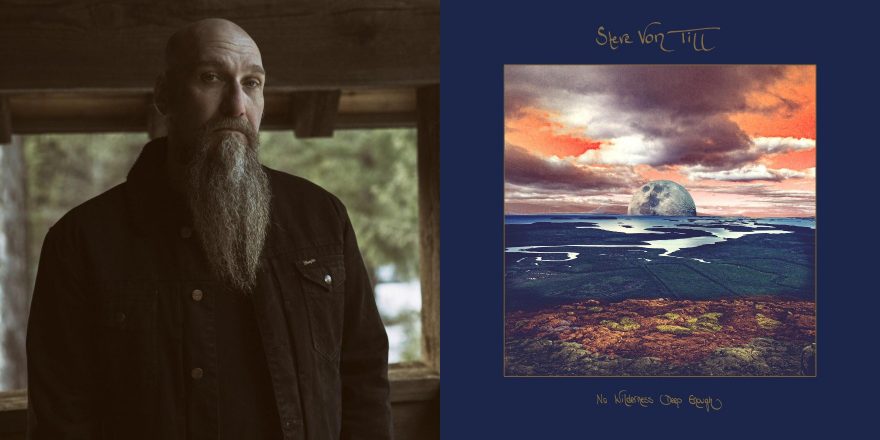


Steve Von Till has charted an extraordinary musical path over the last several decades, from his main duties as singer and guitarist of the boundary-breaking Neurosis, to the psychedelic music of his Harvestman project and the unique folk songs he’s released under his own name.
His latest solo release, Alone in a World of Wounds, is out now
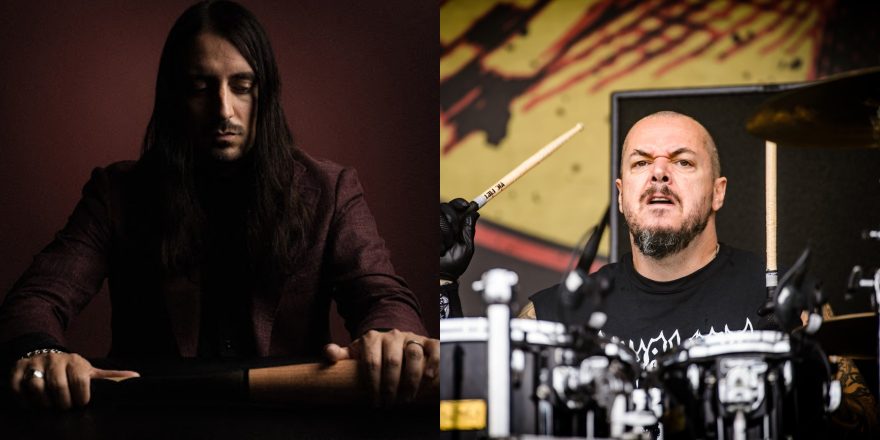
Steve Von Till is a musician, educator, and poet, who performs as a singer and guitarist in Neurosis and solo under his own name; Ian Lynch is a multi-instrumentalist and songwriter who plays in the Dublin folk group Lankum, and solo as One Leg One Eye. Steve’s latest solo record, Alone in a World of Wounds, came out this past spring, and to celebrate it, he and Ian caught up about Irish mythology, shamanic visions, and much more.
— Annie Fell, Editor-in-chief, Talkhouse Music
Steve Von Till: Hey, Ian. Good to see you.
Ian Lynch: Hey, Steve. How’s things?
Steve: Been good, man. Has it been, like, two months since we met in Holland?
Ian: Yeah, a month and a half, two months, since the Roadburn Festival.
Steve: It was great to finally meet you. As I told you there, I’ve been a fan of Lankum since a mutual friend of ours sent me a copy of Cold Old Fire. Instantly rang my bell.
Ian: That was quite a while ago now, wasn’t it? I think 10 or 11 years since that record came out.
Steve: To me, it was really fresh. I’ve been a fan of traditional folk music — not a scholar like yourself, but a fan — and I don’t know if it’s just my punk rock nature, or what it is, but I love it when people take beloved forms of music and turn it on its head and defy the expectation. Whether it’s Dylan going electric and pissing everybody off at the Newport Folk Festival, or I’m sure Fairport Convention probably got a lot of flak for electrifying and turning traditional folk into rock. You do this not only with Lankum, but also with your project One Leg One Eye. And you’re a scholar of folklore and folk music, right?
Ian: Yeah. Well, first of all, to return the compliment: I think defying expectations is something that you’re no stranger to either, with your work with Neurosis or your different forms of solo output, all of which I have been a big fan of over the years. So likewise, it was a very big pleasure to meet you at Roadburn as well.
Traditional Irish music, I suppose, is something I’ve gotten very deep into over the last 20 years. I studied it on a theoretical level in university; I was lecturing on the subject. And as you know, traditional Irish music and song is an aspect of wider international folkloristics, and also just something I’ve been interested in in my personal life since probably I was a teenager. I think the whole idea of defying expectations or doing new things with a genre of music, particularly one that people feel as strong about as traditional Irish music — I don’t think I’ve ever come across a style of music where people have such strong ideas of how it’s meant to be done, and that there shouldn’t be any deviation from the way they see it. I try to keep that in mind, that there is a certain way of doing it and there is an authentic way of playing it. But for me, coming from a very different background of very different musical styles, namely punk and metal, I came to the conclusion that in order to be authentic in my performance of traditional Irish music, I had to find a way of bringing all the different genres of music I’m into together in a cohesive way. And that’s something I’m still trying to figure out, but I think with Lankum and One Leg One Eye, it’s very much a spotlight on where I’ve been at different points in that journey.
Steve: Yeah. There must be a big pressure, especially coming from a scholarly background — people get stuck in these conservative traps of, “You’re not allowed to mess with this sacred territory that is traditional folk music.” Which is ironic because, as your podcast Fire Draw Near illustrates, those songs have traveled across the ocean and back multiple times, and across different landscapes and morphed and changed, just like the more modern forms that are influencing our stuff. Rock & roll isn’t even that old, electric instruments aren’t even that old, yet it’s morphed so, so much in 60 years.
Ian: Absolutely, and will continue to do so because that’s simply the way that culture works. Things morph and change and evolve in all kinds of different ways. And I think with Irish music in particular, at any point in time, you can look back and you can see that it has taken on stylistic changes, and it’s been influenced by whatever contemporary music was at the time, whether that’s the variety music hall songs of the 1800s, or ballad street singers even earlier. There was always new instruments coming into Ireland, like the fiddle — you know, the fiddle wasn’t always used with traditional Irish music. The concertina only came in less than 150 years ago. The bouzouki was a much more recent addition. So there’s always these changes happening. It’s a very dynamic tradition. And I think what we’re doing is just the latest iteration of that. And for the more conservative musicians out there, or the people that want to maintain the tradition as it is, luckily for all of us there’s so many people who are doing that to a very high level. Knowing that that’s happening by itself makes me feel like I’m OK over here doing my weirdo shit. I’m not going to affect the inner core of the actual tradition, you know?
Steve: Yeah, thank goodness you are. I think all the forms need a foot up the rear once in a while to kick it into the future, and to keep it relevant for young folks.
Ian: Yeah, I think so. Because I think without that relevance, it stops to be an influential force. It loses a certain kind of vitality. There’s this almost Darwinian element to folklore, that as soon as something stops being relevant to people, as soon as it stops resonating with people, it will just fall away and die. And that’s absolutely not something that I would want to see with Irish traditional music.
Steve: Yeah, I agree. I think I’ve taken the same approach to both the heavy music that Neurosis was a part of, and moving on to even my own stuff. It’s just distilling it into its nature, finding the core essence of what the music is and creating something new and original — and, like you said, authentic — based on these influences, based on traditions, based on what came before, but taking it somewhere new, pushing the envelope. For me, it’s been about emotional purity. Does it move me or not?
Ian: When you were working with Neurosis in the past, were other people’s expectations and perceptions of how heavy music should be something that you took into consideration? Or has it been more about challenging your own understandings of music and how it should go?
Steve: I think it definitely came from challenging our own ideas of what we wanted our music to be. Much like folk music might get backlash, we got backlash. We came up in the mid-‘80s DIY punk scene in the Bay area; all of our friends come from it, our contemporaries. But as soon as we realized that we wanted to sound like what, to us, a heavy band embodying the spirit of what it’s like to be sensitive, emotional human beings contemplating our place in the universe would sound like, it couldn’t have these boundaries of hardcore. It couldn’t have these boundaries of traditional punk or metal. We started playing with sampling and using other instrumentation and, again, distilling it into its raw form. We were equally wanting to reference Public Enemy’s use of samples, or early Ministry’s use of sampling and electronics as we were referencing Throbbing Gristle or pre-Dark Side of the Moon Pink Floyd or Black Sabbath or Killing Joke and Black Flag. Just taking all these things we’ve learned and making something new to it. And we got a lot of grief. We had people shouting at us. Once we showed up with keyboards on stage, they started shouting, “Faith No More!” [Laughs.] That was their only reference to it. And we were thinking, “Wait, Killing Joke had samples. What are you talking about?” Even Maximum Rocknroll, which was kind of our punk community hub at the time when Tim Yohannan was still alive, he called us “progressive rock.” He wouldn’t let us advertise our record in the magazine because he thought it sounded like Yes.
Ian: Wow. Which album was that for?
Steve: Probably Souls at Zero or Enemy of the Sun. So punk rock, at least that era, turned out to also have rules and to be close minded, and we had to go find our own people wherever they were.
Ian: It seems to be the way it works. And I think it takes certain people or groups of people to really push those boundaries at first. It seems like there’s backlash against it, but then 10 years later, you look at the landscape and to so many people it’s become the norm.
Steve: Yeah. Then you get credited with starting a genre, which is never your intention anyway, because the genres don’t make any sense.
Ian: So, Alone in a World of Wounds — does that fit in to that trajectory? What do you feel like you’re looking into or investigating or trying to interact with that you haven’t done before?
Steve: I have to say that this period right now, as I hit my mid-50s, feels like my most inspired time ever in a lot of ways. I mean, I did three Harvestman records last year and this solo record, Alone in the World of Wounds, really does feel like the record of my life up to this point, at least as a solo artist. It’s a culmination of everything I learned from being a part of that mid-‘80s DIY punk movement, from being part of a collective like Neurosis, of pushing boundaries. The hardest part has been learning to own being a songwriter and being a singer and not just being a member of a heavy noise thing where you can kind of hide in it. There’s nowhere to hide in this type of music. And I’m not a natural performer — it was really punk rock that gave me permission that I didn’t have to be good enough, I just had to confront my fear of being in front of people in order to express myself properly and to feel like I’m a part of making culture. So this is kind of the culmination of all of those things, but it feels also the most exposed, that I’ve put myself out there in a way that is more vulnerable, ironically at a time when I also feel the most sensitive.
I feel like my sensitivities to the things around me have really become heightened and intensified. It’s wallowing in all of that; it’s a deep dive into what that feels like, the sorrow and the longing for things. I’m not even sure what they are, but I know that it has to do with loss, and I know that it has to do with a lack of connectedness to the more-than-human world, to the aspects that would that would make us feel that we are part of the universe, part of the cosmos. Much like punk was as a teenager, the only sure way I know to stay sane or to feel like I’m where I need to be is making music and being a part of the culture of independent music. It’s when I feel most connected.
Ian: Yeah. Because I feel like you can kind of grasp all over the world and all the Western societies and all the places we go, there is a deep ennui that underlies most things. I think a lot of people, we can’t even articulate it most of the time, but there’s a deep sadness, and I suppose what you’ve referred to as the great disconnect.
Steve: Yeah, for sure. I think even the people that seem opposed to what we’re saying, they’re acting based on a fear, because they’re also feeling that. They’re feeling that wound deep inside, and it scares them. So they act in a reactionary form denying that that exists. I really think that music and poetry is one of the few ways that we in the modern world can walk in this modern way of being and connect to things that are timeless, or connect to each other, connect to ourselves.
Ian: Yeah, I think so as well. I think most forms of creativity, whether it’s music, poetry or creating art, they seem to be the most readily accessible ways for us to delve into that other sphere of existence, or whatever it is you want to call it. At least for me, anyway, I’ve definitely come to the conclusion. Because, kind of what you were talking to — I definitely had, I suppose, a resistance against even calling myself a musician for a long time. I never wanted to be that. I was, “No, I’m this or that, but I’m definitely not a musician, I just happen to be in this band, and we just happen to be doing really good at the moment.” I suppose it was a fear of owning that side of myself, and also just general imposter syndrome having this newfound popularity for a band I’d been in for a long time and not really being sure how to handle it. The way I did for a while was to just completely deny that that was happening. I was like, “No, it’s just all a big mistake. In a year or two, everyone will have forgotten about us, and I’ll just be back to doing whatever.” So it was a long and arduous path to get to the stage where I could be like, “No, I am actually a musician. I’m a person who makes music, and I need to make music, and I need to create in order to feel healthy and sane.” It’s almost like it’s part of a daily mental health practice for me at this stage, you know?
Steve: Agreed. I also have been viewing it as a wellness practice in recent years. It’s become very clear that it is a way to stay well, and my imposter syndrome rages constantly. But again, I give everything to punk rock for somehow giving me the ability to ignore it, or at least to not pay enough attention to it to stop me. It’s never stopped me. It’s always there, but it doesn’t stop me.
Ian: Yeah, I suppose I would be the same, because my sole experience for a long time was playing within the DIY punk and hardcore scene, and I never gave a second thought to my musical ability or my ability to play instruments around that. It never really entered my mind. I think it was only when I went into the traditional music world, I started to look at myself under a different kind of lens, and that totally freaked me out. So it was a bit of a journey back out of that world to be like, “I might not be the best musician or performer in any of these things, but when I combine them all together, I have my own voice and that’s the only thing that matters.”
Steve: I feel exactly the same. I’m not a great player, not necessarily a great singer, but my ability to combine all the things I love and put it through my own filters and edit my ideas into something cohesive that I enjoy — in fact, I read this in a book when I was a really young man, that if you create something that feels compelling and emotionally moving to you, you actually have a responsibility to share it with the world because there’s other people that might need it.
Ian: Yeah, 100%. I read Rick Rubin’s book about creativity last year, and he talks about similar things. And while you’re making something, your only responsibility is to the creative idea and to bring that into the world in the most authentic way you can. And thoughts of what other people think of it, that shouldn’t come into the equation at all. That doesn’t matter. It’s all extraneous. Your own responsibility is to the idea, to get it out into the world, and you move on and you do the next thing.
Steve: Right. When I was getting ready for us to talk today, I was revisiting the One Leg One Eye record [2022’s …. And Take The Black Worm With Me], and I love getting absorbed into all those dark textures and all of the really deep reinterpretations of what folk music could even take. But then we get to that last song, “Only the Diceys” — what a beautiful vocal melody. That in itself is timeless. I could picture someone like Shane MacGowan singing something like that and writing words like that.
Ian: Thank you.
Steve: But the beautiful contrast is that it’s on that seasick bed of what would normally be a beautiful guitar part turned into something a little off and otherworldly. Which got me to thinking, when you’re thinking of other worlds — and I think of my trips to Ireland as a young man — how much do you think that growing up in your ancestral homeland has influenced your music and how you approach it?
Ian: I mean, massively, and it’s been there to some degree or another, I think, in all the music and projects I’ve made, going back to my teenage years. Whether that was in a positive or negative way. Because for a long time, I had a real blockage when it came to Irish culture. I had a really strong reaction to that kind of stuff when I was growing up in school. I was a 12 year old punk rock anarchist getting heavily into Subhumans and Crass and everything else, and my interactions with Irish language and Irish culture were basically interfaced by these very conservative gatekeepers in my life, like religion teachers, going to a Christian Brothers school. So I for a number of years lumped it all in the same basket. I was like, “It’s reactionary, it’s nationalistic, it’s conservative, right wing stuff.” And then growing a bit older — I was 18 or so and I went to a punk festival over in Leeds, and I was chatting to somebody, a Danish fella, and he asked me some questions about Irish mythology, and I couldn’t answer him. I didn’t know enough about it. I kind of felt ashamed of that, and I started thinking about it in a different way.
I went back and it was a process of self-education. I started to teach myself the Irish language, and rediscovered this whole wealth of amazing material, and a lot of it to do with the more folkloric and mythological elements. And I was kind of just angry. I was like, “Why didn’t they teach me this stuff in school?” If they had told me about these stories, about the sovereignty goddess, these folkloric tales about why you shouldn’t fuck around with the sea, an abstract personification of the sea — all these different amazing things I was coming across — I would have been so interested to learn about it, and it would have really encouraged me to learn more about the language.
So I suppose Irish culture would have popped up in my music that I was doing, just adolescent punk rock stuff, maybe a negative way. We would have had a song that was to the tune of the national anthem, but you’re singing about how shit it is in Ireland. [Laughs.] But then post this phase, in my early 20s, I would have started bands who would have wrote songs in the Irish language. So I think ever since then, I’ve been really delving into it heavily in the music. And the older I grow, I get more into it, and I’ve learned how to personalize it a bit more or find my own path within that and find the parts of it that I think are very inspiring. When I was in university 15 years ago, I studied the early Irish language for three years. That’s what my degree is in, the Irish language from the from 7th to 10th centuries AD. In that period of time, there’s so much there. There’s the legal tracts which tell you all about the amazing aspects of native Gaelic law that we had — we had an amazingly developed legal system of our own, which was destroyed basically.
Steve: And that’s probably why you weren’t taught the way the mythology connected with the language in these ancient ways, because it’s part of that disconnect. They didn’t want to have you connect to the landscape in a meaningful way, because that would probably be un-Christian.
Ian: Yeah, it’s funny, because all of our mythology comes through the lens of Christianity. You know, it was the monks who were writing down these tales. It was an oral literature beforehand, but it was the monks in the monasteries writing down these stories. And of course, it’s hard to tell how much of it was their influence and how much of the actual tales they are, but you do catch little wisps of truth. There are elements that are still in there that obviously come from an earlier time. And those are, I think, the really fascinating parts of our culture. There’s just endless inspiration there. I think they really speak to something that’s deep in there. It’s like a way of getting a spiritual nourishment from the land, and it’s something that’s just not there in a lot of ways in modern society. I think there’s a real sickness there, and there’s a hunger.
I think of when I was a kid, I’d go out into the fields behind my house and I was drawn to go to this place — it’s not really wild, it’s not like pristine nature. At the time, it was farmer’s fields that were on top of an older racecourse where they used to race horses, and there was the ruins of a racecourse there. But just because there was some kind of wilderness, I was drawn to it. It’s almost like when you’re really thirsty, you’ll suck water out of a muddy, stagnant puddle if you have to. I used to go off to those fields and I’d spend hours by myself and lie around in the grass, and just want to feel like a part of that wilder landscape. I think people really have that need.
Steve: I totally agree. I think it goes back to what we were talking about earlier, that sorrow and that sickness and that illness and that hole that you called the “ennui.” Deep down, we know that we are the wilderness, that we are inseparable from nature. I spend way too much time wondering where the snap in humanity might have come, whether it was the first industrialized agriculture, or the first time we started manipulating the landscape. Who knows? But ultimately, that doesn’t matter. We need to listen to those whispers that I think we get from the mythology you’re talking about, that might enchant the landscape. If the landscape is alive, if the stones and the trees and the rivers and the mountains have, for lack of a better word, spirit of their own, if they are animate and we are in proper relation with them, we wouldn’t do the things that we are doing to the planet, which is causing us to do things to each other. Once we gave ourselves permission to have dominion over land and over the earth itself, that gave us the right to have dominion over other human beings, over other animal species, and probably causes all greed and war. Not that we’d be perfect without it. Not that there was ever some golden age of perfect humanity. But we’d be in a way better spot. We know we are made of the same matter and energy that everything else is made of. We are children of earth, biologically.
Ian: Yeah, absolutely. I also think when people are aware of their surroundings — when you think back to an earlier point in our society where every little hill or rock on the landscape would have a name and a story attached to it — when people are aware of this lore and they have a personal relationship with the landscape, you’re not going to go out and dump toxic sludge all over it.
I really feel the disconnect that you speak of, especially when I’m in new world countries like Australia or the United States of America. You can really feel like it’s a country where people do not have that personal connection to the landscape. And we can all see what the result of that is. But I think as well, the scary thing is that that’s given form to a certain kind of rapacious capitalism in the States, and that’s something that’s being imported back into Ireland now ideologically — and has been for a long time, this way of viewing the landscape as a commodity and something that you just take what you want from it and it doesn’t matter about the consequences because we don’t really need the land to live off. And that’s what’s so ultimately disastrous about our current way of life.
Steve: Part of my longing and my sorrow in my music, I’ve realized throughout my life, is wanting what maybe you have more. As an American. My ancestors just kept heading west, and so we have no ancient stories to these landscapes that we find ourselves in. In order to have more connection, I moved to 12 acres of forest in North Idaho, because I realized that I did have a busy enough lifestyle where if I didn’t live in nature, I wasn’t going to be able to be a part of it. It can’t be a place to go visit. If I was going to understand what it means to be a part of it, I needed to live in all four seasons. I needed to wake up and go to sleep in a wild landscape. But still, we’ve created our own stories. We’ve created our own little monuments here on the property. And I’ve gotten to know it quite a bit, but it’s still not the same as having generations back to time immemorial with a place, like the Indigenous folks of the Americas have, where like you said, each hill probably has a name that relates to, if not actual history, a mythological story of their understanding of their place in the universe. I feel we’re missing that in the modern West, for sure.
Ian: Yeah. I think that what you said there, having an understanding of your place in the universe, speaks to our need for the narratives that mythology gives us, to have some kind of idea about why are we here in the universe. I think this point in time in particular is probably the first time since humans have been on the planet, living in societies with each other, that we have had no sustaining mythology to give us that groundedness. We have, over the last couple of hundred years, replaced it with a cold scientific rationalism that tells us if we look down into ourselves at the very, very smallest point, we are made of atoms, which in themselves are mostly empty. So most of everything is made of nothing. And if we look out to the heavens, we’re basically like biological accidents on this rock that’s floating through the infinite nothingness of the cosmos for no reason, and it’s just all random. That’s a very cold, dark way of seeing the universe. I think I would much rather, “We’re here because this old woman once was here and she dropped some rocks here, and that’s what gave rise to the landscape. And that river there, that was actually a giant snake that was banished by Saint Patrick, and as it was banished away it carved this great trough in the earth…” These stories that give some kind of meaning, you know? I think it’s just a sustaining thing, and that’s why people have always had these narratives, because they recognize it’s necessary. People need to feel like there’s a reason why we’re here.
Steve: Agreed. But without some sort of dogma that we’ve been given for the last couple of thousand years that makes only one truth possible, as opposed to more Indigenous perspectives, which I think you’re talking to, whether it’s Indigenous Irish or American. You have these stories enchanting the landscape, making it alive, making it accessible to people. I find, in some ways, science is catching up with it. We have to unlearn a lot of things from the Victorian age, and that empirical logical reasoning thing. But science is coming around to realizing that the templates we used to use of class and order and kingdom — the world isn’t necessarily made of scarcity and conflict. There’s as many examples of reciprocity and interdependence and cooperation, even among species of plants and trees and communication beyond our understanding, in bio systems that I think will eventually show us that the Indigenous ancient mythologies were saying the same thing, just in more poetic form.
Thinking about mythologies, I also wonder: We live in a new age, we can’t go back. I think we can reclaim whispers to take into the future with us, like little hints, but the ancient ones couldn’t have fathomed where we would end up. So we also have to make new stories, and we have to make new stories relevant to what we’re experiencing… In creating new mythologies with One Leg One Eye, you have a new mythology of “the black worm.”
Ian: I do, yeah. It’s come to feel to me like a personal deity at this stage, or something that’s almost totemic. It was an image that came to me when I was meditating one day a few years ago. It would have been around the start of when I was working on the One Leg One Eye album, and I saw this great, giant, glistening black worm, completely huge and terrifying and fearful. It was like a manifestation of all the self-loathing and darkness and depression I was feeling at the time. My idea was that I would go through this period of working on the album, and by working through the music, I would try and defeat this black worm.
I used to do this journeying where I’d listen to shamanic drums and would go into a kind of visionary state, and could go underground and talk to various creatures and beings. And it was after one of these — I basically had this conversation with a fox-headed being who told me, “No, you don’t want to defeat the black worm. You have to embrace it. You have to let the black worm become part of you and you have to accept it.” So I went back down and found the black worm again, and we embraced each other — I embraced this big, slimy, glistening, horrific black worm — and I came out of that, I felt like, with a greater understanding and a peace within myself that I hadn’t felt before. And that became a part of the narrative arc of the album. So the making of the album was almost like a ritual I went through to deal with this stuff in myself. After the whole thing, I was like, “OK, so it was all about the black worm, and now it feels like I should just incorporate the black worm into what One Leg One Eye is.” You know, as a representation of this darkness and how to let it become a part of yourself and recognize it. So, yeah, my relationship with the black worm is ongoing and it brings new surprises all the time. And it makes sense to me, at least. [Laughs.]
Steve: Yeah, I mean, the darkness is real. I love that that fox-headed being told you to embrace it, because it is a part of us and we have to come to terms with it. And I’m glad, for all of us, that we get this record out of it.
Ian: I think if you want your music to be healing for other people, it makes sense to me that you should look inside yourself first and deal with your stuff. And then once you are in an OK place to do that — like, if I hadn’t have gone through that process, I wouldn’t be playing live with One Leg One Eye like I am doing now. I feel like I can maybe bring this to other people and if anybody else can get some of that healing energy from the music, then job done, I’m more than happy. That’s what it’s become about for me. If I can just bring some kind of clarity or healing energy into other people’s lives, that makes me really happy.
Steve: For sure. I feel very much the same. And surrendering — I’ve had to learn that one over time as well. I never intended to write songs on piano with strings and French horn and synthesizers, you know? I stumbled into it by accident. But now I can walk forward with intent and say, “OK, now I recognize I love to sing into these soundscapes of texture, and they bring something different out of my voice that I would have never come across with a guitar in my hands.” I needed these synthesizers. I needed the harmonic complexity of the giant wood box full of strings that a piano creates to pull something different out of me. And without learning through the years that there is a magic, there is a universal creative force that, if you do let go and you let it take over, it’ll put you where you need to go. And that’s how we get these beautiful things that we get to share with others.
Ian: It’s been amazing to have this conversation with you, Steve.
Steve: Great talking with you too, Ian. We could keep going and punish the people that are peering in from the outside for a long time… I look forward to many more.
Ian: Absolutely, this is just the start of a larger conversation, I hope.
Steve: I hope so, too!