

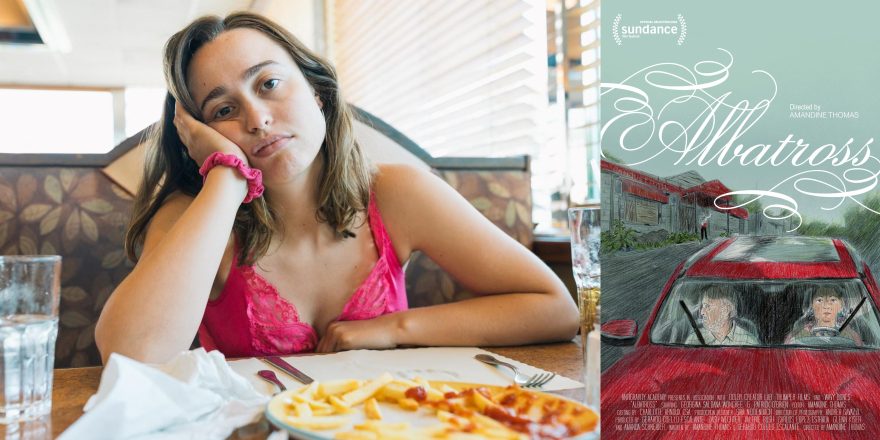
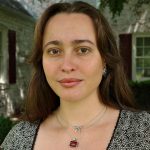
Amandine Thomas is a French-American director, writer and editor whose latest short film, Albatross, premiered at the 2026 Sundance Film Festival. She is one half of THUMPER, a creative duo with Gerardo Coello Escalante. Their short film Viaje de Negocios premiered at the 2024 Sundance Film Festival, and their follow-up, SUSANA, premiered at the 2025 Sundance Film Festival. She recently released a documentary short called hello beautiful please follow back. Learm more at her website.
I have never opened Blender before. I am trying to make a heart-shaped balloon and it is inscrutably difficult. I know I could put a sentence into an AI software and generate what it is that I want, but I don’t want to do that. Soon I will take a break and look at something pretty or horrendous on the internet. Then I will open another file and watch another three tutorials, and I will continue learning. Learning something new makes me feel small and stupid and also alive. It has been my sole reliable guide in life. As a child, I received two Most Improved trophies for sports in which I started out terribly and became somewhat decent. To this day, I think of these trophies as some of my highest achievements. Back when I was playing those sports, I never really considered that I would have to keep learning new things at a consistent pace as an adult, and that this ability would become my most vital as a filmmaker. I guess I thought I’d kind of come to some arrival point.
I made my first short, Cherry Cola (total budget: $11,000), while I was living at my parents’ in Virginia at 24. I had come home from New York after experiencing what could only be described as a nervous breakdown, which included a full body rash. I had been an actress; I went to drama school and everything. When I was an actress, I didn’t let myself believe I could be anything else, because I told myself that I hadn’t obtained the necessary skills. Once I was asked to write my own monologue for a commercial audition for a car company. After I presented, the casting director peered at me and said, “I think we might have a writer.” It took everything I had to not burst into tears during the audition, which would have in fact been inappropriate, because my character was supposed to be happy about the car. I did not get the part.
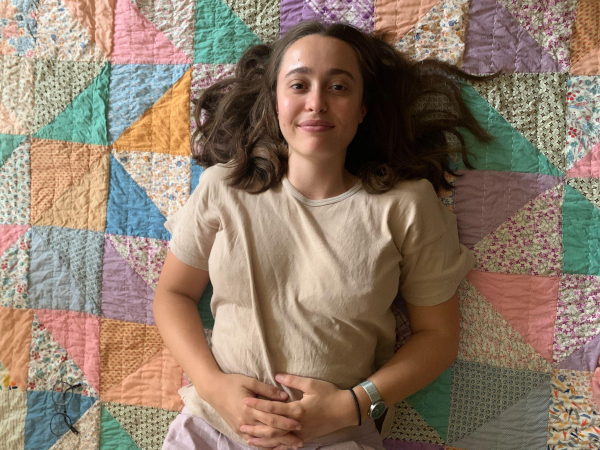
After my breakdown, I came home and felt like a total loser. I was embarrassed that I couldn’t maintain the momentum of my life. I was what they call “lost” and I felt guilty and stupid about it. I first took a road trip around the country by myself for a couple of months to “find myself.” During that time, I’d call friends and family and complain loudly to anyone who would listen that I felt like I was disappearing, like in a physical sense. I told myself I would become a farmer, but I quickly learned that farming in the United States was in fact a very challenging path. I got a job as a cashier and a waitress at places which frequently featured former high school classmates as patrons. I joined a quilting club at the church my mom worked at. I lied about my experience to get my first P.A. job on a small documentary shoot; when the D.P. saw that I could not in fact set up a C-stand (despite having watched a tutorial five times the night before), she said nothing and promptly did it herself. I am still so grateful to her for that. My grandmother would not stop telling me to go to law school.
I thought about going to film school, and then I looked up the tuition and stopped thinking about it. I figured I would make my own short and that would be film school. I took an eight-part online class about filmmaking at my local library from a website known at the time as Lynda.com. I read a bunch of books like How Not to Make a Short Film and In the Blink of an Eye. I made mini shorts on my cell phone. I complained loudly about how I was too insecure to make a short film, until a friend told me to shut the fuck up and just make it already. I crowdfunded and then used my savings to supplement the rest and then somehow I convinced a bunch of people to make Cherry Cola with me. I cannot emphasize enough that I did not totally understand the difference between a 1st A.D. and a producer, or a 1st A.C. and a gaffer. But I learned. I wrote, produced, directed and acted in the short. I applied to any festivals I came across and that was that. I had a film. I was a writer and I was a director.
During the pandemic, I was hired as a COVID compliance officer for a commercial shoot, despite having no real scientific experience with COVID or any other virus, for that matter. I learned a bit about viral pathogenesis, so I could speak confidently about it. A producer took a liking to me and it was the first time a man in the industry had offered to help me that did not include some innuendo about sexual favors. I took on enough production tasks as a COVID compliance officer that I eventually got to work in production. I got enough work to move back to New York and I figured working in production would be, again, my film school. I wrote stuff, and watched stuff; it was all school.
I wanted to make another film, but I could not afford to and someone told me you could only really crowdfund once. So I kept making little cell phone movies that I learned to edit in Adobe Premiere. When I met Gerardo, who would later become my partner and then my main collaborator, he was working as a 1st A.D., and quite accomplished. He was a bigger cinephile than me and we would watch movies together, some of which I fell asleep in. He wanted to write and direct too.
I will not mention the absolute unending tumult of my home and family life except that
watching my father become sicker and experiencing my family fall apart made me stop caring so much about maintaining financial stability, something that will become important in the next paragraph.
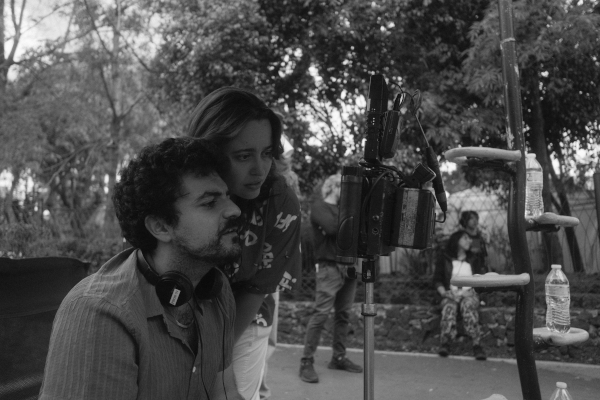
Gerardo and I had come up with the idea for our first short film, Viaje de Negocios, on our second date, while we walked by a raccoon eating fried chicken in Prospect Park. Six months later, we wrote a first draft, which we decided Gerardo would direct. Six months after that, we made the short. I had never edited a narrative short before. I edited in my multicam sync timeline and we ended up with some barely, but perceptible sync issues. Six months after that, we co-directed a second short, SUSANA, in whose timeline I did not make the same sync issues. We found out about our Sundance acceptance in the middle of preproduction for SUSANA, and I would be lying if I did not say it felt better than receiving either of my Most Improved trophies. We split the cost of SUSANA and spent all of our money on it. By the time we went to Sundance with Viaje de Negocios, we were in credit card debt. When we went to Sundance again the next year with SUSANA, we were in deeper debt. The majority of American emerging filmmakers I know either have their bills covered by family or are in deep credit card debt. My success as a filmmaker has been in direct correlation with my failure as a financially stable person. I currently have $1500 in my bank account. No health insurance, no savings.
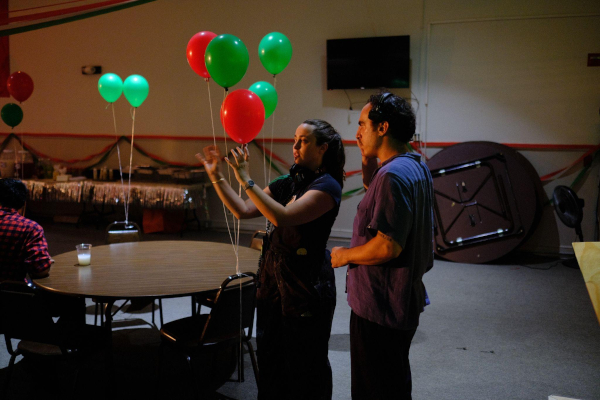
Later that year, I used phone recordings and learned After Effects to make a short documentary called hello beautiful please follow back, about my grandmother’s online love affair with a romance scammer. I released that film online in the spring of last year. I applied for grants with the film I wanted to direct, called Albatross, and eventually received one through a program with Antigravity Academy. We made the film in July of last year, and it premiered at Sundance this past January.
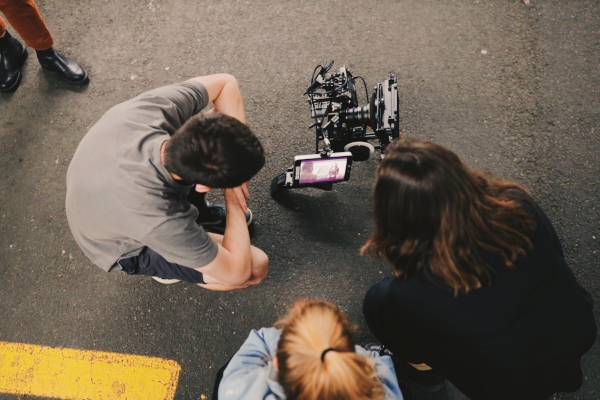
On our films, Gerardo and I used our production and A.D. backgrounds to make the schedules and to make the budgets, to find and negotiate locations. We’ve cast a lot of roles from the locations themselves. The scripts start out kind of bad and then they get better as we get more specific. I’ve found my experience as an actor is my most invaluable asset as a director and editor. All of these are skills I’ve learned and continue to learn through making work – skills I did not have before.
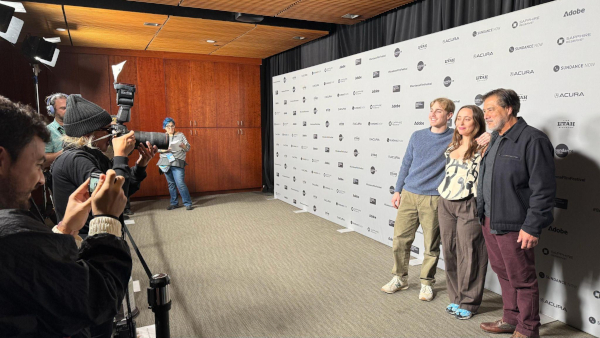
I realize as I write this that I never really graduated from the film school that I imposed on myself. Every filmmaker continues to learn and to grow throughout what they call a career. That, I believe, is kind of the whole point. But before I made any films, I was so stuck on thinking there was all this stuff you had to know in order to start. The truth is, you can learn as you make things. And if you can’t get someone to do it for you, you’ve got to learn to do it yourself. You’re allowed to learn on the job; everyone does. You’ll likely end up surprising yourself with how much it is you do know. Sometimes I feel like I know nothing, like as I work on this heart-shaped balloon. Sometimes I feel like I know a lot.
Making a film is a miracle and a heartbreak. It’s a miracle because of all the disparate elements that have to come together to become a film. Low-budget indie filmmaking requires a high dose of serendipity. It’s a heartbreak because making something real requires letting go of the thing in your head. The day after we wrapped on Cherry Cola, I sobbed to my friend because the footage wasn’t exactly what I had in my head. I thought it meant I was untalented or something. I look back at that film and I’m proud of the girl who went into it not knowing, who came out having learned.