

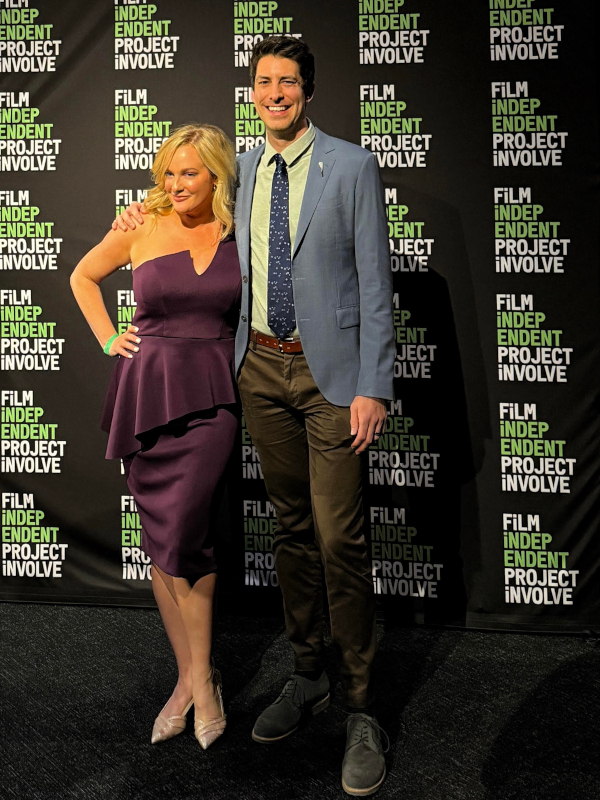
Jacob Combs and Laura Hunter Drago are Los Angeles–based filmmakers and Film Independent Project Involve Fellows. Jacob is a director-writer-producer and a recipient of the Cayton-Goldrich Family Foundation Fellowship. His shorts include The Orange at the Seder (Seattle International Film Festival, BFI Flare, and HollyShorts) and Without. His writing credits include Netflix’s Blockbuster as well as projects with Pixar. Laura is a writer/producer and recipient of the Sony Pictures Entertainment Fellowship. Named one of Austin Film Festival’s 25 Screenwriters to Watch, her screenwriting has won awards from Austin Film Festival and WeScreenplay Labs. She wrote, produced, and directed the Webby Award Honoree podcast The Crime at Camp Ashwood. Jacob and Laura’s Project Involve short film, Tradwife, is screening at Slamdance at the DGA Theater in Los Angeles on February 22 at 7:30pm. (Photo by Fred Hayes / Stringer via Getty Images.)
Getting into Film Independent’s Project Involve fellowship presented us with a huge career opportunity and a daunting challenge: the program brings together creatives from different disciplines who start as complete strangers and work together over the course of a year to make a short film. Blending the personalities of a group of mid-career creatives who are essentially on a yearlong blind date could have been a minefield of conflict – especially for a writer like Laura, who had put so much thought into the crafting of the script, or a director like Jacob, who had the responsibility of visualizing that script while staying true to its core. (Plus, we both have Aries sun signs, so we have Feelings with a capital F.)
We both experienced sleepless nights imagining working with someone who might not like our vision for the story or the film, or who we might just not get along with. But the plot twist here was … we actually got along really well, and ended up finding a creative partnership and friendship that extends beyond the fellowship. While we’ve joked that the many unexpected synchronicities we discovered along the way felt like luck, looking back, we made a series of decisions and built a strong communication system early on that made things go as smoothly as they did.
Coffee, Meet Hot Chocolate
Months before directors were assigned to projects, we got together for coffee – or more accurately, hot chocolate. Getting to know each other as people before we started working together as artists made things a lot easier later.
Jacob: Even though it makes me feel like a child, I cannot drink caffeine after about 2pm, so when we met for the first time, I was almost embarrassed to order a hot chocolate … and then immediately delighted when Laura did the same. I wanted to come across as sophisticated – the kind of person who drinks espressos before all-night marathons of inspiration. But showing Laura from day one who I really was kicked off a long conversation that kept revealing experiences we both shared as theater kids who had lived in New York and realized our true goals as artists later than we might have liked. From that first day, I could tell we would be friends first, even if we didn’t end up becoming collaborators … luckily we got to do both!
Laura: Jacob had reached out to me with thoughtful comments on my script, and to set up getting coffee together. I agreed to the coffee even though I had given up caffeine completely about six months prior (and realized that maybe I never had anxiety, just a coffee addiction). So, when he ordered a hot chocolate, I was relieved! We had a pretty vulnerable conversation about the imposter syndrome we were both feeling in the program and the extremely winding roads we had taken to get to where we were in our careers. I remember clocking quickly that it was easy to be honest with Jacob.
Script Development with Ibsen Inspiration
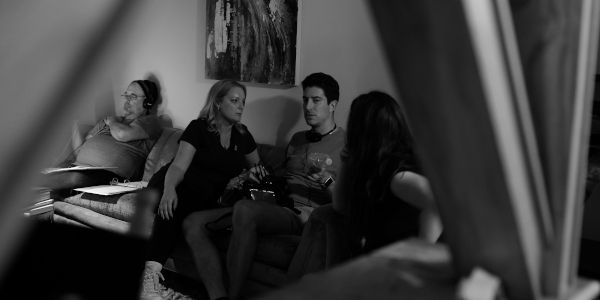
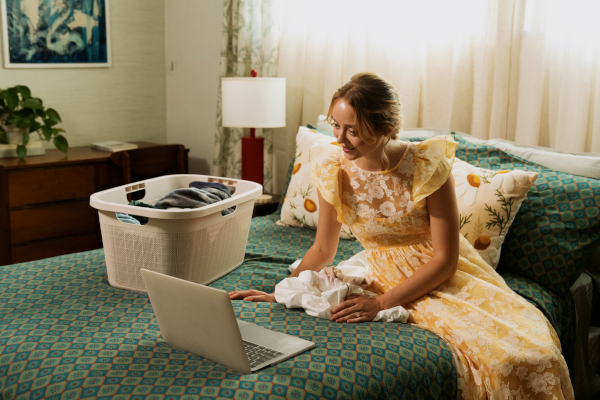
Through an intense development process, Laura made changes to the script that would become Tradwife, our short film about an actress turned tradwife influencer whose audience is put at risk when an online troll exposes the cracks in her picture-perfect marriage. Being upfront about our mutual excitement around the short rather than playing it cool set up an enthusiastic atmosphere that made things seamless once we started working together.
Jacob: One of the fun (read: at times painful) elements of Project Involve is that directors aren’t allowed to give feedback in the development room before they attach to projects. I had been excited about Laura’s script from the jump, with its blending of tones from almost-zany comedy to edgy thriller, and above all, the theatre actress who was its protagonist. But in one draft, Laura changed the play the film’s main character had been obsessed with for years from Arsenic and Old Lace to A Doll’s House. I remember literally sprinting to Laura to say how much I loved the change because it suddenly made the character and her motivations crystal clear to me. It was like discovering something new, but realizing it was just out of the corner of your eye the entire time.
Laura: Developing a script in a room full of people with different tastes, I realized I couldn’t please everyone and needed to focus on who I thought was most excited about the project. One of the main debates people in the sessions had about my script was if it should keep the theatre tie-in that I’d baked in from the start. I really wanted it there and also knew that Jacob was interested in that aspect of the story … and by this point, I also knew I wanted to work with Jacob. The night I pitched switching the play to A Doll’s House to the development room, I was secretly pitching both that idea and the movie to him, specifically. So, I was extremely unsurprised when he ran up to me afterwards.
Casting Mind Meld
The discovery of our top choice for our lead actress was a moment of unexpected serendipity.
Jacob: The biggest challenge with casting was that we had so many ideas of who could play the lead role. Our team made an extensive wishlist of actresses, and then it was my responsibility to narrow it down so our casting director could make offers – after all, I was the one who’d be working most closely with our actors. I was feeling the pressure, but when I looked at our list, one name jumped out: Madeleine Arthur, who had been added by none other than Laura! I had worked on a Netflix show Madeleine had been a part of, and I had immediately fallen in love with her comedic chops and her depth for portraying a character emphatically. I knew she could walk the script’s fine line between comedy, satire and danger.
Laura: As a former actress, I think about casting as soon as I start writing anything. I had a strong memory of Madeleine from the To All the Boys I’ve Loved Before series. She’d stuck out for her energy and range, but I added her to our list without any idea that Jacob had worked on a project with her. When you go off to independently think of ideas and then come back together with something so aligned like this, it feels like the stars falling into place. We were thrilled Madeleine said yes, because she was the perfect person for the role.
A Midsummer Night’s Shoot
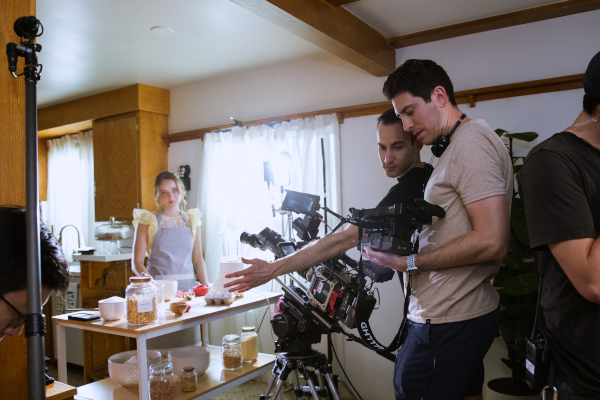
Our three days on set for Tradwife were whirlwinds, with an ambitious schedule (half our film takes place at night, and we were shooting during the longest days of the year). We supported each other on set as cheerleaders and critics, pushing the film to be the best it could be.
Jacob: Tradwife was the first time I had directed something on screen that I hadn’t written, and it was such a delight to go to Laura anytime I had a question about shooting something differently than she’d scripted it. Because we’d worked so closely in the development process – and because of our shared theatre background – we saw the different takes as opportunities to try new shades to the scenes and dialogue. Of course, we were helped tremendously by our two amazing actors, who brought thoughtful preparation and introspection to their characters. But in a way, Laura was my emotional barometer on stage – I could come to her after a take and say, “I felt that. Did you?”, and get immediate feedback about anything that wasn’t quite connecting, or any details I had missed.
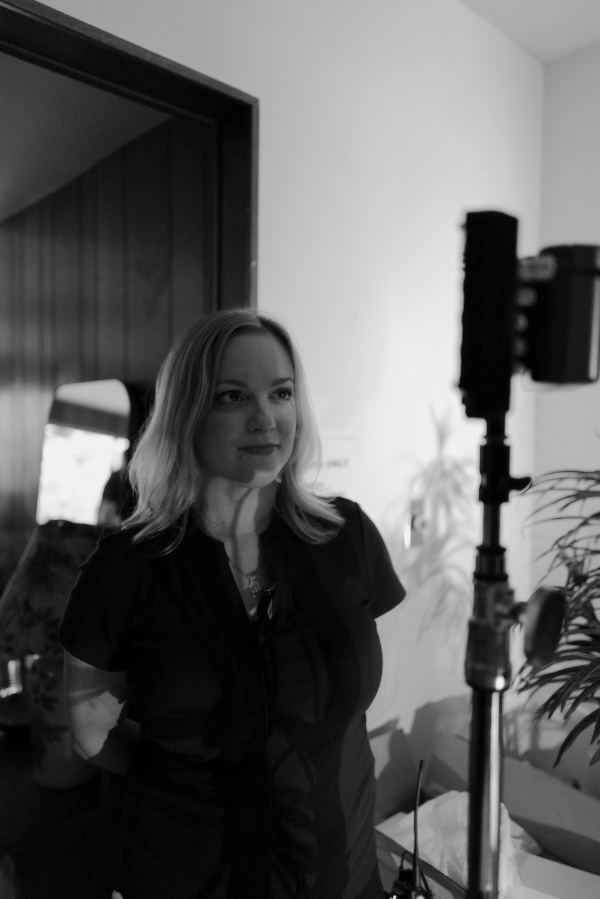
Laura: For me, production was kind of like sitting on a peaceful children’s theme park ride and watching the whole thing come to life. By this point, Jacob and I had built a real friendship and I fully trusted he was doing a great job. I was mostly there to give a thumbs up and stay out of anyone’s way. Jacob, on the other hand, (obviously) had a lot to do, and a lot of people to please. We did nightly debriefs over fast food (with one particularly heart-breaking disappointment thanks to a broken Wendy’s Frosty machine). Taking a moment away from the hustle of set allowed us to keep track of how things were going and also appreciate the experience.
Navigating a Unique (Read: Headache-Inducing) Post Process
As the saying goes, a film’s story is found three times over: once in the script, once on set, and once in the edit. Our short had a post-production process unlike anything either of us had experienced, because much of the story takes place through on-screen live-streamed comments. We could change and revise those all the way until the end of post-production, which created both opportunities … and some real challenges.
Jacob: I really underestimated the amount that we would be “re-writing” in post. There’s always a huge element of reimagining that happens in the edit, but on Tradwife, we could essentially rewrite dialogue as long as it was something typed on screen and not something an actor had said on set. Laura rewrote about a million comments through the process and was always game to try something new, but I had to learn what an unusual position that put a writer in compared to more traditional post processes. Rightfully so, Laura saw every word that ended up on screen as a manifestation of her writing. To be honest, it took me a while to fully understand that and learn how to juggle the exploratory processes my editor and I were doing as we tore things apart and put them back together, with the parallel process of asking Laura to rewrite material after all the footage had been shot!
Laura: Post was the most difficult part of making the movie for me. For the reasons Jacob mentioned above, I was balancing trying to give him the space to have his process with our editor, while also feeling like that process was making it difficult for me to get a handle on what ended up being a major part of the film’s writing. It was the first time I hadn’t felt 100 percent on the same page with Jacob, and because we have intentions to work together on many other things, it was important for me to communicate with him about the issues it was creating. We had a couple tough conversations (Feelings with a capital F, remember?) which weren’t fun, but taught me how much I cared about both the film and my working relationship with him. We ended up creating a process for the “post-writing” that not only made everyone happy but also is one of the things we get the most positive comments on about the film. Sometimes working through something tricky together makes the whole thing stronger. I think we learned a lot about each other in the process that will help us when we make our next film together!
—-//—-
There’s a weird inherent tension in the power dynamics of Hollywood: writers have so much responsibility to be vulnerable, creative, and open to constant notes and rewriting … and then they have to hand their scripts over to directors who often do pretty much whatever they want as they bring them to life. But in this experience, Jacob saw the unique promise and delightful specificity of Laura’s script, and Laura saw the vision Jacob had for the project and trusted it completely.
Our respect for each other led us to a different type of collaboration: our approach was more about creating opportunities for each other rather than just for ourselves. We had so much fun making this film and we can’t wait to share it with the world.
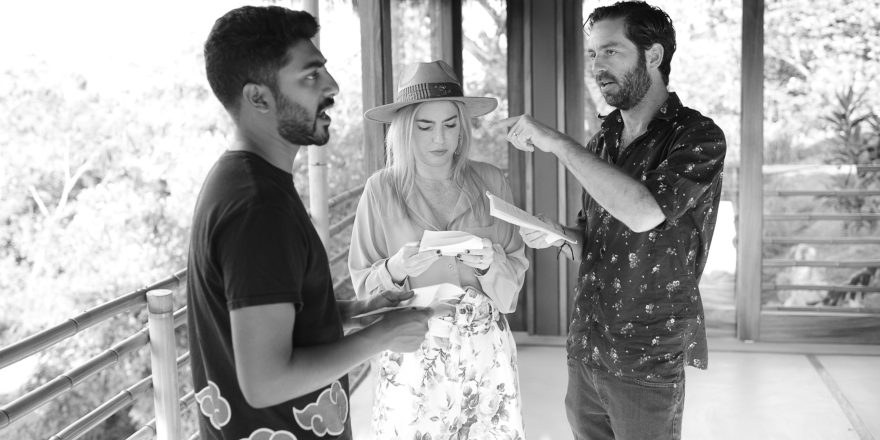
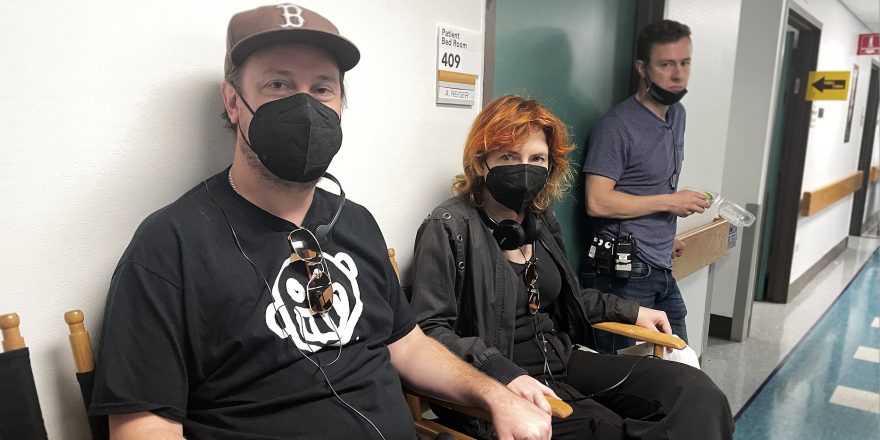
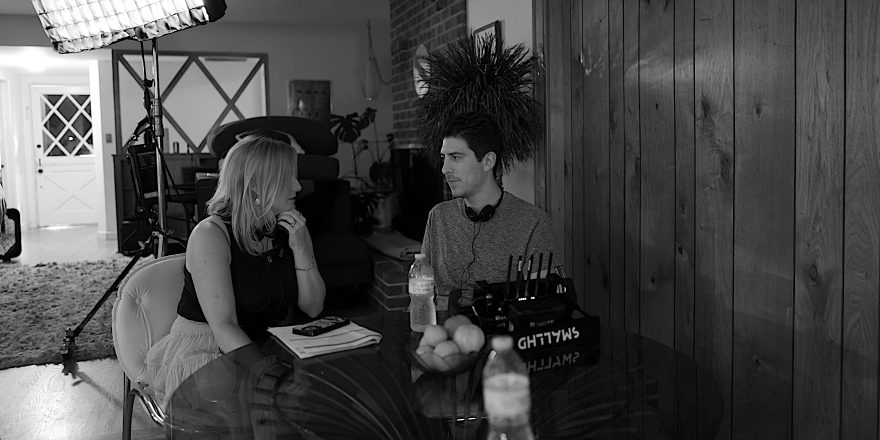
Featured image shows Laura Hunter Drago and Jacob Combs on the set of Tradwife; all images courtesy Laura Hunter Drago.