

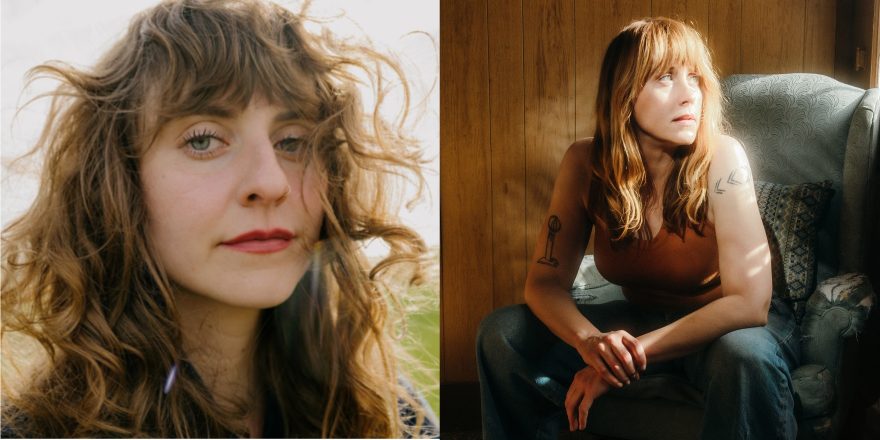

Hannah Frances (b. 1997) is a vocalist, guitarist, composer, and poet melding avant-folk, progressive rock, and jazz. Her latest record, Nestled in Tangles, is out now on Fire Talk.
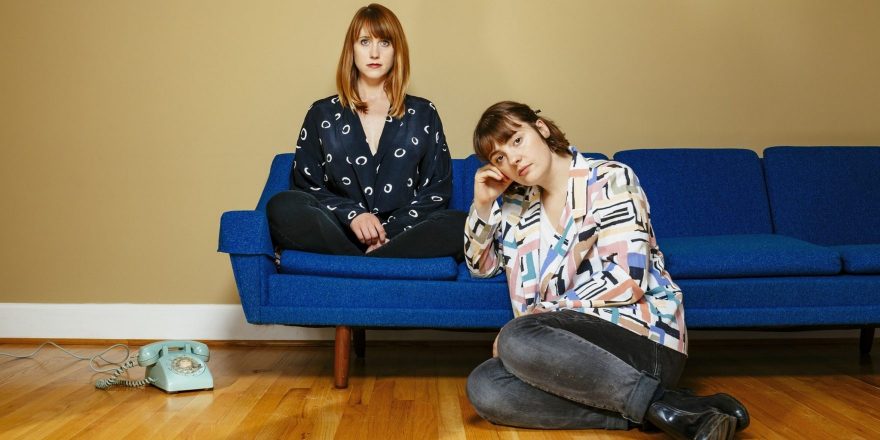
Jenn Wasner is an artist based in LA who releases music solo as Flock of Dimes, and as half of the duo Wye Oak; Hannah Frances is an artist based in Vermont. Both put records out earlier this month — Hannah’s Nestled in Tangles and Flock of Dimes’ The Life You Save — so to celebrate, she and Jenn got on Zoom to catch up about it all, and much more.
— Annie Fell, Editor-in-chief, Talkhouse Music
Jenn Wasner: Well, first of all, let me just say: it’s so nice to get a chance to talk to you when I’m not trying to sell merch. [Laughs.]
Hannah Frances: I know, that’s how we met! I was buying a CD.
Jenn: It was really lovely. Hannah came to one of my living room Undertow shows in New Hampshire, and we met at the merch table. I was totally geeked because I am a big fan of yours, and it was so nice that you were there. One of the nice things about those shows is that I get to talk to people but, yeah, sometimes I wish I could split myself in 10 different pieces and talk to everyone at once, and it’s just not possible.
Hannah: Totally. I also get really overstimulated at the merch table and want to talk to everyone and give everyone my full presence, and that’s really hard. So when I do meet people at a show, I’m like, “I probably wasn’t all the way there…” But I remember that show — it just felt so kismet, because Adam Schatz was there, who I had been wanting to meet, because we do live super close to each other and we have lots of mutual friends. You shouted him out, and I was like, Adam Schatz! That’s him! That’s the guy I’m supposed to meet.
Jenn: He would love hearing himself being referred to as, “the guy I’m supposed to meet.”
Hannah: [Laughs.] But it was a real honor to have connected with you at that show, and to be here with you today. You’ve been a long time inspiration of mine.
Jenn: Thank you. That’s very genuinely so moving to hear. Your record is absolutely phenomenal. I’ve been listening to it a ton, and it’s just fantastic.
Hannah: Thank you.
Jenn: And it’s such a wild stroke of additional kismet that we are record release day buddies as well.
Hannah: I know! And there’s a lot of similar themes that our records touch at, which I think also feels really kismet.
Jenn: Yeah. We’re both making just really light, easeful, non-heavy or emotional… [Laughs.]
Hannah: [Laughs.] Yeah, super easy music that you could have on at a coffee shop.
Jenn: Here’s hoping. How is your experience of putting this music out into the world going so far?
Hannah: It’s been super rewarding. Obviously, there’s a lot of back end labor involved, so it’s easy to kind of lose touch with what the meaning of it all is, because I’m so wrapped up in, like, making sure I’m posting the right things and posting at the right time and promoting myself. It’s amazing how much space that takes up creatively and emotionally. I think that’s been a huge part of the last few months and rolling this record out. But I feel really proud of it. I still feel so connected to the music, and I’m so excited by it. It almost feels surreal, because I’ve been living with these songs for so long… I think being perceived is such a complicated experience, and what we do opens yourself up to rejection and not resonating for people and it not being what some people want to listen to. And that’s fine. I’m very tender, but I have a tough enough skin to be able to continue to release music and let water roll off my back.
Jenn: I don’t know if this will speak to you, but I feel like what you’re describing — sort of the ability to emotionally compartmentalize enough to do the work, like the actual nuts and bolts of putting the stories up — it’s funny because my ability to emotionally compartmentalize enough to be able to do that is sort of an artifact of the very same sort of emotional compartmentalization that has allowed me to survive generational trauma. You know, it’s all the stuff that’s in the record. And so I’m kind of having a weird time with it because part of making this record was an attempt to learn to stay with my own feelings and my own inner landscape a little bit more. And yet there is sort of this tool in my tool kit that allows me to power that stuff all the way down and just get the work done. Which is helpful, but strange, because it almost feels like this is the exact thing that I’m trying to learn how not to do, and yet I still sort of have to do it.
Hannah: Yes, totally with you.That’s the work that I’m also doing, trying to not intellectualize so much and actually hold space for my internal experience. And it’s easy to be like, Should I be feeling a certain way about putting this music out? Even my therapist is like, “How does it feel to put out ‘Surviving You,’ something so raw and vulnerable?” And I’m like, “… It feels fine!”
Jenn: [Laughs.]
Hannah: I think it’s interesting because there is a toughness and, yeah, a level of compartmentalization that we have to have to be in this industry and to be making the kind of music that we make, and then also be doing all the administrative work and engaging with just so much stimulation technologically. Like, I’m making my own graphics. There’s only so much you’re allowed to let in and feel.
Jenn: Yeah, which is so weird because you’re talking about how much you’re feeling all the time. But it’s the time that I feel like I’m the most detached from my own feelings. It makes me feel a little bit like I’m a sham or something, because I’ve been so in the work mode, the administration mode, but all I do is talk about how how much I feel all the time. It’s a strange thing that I’m trying to figure out how to navigate, particularly with this record.
Hannah: I think David Lynch said something along the lines of emotion and intellect, where as artists, we have to be so in our internal emotional experience to make this kind of music and to do our own emotional work that pours into music as an offering to others. But then you have to also then intellectualize it, because you have to describe it and put it into something that is accessible. So I think there’s compassion we can have for ourselves, because this is just what is necessary to then move out of the space of the creative cave work, and then moving into, “I’m going to share this with the world, which is something I have to do as a spiritual purpose.” But to do that, I’m not still in the emotional soup of this music. I have a level of levity or space from it, enough so that I can write up a press release blurb and I’m like, “This song is about generational trauma and working through abuse.” It feels like such cognitive dissonance because you’re like, How can I talk about that with such a level of intellectual clarity? But I think we’re doing a good job.
Jenn: Yeah, I think that’s a good way to put it. It’s like a super power that it seems like we both have. The origins of that super power may be sort of difficult to hold, but the ramifications of it, have actually made us better at our jobs, in a weird way.
Hannah: I agree, I think that we’re really good at going into the mud, and then creating this vessel that is ultimately articulating really difficult things emotionally that perhaps other people struggle to do. This is why we turn to music: other people are articulating and sharing stories that we can see ourselves in, and help us understand ourselves and our worlds in a new perspective. And we can do that. And then we also kind of have this super power born from having to compartmentalize, that we’re able to be like, “Yes, this is what I have experienced, and I fully understand this intellectually.” And then we can market it on the internet. It’s just extremely bizarre.
Jenn: It is surreal. I truly lost my shit this morning, because I’ve just been in total go mode — so much of this part of the process can be really challenging for me, because it forces me to engage with this sort of facts and figures part of the process that I think is the easiest path to feeling like shit about myself, to the detriment of the other stuff. But I was standing in line at the coffee shop this morning, and I got an Instagram message from a total stranger that was just so profound. It was like, “Here’s a little story, this is my experience… This record really hit me, I know exactly what you’re talking about.” I just felt so seen in that moment. My partner came out of the coffee shop and he was like, “Why are you crying?” It just broke through. I’ve been so caught up in the facts and figures and, “Am I selling the most? Are the tickets going?” And in that moment, I was just like, Oh, the whole reason I’m doing this is this person and people like this. I’m excited to see what happens once I move out into the world and start being able to interact with the music and with other people again.
Hannah: Yeah, I really feel that. I’m not exactly feeling the gravity of it because I’m so in the email threads and getting so lost in the sauce of, like, low ticket sales and “I need to make a reel to promote the shows!” It’s making me feel so disconnected from the actual purpose of all of this.
Jenn: I wanted to ask you about the last track of your record. It feels like there’s some sort of found sound going on. In the first track of my record, there’s a recording of kids playing on a playground. And while I was listening to your record, I thought I heard a similar [sound] — is that what that is?
Hannah: Yeah, it’s kids playing. It comes in in “Beholden To,” which is one of the interludes, and then the kids come back at the very end of “Heavy Light.” Kevin [Copeland] and I found a field recording of kids on a playground, and we just plopped it in.
Jenn: That’s exactly what I did. I wonder if we used the same one.
Hannah: These kids are absolute stars, and they’re getting no credits.
Jenn: Yeah, this is the true travesty of music industry: all the unpaid people from field recordings. But that is so fascinating. I’m sure it’s just a coincidence, and not thematically related to anything we’re going through at all…
Hannah: Just a coincidence! We just like the sound of kids playing…. Yeah, it’s very thematic, obviously tying into so much inner child work. It felt necessary to have that kind of heart-tugging sound of children. It really brings that theme, I think, into the body.
Jenn: That’s a good way of putting it. It’s such an immediate and not really intellectual reaction. I feel like we all have this sort of visceral, almost underlying somatic reaction.
Hannah: Totally. I think it’s a universal place, when you see kids running and laughing and playing on the playground. We were all children. It’s a deep memory.
Jenn: I’m reluctant to even ask this question, because I don’t want to have to answer it myself — [Laughs] — but I’m curious. I don’t know if you’ve done many interviews around this yet or if you’re just getting started, but has releasing this and having some of these conversations publicly trickled down into your personal life and relationships yet? And if that is the case, how are you handling that? How’s it going?
Hannah: [Laughs.] “How’s it going over there with all these people hearing about your family trauma?”
Jenn: [Laughs.] Asking for a friend!
Hannah: Well, I did this interview with Hearing Things back in August, and it was a really great write up, but it was very much Q&A style, and she just fully quoted everything I said. I was like, Right… I think I shared a little too much in that interview, and I was very specific about some difficult entanglements with my mom, financially and being parentified. That came out and I remember I was just filled with this dread. That was the first time that I saw it written back to me. But I remember I sent it to people who make me feel really safe, and I was just like, “Can you read this and, like, affirm that I’m not…”
Jenn: The worst. [Laughs.]
Hannah: Yeah! Because I’m doing a lot of self-gaslighting. And then my mom, who doesn’t believe in my experience and completely denies my experience — and I know that she would never read it because she doesn’t keep up with anything and doesn’t give a fuck — but if she did, there would be backlash. It’s a really emotionally sticky experience that I don’t feel like I’m putting on blast for posterity, but it’s just like… This is what I write about. And it’s really important for me to give some level of context to that for people who resonate with the music. It’s a fine line, and maybe you’ve experienced some of it. But I haven’t directly engaged with it. My mom doesn’t listen to my music.
Jenn: It sounds like such a trite thing to say, but I do think it’s incredibly brave. To be really blunt is important. I’m struggling with that. I mean, I think I’m doing the best I can. I’ve given myself some hiding places that I’m worried might be something of a cop out, but also… my situation is less specific to one person and more about a family system. And in that way, I told myself going into this, I don’t need to name people to be able to talk about this stuff. And ultimately, the thing that I’ve been saying — which is true — is that I thought the record was about other people, but it turned out to be about my own codependency with those people. So in a way, it turns the lens back around to me, which is legit. But there also is a part of me that’s like, You could be more specific than you’re being. And it would be in some ways, I think, better context. But also, these are real people who I have real relationships with. It sounds like you’re fairly estranged from your mom. I’m not estranged fully from my family. I’m still trying to navigate and work on those relationships. So part of me is like, OK, you’re allowed to have boundaries around what you say and it’s OK to just keep the lens on you and not air out other people’s shit. And also, I do sometimes wish I felt like I could be more honest. Maybe I’ll be there someday.
Hannah: I think it’s both. I also think the lens of this record, I am very much looking at relationships and at experiences. I mean, the ultimate healing and release is forgiveness of ourselves. I think that’s what I’m ultimately getting at: I don’t forgive these experiences or these people, but my greatest healing is reparenting myself and forgiving myself and understanding myself and moving forward in life with more of an integration of my parts.
I definitely try to speak to that mostly when I’m talking about the record. But I think some of my lyricism is so direct — more direct than I was on Keeper of the Shepherd, which was more metaphorical, not necessarily about anyone specifically. That record was like, “I’ve lost myself and I’m learning how to find myself and my voice and reclaim my power.” And this record is, “I’m doing that, and I’m healing and I’m learning how to feel safe in relationships and feel safe within myself. And to do that, I think it’s really important to name where we’ve come from and why we have trust issues.” Name the hard parts to be able to free ourselves from them. I think on this record, anger and injustice is something I had to name for myself, because I’ve never been able to do that. My experiences have always been invalidated, and by really defensive people. And so this record gave me that liberation and bravery to be like, “Yeah, actually, you can do both. You can release someone, but also hold them accountable for the impact of their behavior.”
Jenn: Yeah, and it’s not something you necessarily need their permission to do. Which I think that’s the thing that I was so caught up with for so long. You give yourself permission to do it. And this is something I’m going to be dealing with for the rest of my life. It’s threaded into every part of the person who I am. And I’m learning to work with it. I’m learning to navigate it. But it’s never going away. You can’t separate the person I am from it.
Hannah: No. And we can’t separate our music from the fiber of who we are. That is the kind of music that we make. I mean, some people are out there making fun pop music that’s disconnected from maybe their greatest pain. But we move through our pain through writing.
Jenn: Yeah.
Hannah: And that’s what we’re putting on display for everyone, which is so vulnerable in and of itself, that I think any further pressure on ourselves to speak about our music specifically… I think we shouldn’t do that. If we want to, great. And if I’m just not in the mood to be specific, I can be more vague. That’s also totally valid.
Jenn: That’s allowed.
Hannah: Yeah. We give so much in our songwriting, and that’s why this point of presenting the work, it feels like there’s so much labor involved.
Jenn: It’s like, “I already did this. I wrote it down, it’s all in the songs.”
Hannah: Yeah, it’s all in the songs. And now I have to write about them and talk about them all the time… It is a lot. I feel like we should give ourselves a huge pat on the back.
Jenn: Well, I will give you a huge pat on the back, and I will accept your pat on the back with gratitude.
It’s interesting: my song “Afraid” kind of felt like it was revolving around this mantra, “I did not enter this world afraid and I refuse to leave it this way.” And I feel like, “Learning to trust in spite of it is life’s work,” is sort of similar. I find myself returning back to that line of yours. It has really stuck with me, in a way that has been really, really helpful the past few months of my life. So I’m grateful to you for that. I feel very seen and held by your work on this record, and it’s really helped me carry this weird record of my own to the finish line. So, thank you.
Hannah: Wow, thank you. That’s a huge, huge honor. That’s all I want to do it for.
(Photo Credit: right, Elizabeth Weinberg)