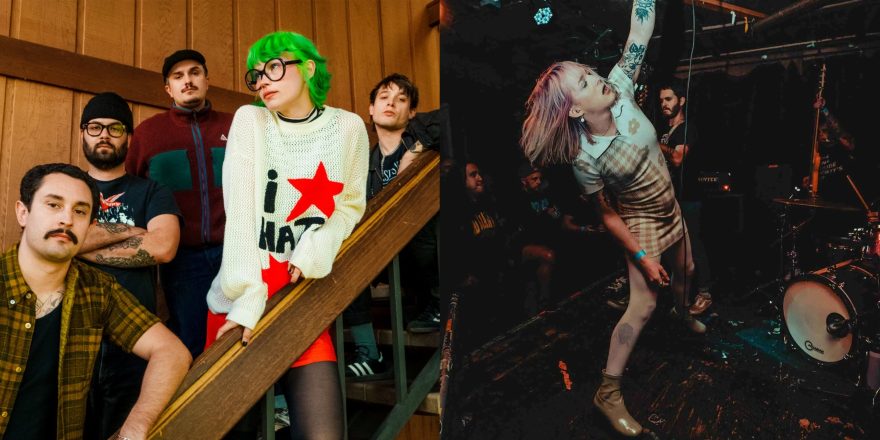


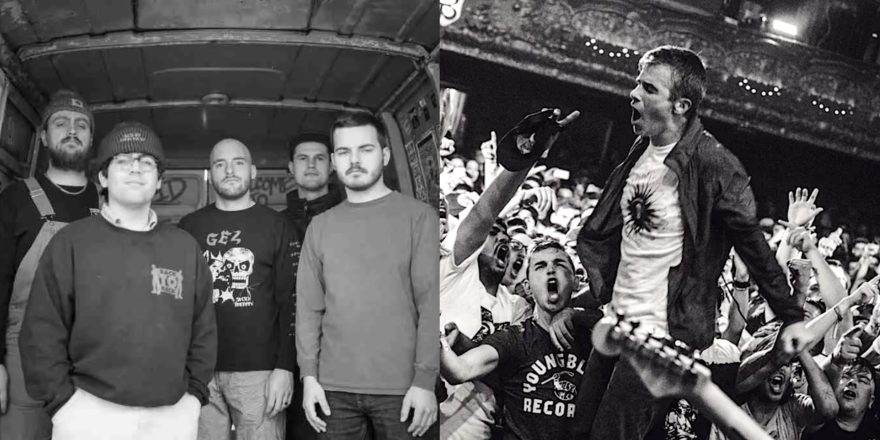

Gumm is a hardcore punk band from Chattanooga, TN. Their latest record, Beneath the Wheel, is out now on Convulse.
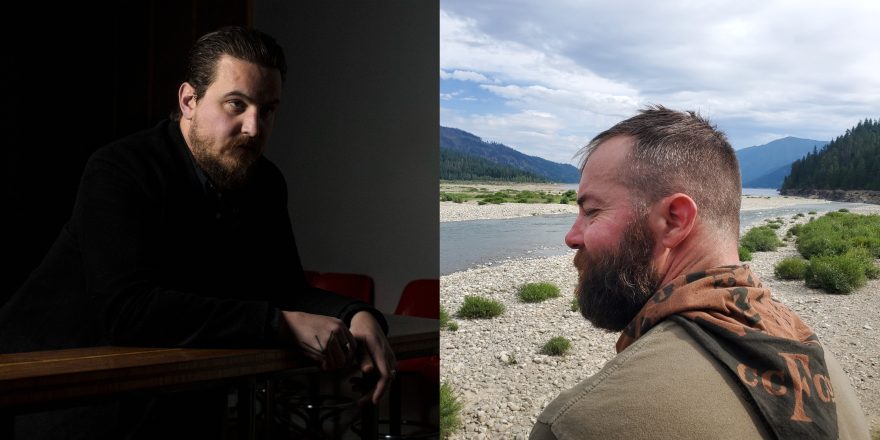
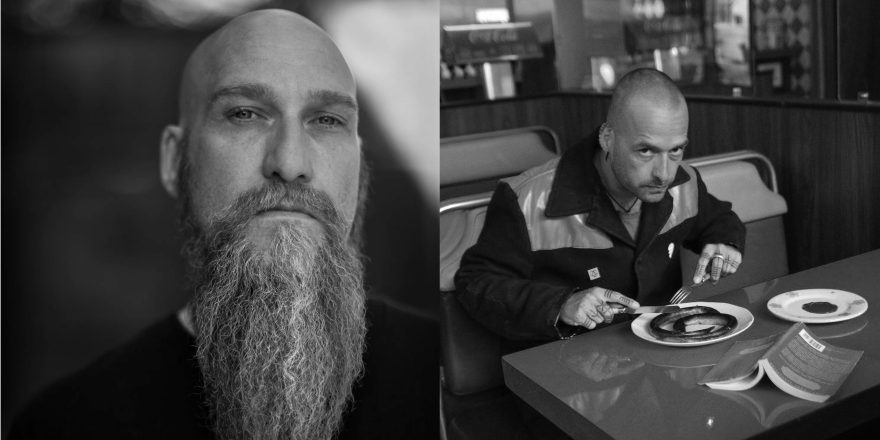
Pat Flynn fronts the MA hardcore bands Fiddlehead and Have Heart; Drew Waldon fronts the Tennessee-based band Gumm. Gumm’s new record, Beneath the Wheel, is out now on Convulse, so to celebrate, he and Pat got on the line to catch up about it, and much more.
— Annie Fell, Editor-in-chief, Talkhouse Music
Pat Flynn: We’re just having a conversation, right?
Drew Waldon: Yeah. [Laughs.] It’s so loose.
Pat: Awesome. Any opportunity to take a break and have a conversation about music and creating shit — I could sure use a fucking break from work.
Drew: Are you grading papers and stuff?
Pat: You know, I should be. That’s part of the problem… I really like the new record.
Drew: Thank you.
Pat: I was combing through the lyrics this week. You strike me as a really frustrated person. At least lyrically, it comes through. I mean, I write music and some people — I just did it myself, I guess — might think that I am walking and living the mood of my lyrics. I remember one time, it was really sweet but someone came up to me at the end of a Fiddlehead set and was like, “You are loved, man.” And I was like, “Thanks.” I was like, That was really nice. And then I started thinking about what would compel someone to say to another human being, “You are loved,” and I was like, Oh, that person must think that I don’t love myself, and that’s not that’s not true. You know, I have those bouts, but usually I put it into music, and then I kind of make sense of whatever was bothering me a little bit better. And I just committed the same little sin on you. To be clear, I don’t think you’re walking around the streets of Chattanooga like… What’s the song? “One Thing After the Other”?
Drew: “One Thing at a Time.”
Pat: I don’t think that you’re walking around the streets of Chattanooga just as frustrated as how that song comes off. But lyrically, you’re putting it out there. My take away from the lyrics on this record is pretty self-critical.
Drew: Definitely, yeah.
Pat: A lot of disappointment and frustration. It’s very inward. It’s right up my alley, and I’m glad I had a chance to actually take a second to stop and think about the record. And I get to exercise to it, so that part’s cool.
Drew: Hell yeah. I’m glad you like it, man.
Pat: I’m a fan. What do you make of my interpretation of your lyrics on this new record?
Drew: I mean, I think that’s true. I was writing these lyrics at a time of, yeah, real self-criticism, and not feeling very stoked on myself. I don’t think I’m always there, and I don’t think that’s all that’s there in the lyrics, but I think that definitely rises to the top.
Pat: There’s a one song — are you kind of mocking half-assed slacktivism, or kind of poser concern?
Drew: Yeah.
Pat: I liked it. You talk about, “I tried being concerned…”
Drew: “I tried hostility, I tried being indifferent.”
Pat: That song really stood with me. Especially with the politics of our day, and the way in which information comes to us, I — maybe in a less professional part of my life — am in kind of a philosophical rut. Like, I kind of hate everyone right now. And I don’t mean that in a contrarian, libertarian type of nihilist way. I just find every single corner of the political world totally frustrating.
Drew: Well, the lyrics in your new track, “How Much Art,” is about not being able to relate.
Pat: Yeah, yeah. And I think what you were saying in the song — “I’ve tried this, I’ve tried that” — is a consequence of me kind of just being frustrated with basically every take that everyone has. Like, I find myself trying on different ways to feel about it, becauseI don’t like a nihilistic take. I don’t like the contrarian way of things. But I really appreciated those lines and they stuck with me. But I also like how you go down the line in the record, and there’s a song [about] something that I find equally frustrating, which is, “You slap a sticker on the car.”
Drew: [Laughs.] Yeah.
Pat: I think I’m burnt out on my frustration towards yard sign politics.
Drew: Oh, totally.
Pat: Up here in Massachusetts, it’s really frustrating. We’ve got this northerner reputation of being super progressive, and there’s kind of a moral sanctimony, at least maybe amongst the people of Massachusetts, and perhaps even a perception that has been, in my opinion, fabricated. Living here, there’s a lot of right wing conservative people, it’s just been very gerrymandered so it doesn’t play out right politically very well. It’s not super reflective. But even so, in the wealthy and actually voting-left and voting-liberal parts of the town, you have these beautiful yard signs that have all these wonderful ideas of, you know, social harmony. And then if you want to live in those towns, you have to have a million dollars. If you want to attend their public schools, well, you better have the right economic background. So I look at these towns and I’m like, I really wish next to your, “In this house…” yard sign, you also had a sign that said, “But by the way, no, poor people.”
Drew: Dude, I mean, obviously I live in the South, but where I am, the neighborhood that I’m in is kind of a liberal bubble. And in the South, I feel like people feel like they have to overcompensate because of the reputation of the South to be inclusive, but a lot of the time, that’s largely lip service. And that’s kind of where that line came from, “You’re satisfied with putting a sign in your yard and slapping a sticker on your car and feeling like you’re doing something.” It’s kind of an extension of what I’ve been feeling and observing here for a long time. There’s a song on the last record that we don’t really play anymore that was directly written about my experience working in construction in this neighborhood where, I was working on this new house that was half a million dollars for just a bullshit tall, skinny condo with a ton of signs in all of its windows making these great claims about liberalism and inclusion and, like you were saying, social harmony. And right next to it is a house of Hispanic people, and just watching the woman who owned the house I was working in not even acknowledge or be in any way neighborly to these people that lived right next to them while having this persona on display…
Pat: Yeah. The deeply bothersome thing — which is why I find the energy and also the actual content of what you have to say to really be compelling — is… Well, I appreciate it because there’s an overall sense through Gumm of, you don’t listen and [think], Alright, these guys, want to make America great again. You’re not catching that vibe at all in any way, shape, or form. But you’re also not catching the vibe that you’re into sanctimony and posture.But as I say that, you feel almost immediately this reflex to do what you were talking about, to not overcompensate, but just immediately remind you, “Just because I’m upset with the left doesn’t mean I’m down with the right.”
Drew: Right, yeah.
Pat: That’s a very frustrating existence that I wonder how frequent it’s been throughout history. I’m teaching the French Revolution right now, and there’s this one period of it where it gets really out of hand and you get these wildly radical, futuristic, essentially proto-socialistic communists who are, basically in the name of creating a progressive society, killing everyone. And it happens to be mostly the poor people, who happen to be deeply religious and were kind of like, “Woah, what’s up with these city intellectuals now murdering people left and right in the public square?” That hit a crescendo, and then it stopped, and there was this period where a new revolutionary government took over, called the Directory. It was mostly comprised of people who were like, “Well, fuck you guys, you’re just murdering a bunch of innocent people because they don’t line up with your politics exactly the way you want them.” And by that point, people were so burnt out on intensely radical revolutionary jargon and talk; they weren’t seeing their lives improve or anything like that. So they were seemingly a little bit more in favor for something like… I don’t want to use the word “moderate,” because it has so many negative connotations to it.
Drew: It had to even out a little bit.
Pat: I guess, yeah. But I wonder, the members of the Directory, would they have understood Gumm? Would they have heard that and been like, “Yeah, I like this.”
Drew: I just think my frustration, really, is people unwilling to recognize the people on their opposing team as people. And that was kind of evidenced in how people responded to the song.
Pat: How did that song connect with people live?
Drew: I think it goes well live. I mean, it’s kind of got a catchy chorus and people like singing along to it, which is fun. Gets some pile ons — which is funny because it’s a weird angular song..
Pat: Oh, yeah. You don’t write easy songs.
Drew: No, unfortunately not.
Pat: Well, I love that. Don’t get me wrong, I love an easy song. I love a straightforward, easy ripper. But I’m always impressed when someone can get people moving but not use the low hanging fruit to get them to go there.
Drew: I’m anti-low hanging. I can’t do the low. I gotta reach. If not just for my own entertainment or challenge.
Pat: What’s your role in the song writing process?
Drew: I’ll give feedback on riffs, but I don’t play guitar. So I can help kind of give feedback, but my feedback is literally like, “Nah, don’t do the dun-dit-duh-duh part. Do the ding-duh-duh-ding-dun part.” [Laughs.] That’s kind of my role with that. I play drums, so sometimes I’ll have ideas for drums. But usually it’s just letting the boys cook and just being a cheerleader for them. And then writing lyrics.
Pat: I think that shows in what you guys have. Let letting the boys cook is a huge one. I learned a long time ago that you gotta let that happen. But I’ve also found that it’s a fine line to walk because if you’re completely out of the… I don’t know, if you hand me a song that I had nothing to do with the musical writing process of it, it might as well be an advanced physics course at MIT or something like that. I look at it like, Huh? I don’t even know how to get in here.
Drew: Dude, I totally get that.
Pat: I gotta be in the sausage factory for a minute or two. But what I’ve learned is, if I feel like I’m going to have fun singing it, then I really gotta make the case for that to happen. I like to have fun singing, and for me, if I’m not having fun doing this part, I don’t think anyone’s gonna have fun doing it. And something that’s come up that makes it super difficult is, when it comes to verses — the chorus, everyone wants them to be fun — but especially coming from hardcore, the verses are not exactly fun.
Drew: Right. That’s when you’re spitting.
Pat: Yeah. It’s funny, I’ve actually never talked about this before, or worded it this way, but the verses are kind of like the analysis of the song, and the choruses are like the conclusion. It’s like, “Here’s the fucking point.” But an analysis is kind of boring. I’m teaching argumentative writing with my students, so I’m a little stuck in that world right now. But’s technical — you know, “This matters because…” You connect it to your argument and then boom, “Therefore, Columbus was a bitch.” You know what I mean?
Drew: [Laughs.] Right, yeah.
Pat: I’m at a point when it comes to songwriting now where I just have no tolerance for being bored while singing. I don’t know if that’s a good thing or a bad thing. And especially when I hear a song where, the whole way through, I’m like, “Fuck yes, the verses” — it’s why that “Give You Back Your Youth Song,” that’s definitely in my top 10 songs of the 2020s so far.
Drew: Damn. That’s awesome.
Pat: I like it musically, lyrically. And watching you guys play it… I feel cool. I definitely feel cool watching Gumm. Not “cool” in a scene type of way, but I feel like there’s something thoughtful happening, and that’s cool watching it play out.
Drew: That’s good to hear, man. Sometimes I can’t tell if that gets through.
Pat: No, that’s real. And I don’t know how many hardcore kids are looking for this kind of feeling like people are working things out and putting out into the world something that they were thinking about, and it seems meaningful enough to be thought out in live time, but I appreciate that. I just turned 40, and suddenly now that I’m in a new decade of my life… I don’t know, I saw Judge the other night and I moshed for every song.
Drew: Let’s go. Hell yeah.
Pat: But I’m starting to be like, I’m 40 now. What do I want from this thing I’ve been a part of for 25 years? And I don’t know if it’s because I’m 40 and I’m playing into the role of the age. I don’t think that that’s the case, because I was moshing at Judge for every song. But genuinely, I think I’ve just been doing this long enough that I’m constantly seeking out something with a lot of thought. I need some thought. Not hammed up or anything like that. I get that from you guys, especially with “Give You Back Your Youth.” Is there a synth in that song? Is that just feedback or something that’s going on? You know what I’m talking about.
Drew: I haven’t listened to it in a long time. I think it’s maybe just how we layered guitars.
Pat: It’s extremely compelling to me… I really don’t like going to shows, especially non-hardcore shows. I like going to hardcore shows and punk shows, but the non stuff, it’s just not for me. Those crowds are too big. I don’t feel connected with anything. But I really enjoy if I’m going to go see a band that I think I’m going to, quote-unquote, “feel cool” listening to. I enjoy going to see a band like Gumm because there’s substance and thought to it. And part of it is you do a nice job with your verses. They are not boring. And to me, it’s all in what beat you decide to go with for the verse. I think halfway through writing the second Have Heart record, some 15 odd years ago, I was already feeling, Please don’t do the fast beat. I can’t do it anymore. I have to say too many things, and I can only say them in a very mono-rhythmic way. I gotta figure something out, because I don’t know if I’m annoying to write with…
Drew: [Laughs.]
Pat: I don’t know how you feel as a singer, but if I’m not compelled: “What are we doing here?” You know what I mean?
Drew: Yeah, dude. We wrote the record over the course of eight months or something, just because we were playing shows and touring in the middle of it and writing when we could. And it took me all eight of those months to write the lyrics to 10 songs. Because I’m not going to just write something to fill the space. I’m going to write something that I feel like writing and that I feel like I’m like pulling something out of myself.
Pat: I’m with that, a thousand percent.
Drew: I wish I could be better at it. I wish I could just grind it out. But it’s tough.
Pat: I never want to write a line that I fucking don’t care about. It’s like, Oh, my god, this line sucked. And then you don’t even want to sing the song. So I’m all for really taking the time to just make it all work really well… I think we’re going to get cut off.
Drew: Yeah, I think so.
Pat: I like the new record, my friend.
Drew: Thank you, man.
Pat: Let’s get on the stage again!