


Katie von Schleicher is a musician, producer, and engineer based in Brooklyn. Her latest record, A Little Touch of Schleicher in the Night, is out October 20 via Sipsman.
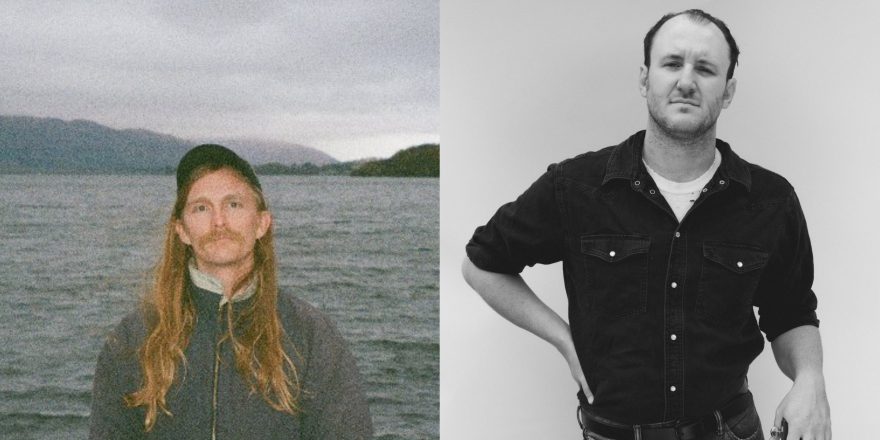
Katie Von Schleicher is is a musician, producer, and engineer based in Brooklyn; Gabriel Birnbaum is a songwriter, producer, and saxophonist who fronts the band Wilder Maker. The new Wilder Maker record, The Streets Like Beds Still Warm, just came out last week on Western Vinyl, so to celebrate, the two longtime friends got together to chat about it, and much more.
— Annie Fell, Editor-in-chief, Talkhouse Music
Katie Von Schleicher: I like how you said that we’ve worked together for a really long time, and that’s why you would like to talk to me. It has been a while. How long has it been? 14 years?
Gabriel Birnbaum: Yeah, it’s been 14, maybe even 15 years.
Katie: We were in Boston at the same time.
Gabriel: Yeah. The first time that you ever sang with me, I think I had seen you play with Sleepy Very Sleepy at O’Brien’s, if I remember correctly.
Katie: Checks out. We did play there.
Gabriel: I think Elio [DeLuca, engineer at The Soul Shop in Medford] ] took me to go see you guys. And then I think when I was recording God Bless the Hunger about a million years ago in Boston, Elio was like, “I know who should come sing on this.” And he brought you and Brittany [Asch]. Who’s now a famous florist.
Katie: She’s killing it. Here’s what I wanted to ask: You always impressed me as the most arrangement-minded person I had ever encountered, and now, you’ve just made probably the loosest thing I’ve ever known you to make, if I don’t count your ambient music.
Gabriel: Yeah, I think that is true.
Katie: I was just wondering, did you feel like you had to let go of control in some way to make this record? I mean, there is a lot of control on the back end…
Gabriel: Good question. Yes, and I think I was interested specifically in letting go of control. I think it’s been hard for me to have a truly collaborative recording before this.
Katie: Well, it makes sense that 15 years have passed, because at this point you have the most time-tested excellent people to collaborate with that you can really trust.
Gabriel: Yes, 100% trust. I know that everything that all of the people involved play is going to be amazing, and also that it won’t be what I would play. Equally important to this process, I think. Also, I think there’s been a mental process for me, starting from collaborating with Mutual Benefit on his record — Jordan [Lee] is a very control-oriented, creative person, and a lot of our relationship in making Growing at the Edges was about navigating the boundaries of his control, and me kind of Impishly fighting with him to let me do funny or weird stuff on the record that he was uncomfortable with. 75% of which got deleted, but some of which made the record, and really altered the feeling of it.
Katie: Which is why he wanted to work with you, I would assume.
Gabriel: Yeah. He approached me and was like, “I really like how the last Wilder Maker record feels,” Male Models, because like all of our records, us playing in a room was the basis of it, and there wasn’t that much on top of that. I was like, “OK, if you want to make a record that feels like that, you should make a record in a similar way.” So we got Sean [Mullins] and Nick [Jost] and recorded a bunch of stuff in a room, and then we added a lot of overdubbing and massaging, but the core of it was a live band. So we made this record, and Jordan is obviously incredibly capable of making records completely controlling everything and recording everything on his own, and has done that repeatedly — he’s very DIY at his core — and it was interesting to see how it changed everything for him to allow me some space to fix around in his vision. At the end, the record he made, whatever you feel about it, is not the record that he would have made on his own. And I think I saw that process thoroughly and was like, Oh, maybe if I stop controlling everything all the time, I will receive a record that is not what I could have made on my own, and therefore it will be something new and different for me. So, yeah, that was definitely intentional letting go of control and, I think, a new feeling that I could do that.
Katie: Yeah. Well, I just want to say that my last record, when you arranged the strings for it, it was my first time ceding control. And I wrote the songs, but we did them so loosely. Partly I did it with Sam [Evian], but we had this language between me and the same collaborators, Jost and Mullins and Sam, where I’d be like, “Here’s kind of what I’m going for.” And Sam would be like, “Got it.” Five seconds later, we’d just track it and it was like, “It’s over!” It was almost too easy, and I felt really skeptical of how easy it felt. Then obviously, it would have been 60% or less what it was without all of that string arrangement on top of it, and leaving room for that was easy on me. I liked doing it that way. And now I’m back to being really torn between wanting to make something hyper controlled, or something hyper loose, like more loose than ever.
Gabriel: What are you thinking about?
Katie: I mean, my job has ruined computer screens for me, so I would really love to not look at a screen, which I guess lends itself to tape process-wise. I can’t get it up for opening Pro Tools. [Laughs.] I just can’t.
Gabriel: I hear you.
Katie: And mostly I’ve been listening to music that I work on. I’ve been mixing albums for the last four months. I’m excited to leave for tour and just listen to something else.
Gabriel: One of the things I miss most about tours is being in the van with other people, and having other people put things on and being like, “Hey, what is this?”
Katie: Yeah, I know. Hugo [Stanley] is my favorite DJ in Frankie Cosmos. I mean, Frankie Cosmos is a band that genuinely — they’ll put on indie rock in the car and I’m like, “Woah, you guys actually like indie rock? I don’t know anybody who likes that stuff.”
Gabriel: [Laughs.]
Katie: And yet we’ve dedicated our lives to it.
Gabriel: Sort of. I’m trying to weasel out.
Katie: Well, Frankie Cosmos got me into this band Good Morning that I actually do really like. I think they have a kinship to your music, in a way. With some people I would discuss your music with, some people would prefer your home recorded stuff to any of your most professional stuff. We’re always talking about that first — is it the first of the three EPs, the one that has “Summer Drifts”?
Gabriel: Third.
Katie: OK, third one. Anyway, Good Morning has that [feeling of], they just do it themselves somewhere and they’re so loose about it.
Gabriel: One of my mantras making this record was, “sound is sound.” And I would repeatedly just do things I knew were wrong.
Katie: What do you mean?
Gabriel: I ran a lot of stuff on the Tascam, and I was lazy and I would just use the headphone jack as the out. I was like, “You’re not supposed to do that, but whatever.”
Katie: Honestly, I shouldn’t say this as a licensed recording engineer — just kidding, I don’t have a license — everybody’s like, “Oh, you need one of those reamp boxes, the radial reamp, to go through your Space Echo.” And I’m just like, “I’m running the quarter inch into the pedal, and I’m not unhappy about it. There’s nothing bad happening.”
Gabriel: I ran pretty much every single sound on this record — there are not that many overdubs, but there’s a ton of me just running the stuff we recorded in the room through my guitar pedals. That’s almost every effect on the record.
Katie: I’m sure it sounds fine. I’m dying for something subversive to happen in music, and it rarely seems to do that anymore.
Gabriel: What would be subversive?
Katie: I mean, Lingua Ignota was subversive, but that’s also heavy, extreme stuff. Now — here’s my new thing in the studio — if something makes me laugh, then I get very excited about it. Music should make you laugh. Like, the kind of “I can’t believe that’s what’s happening” laugh. Maybe I’m broken brained, but I need it.
Gabriel: Well, I would argue one of the reasons indie rock has gotten so boring — are we allowed to do this?
Katie: Shit has gotten pretty boring!
Gabriel: Yeah, it’s very boring! And one of the reasons is that it’s never funny.
Katie: I do think Cameron Winter’s funny.
Gabriel: Yeah, that’s why he’s great. I love that record.
Katie: That’s the most recent released album that I’ve loved.
Gabriel: I would say in the indie rock zone, that is probably the most recent record that I’ve loved. I also love Will Stratton’s record from this year, but it’s very different. It’s like reading a historical novel. It’s an amazing record. It’s not really, in my opinion, related to contemporary indie rock, except that it’s a songwriter record that came out this year.
Katie: Yeah, I guess “indie rock” is a dangerous catchall for songs that aren’t pop songs.
Gabriel: It’s sort of unclear where the line is, as always. But getting back to your point, I don’t get delighted unless I can be surprised, and it’s hard to articulate why, but I don’t think it’s possible for me to be surprised by an indie rock record generally. Unless it’s Cameron Winter crooning about how he’s a piece of meat — that caught me off guard.
Katie: Yes, there’s some really great twists, and it’s all really plain speech on that record. I would like to be surprised more, and sometimes maybe to a dangerous effect. Like, I’m afraid that it’s my brain being broken. But I’m just obsessed with what could be subversive.
I was working on this new Youbet record with Julian [Fader], and that’s pretty subversive. Nick [Llobet] is weird and and will be like, “Turn up my cat purring,” in the loudest guitar section of the song. But Nick suggested I listen to The Raincoats album Odyshape, and I was like, This is the shit right here. It’s just so simple, so much space. I mean, your record has a lot of space in it too, which is really nice.
Gabriel: It does in a different way.
Katie: And it feels primitive in a similar way to me.
Gabriel: It’s cool to hear you use that word to describe it.
Katie: [Laughs.] Is that a fucked up word?
Gabriel: No, it feels good!
Katie: It’s what I want, something primitive, subversive, ugly. All of those things.
Gabriel: I feel like that’s one thing that’s never in indie rock.
Katie: I mean, hello? Has anyone looked at fucking Picasso? That shit is ugly! You need something ugly. I mean, I have to assume that your album is not just informed by those things that you’re a fan of. Also, the work you’ve done in the past five years with labels like International Anthem—
Gabriel: Yeah, that’s definitely an influence. I did press for a lot of those records. I worked for them for a year and change and I got to see how they made those records and listened to them very intensely because I was working on them. That definitely had a huge impact on me. I also do press for this label called Colorfield in LA that has a similar idea, where it’s run by this engineer, Pete Min, who has a beautiful studio out there, and every record is made with no pre-written material. They just come in and kind of play the studio.
Katie: I’ve probably said this to you before, but the thing that made me want comedy in music — whatever that means, comedy being an extremely subjectively used word — it’s working at Figure 8 and getting to do sessions there that are not sessions I brought, but people who are familiar with this community around Figure 8 and the studio and just hire me because I’m available. I’ve gotten to work on a fair amount of recordings that have that feel to them where it’s, like, an incredible violinist playing a CR-78 drum machine and just hitting snare, to the point where I’m laughing. It’s hilarious. I did a session that was for musicians that were eulogizing a friend who had died of COVID, and it was so funny — they would listen back and they were laughing, and then I realized it was OK to laugh, because some of it was so beautiful, and then some of it was so free, and that makes you laugh. And someone doing something super rudimentary when they could be doing anything, they’re virtuosic at an instrument…
Gabriel: You know that Borges story about the guy whose entire life’s goal is to write Don Quixote again?
Katie: [Laughs.] No! I’ve gotta read.
Gabriel: It’s an incredible story, I think about it all the time. But someone who is a master musician going dzzt-dzzt-dzzt-dzzt on the CR-78 is different fundamentally from someone who doesn’t know anything about music. It’s not bad, but different.
Katie: Here’s my fantasy, OK? Because Frankie Cosmos is taking over a studio in the Lower East Side, and I’ll be the engineer of it.
Gabriel: What?
Katie: I’m gonna have my own space to build however I want, starting October 1. it’s Phil Weinrobe’s old studio Rivington 66.
Gabriel: Oh, yeah, I’ve been there once.
Katie: Yeah, it’s that space, except it’ll have to be my gear, which is cool. I’m gonna figure it out slowly, like a person who doesn’t have $200,000. It’ll be fine.
Gabe: Why don’t you just get $200,000?
Katie: I just need $200,000…
Gabe: Problem solved.
Katie: [Laughs.] But I’ve fantasized about making a record in there, and my fantasy is a record where I have excellent musicians playing and the rule is: you have to do something ugly, you have to do something primitive, interspersed with whatever else you want to do. And then my idea is, whenever a guitar is played on the record, it’s played by a non-musician. Could be bad. Could be great. Because sometimes I think non-musicians give the best mix notes. They give the best feedback.
Gabe: I always play mixes for non-musicians.
Katie: Yeah, because they have the most brutal feedback, too.
Gabriel: Oh, yeah, for sure.
Katie: Ellen [Gabriel’s partner] has had, you’ve said—
Gabriel: [Laughs.] Some quite brutal feedback. I told you what she said when I played her the mixes of this record, right?
Katie: What’d she say?
Gabriel: “I think musicians will like this.”
Katie: [Laughs.] But you know what? When I make a record, I really don’t care if anyone but a musician likes it.
Gabriel: I have to admit, that’s probably my target audience.
Katie: I mean, I care if someone else likes it, but that’s all gravy, right?
Gabriel: You don’t make it for that reason.
Katie: I feel liberated to not try and be successful anymore.
Gabriel: This is why I became a therapist. I don’t want to have to worry about this shit anymore. And I couldn’t have made this music without being a therapist. Like, I needed to have no financial pressure to succeed whatsoever. I feel like the last Wilder Maker record, even though I love it and I love the songs, is the sound of me trying to fit myself into a shape that I thought would be approved of by the world.
Katie: Of course. Maybe you’ll have a different spin on it later, because I feel that way about my record Consummation. But then it also sounds psychotic. So…
Gabriel: I listen to it and I’m like, This is good. But I also think I was like, I’ll make the shiniest pop song version of my music, and then everyone will like me. And that doesn’t really work.
Katie: I’ve gone through this as a mix engineer, because I make what I would consider bold choices on my own music so easily. And then when I started working on other people’s music, the only reason I’m valuable to other people is because of my experience making my own music — at least when I started out, when really I had no engineering chops and I had just musical experience. And I was being so timid with other people. It’s so much harder. And I’m sure you experienced that a bit with Jordan. It’s way harder to be bold with abandon on someone else’s record. I’ve gone so far in different directions. Like, in the last year, I started trying to just make the most expensive mixes I could.
Gabriel: Expensive…
Katie: Expensive sounding — sorry.
Gabriel: Just charging people out the ass. [Laughs.]
Katie: I just tried to make the most money I could. [Laughs.] No, just, I’d listen to a Shawn Everett mix and I’d go, That sounds expensive. And then I was like, Could I make something that sounds expensive? And then Brian, my boyfriend — who’s my toughest critic and really good mix note giver — two months ago he was like, “This sounds expensive.” I was like, “Yes!” And now that I’ve proved I could do that, I want to just make the most out of it.
Gabriel: I have a very funny conceptual record that I don’t know if I’m going to make or not, but it would be a good antithesis to this record. I read that book Station Eleven a while ago. Have you read that?
Katie: I watched the TV show.
Gabriel: OK, probably same difference. I was really intrigued by the theater troupe.
Katie: In the show, I found them a little unbearable, because I hate a jamboree.
Gabriel: [Laughs.]
Katie: I’m sure in the book, you’re not listening to them play guitars around the fire.
Gabriel: No, you’re not. But I did have this thought about speculative fiction future — I think a lot about how music is affected by technology now — what would music sound like if there was no recording technology and no electricity and you couldn’t record voice memos? You would write songs completely differently because you would have to remember the entire thing.
Katie: Well, it’s my feeling that if we had to remember all of our songs with no aid of recording technology from writing to recording, our songs would be banging.
Gabriel: Right.
Katie: They’d be all hits because you’d have to keep them in there.
Gabriel: Right. But my idea is, I can only write things down, I can’t record anything. I like the idea of the song morphing as you try to remember it. And you have to get a full record’s worth of songs together in your brain before you record.
Katie: No demoing it.
Gabriel: Yeah, no demos.
Katie: I like it. I love doing song-a-days. And I terminally lack the confidence to just do a voice memo, so I’ll produce the shit out of them and clear my days for the entirety of a song-a-day.
Gabriel: Really?
Katie: Yeah.
Gabriel: Woah.
Katie: I mean, I started doing them in the last year. I’ve done two song-a-day weeks, and I did them all to the Tascam, and then I just to stereo bounce it out. And, I mean, they sound like demos.
Gabriel: I love demos.
Katie: I love demos, and now I’m thinking, I should just release the demos. They’re done. And, I mean, I’m super into mistakes. It’s why I love microphonically recorded music and full takes and performances, because I love mistakes. They can change the amount of bars in a song. I would never be like, “And here’s a bar of three,” but I will fuck up and do a bar of three. You know?
Gabriel: Yeah, totally. You’re thinking about something else, drop a beat.
Katie: Yeah, exactly. And then that becomes the most precious thing. And that is demo-itis, of course. But I love that I write the song that day, and sometimes I’m finishing writing it while I’m recording it. I’ve made a song that was really just a piano thing, and I was like, I’ll make this as complicated as I can do on piano, and then I’ll figure out what to sing later. And I like that song. It turns out it’s nice. It’s not totally unlike your thing — although the beauty of your thing is a thing that I really believe in: I think you should try a song three or four different ways before you commit to one way. And you should switch an instrument. I would never get a song above 60 bpm if I didn’t do that.
So, we’re both in our late 30s, and that’s kind of an interesting transitional time as artists. It’s partly why, I think, we’ve both eased off putting pressure on ourselves to do anything but follow what might interest you — which is amazing. I love the easing off of that and just following my gut more. But I guess my question about that is, is there anything to that and finally being ready to really invite in collaboration in a different way?
Gabriel: Yeah, I think that they’re connected. I remember a conversation I had with my dad a long time ago when he was describing his approach to 40, and he said something like, “When you hit 40, you have to accept the distance between the person you are and the person you thought you would be.” And I think part of the interest in collaboration is accepting my limitations. I grew up in a culture of indie music where it was like, the lone genius. It was Phil Elvrum alone in the studio doing all this really wild stuff. So that’s what I thought I was supposed to do.
Katie: Yeah, there’s a big push to be that self-contained thing.
Gabriel: Yeah. And I think that’s not exclusive to music at all; the lone male genius thing has been around forever in all media. But I thought that was the best way to do something, so I just tried to do that, and I tried to get good at every single thing. Which is great training for learning more skills.
Katie: I think I also sought to become the lone male genius.
Gabriel: I think you did, too. [Laughs.] But I think I’m realizing, that’s all well and good and I’m glad for all the experience and the skills I got doing that, but there’s a thing that happens — I think Andrew McGovern actually talked to you about this with overdubbing trumpet, where you don’t want to overdub the same trumpet player four times because it sounds like shit. It sounds like a synthesizer. You need four different trumpet players. And so in the same spirit, sure, I can play lots of instruments, but that’s not the point. It’ll be like a bunch of mirrors and a bunch of me.
Katie: Also, I don’t know how much you care about being the listener of your own music, but I find that if it doesn’t feel like looking in a mirror, I can finally enjoy it.
Gabriel: Yes, I do enjoy listening to this record a lot more than I have enjoyed listening to my other records.
Katie: Weirdly this sounds so like you though.
Gabriel: I definitely shaped it heavily, but there are some tracks where I’m barely there at all.
Katie: It’s probably cool for you to work on something like that.
Gabriel: It is cool. It’s interesting. There’s one song where I’m just knocking on the Wurlitzer with the sustain pedal down, and I think that’s the only sound I make.
Katie: There’s a huge value in team. I think partially COVID lockdown era made that really apparent to me. Or, that was also in my early 30s, so maybe it was naturally where I would have been thinking anyway. But it just made me long for other people’s input and to hear other people.
Gabriel: Yeah. I mean, you were talking about laughing earlier, and I feel like it’s hard to make yourself…
Katie: It is hard for me to make myself laugh musically, yeah. It has to be something I didn’t expect.
Gabriel: I think there’s a lot of things like that where you can only really get there with other people. This is the core drama of my life, I would say: aloneness versus community.
Katie: I completely agree with you. We’re both introverts. Which, as you know, doesn’t mean that much. It just means we need to be alone at some point to be functionally not alone. As I approach 40, I am still mystified by all the shit that I do not have now. And for me, one of those is, alone versus together. Still working on it.
Gabriel: I think it’s a forever dilemma.
Katie: [Laughs.] Yeah.
Gabriel: I was reading about personality structure for therapy, and I think that a personality structure thing that we share is that it is a forever attention. It’s like Schopenhauer’s porcupines: You want to be close, and if you move close, your quills poke each other and you experience pain. So you move away and you get lonely. You move close and move away, and that’s how it is.
Katie: Both of us.
Gabriel: I think.
Katie: Yeah. We’re a little different, but pretty similar to one another. [Laughs.] It’s tricky because the immediate pricks of loneliness being something that I experience, and then surfeit of togetherness being something that I also experience… I can work seven days in a row and be gasping for solitude, and on the eighth day when I’m alone at 2 PM, I’m like, I’m so lonely. And it’s tricky because part of being an artist is habit, and I started the habit in very private way. I have to feel a little lonely to want to write a song. I don’t buy into tortured whatever, but I have to have a hole that I want to fill with creating something.
Gabriel: I mean, there’s always a hole.
Katie: [Laughs.] The good news is, there’s always a hole!
(Photo Credit: left, Keegan Grandbois)