


Jon Stahl is a writer and producer operating at the intersection of traditional media and the creator economy. He worked in the writers’ room on the final two seasons of HBO’s Veep and wrote on FOX’s animated sitcom HouseBroken. He is the author of How Not to Be a TV Writer, a Substack newsletter discussing creative work and industry change, and the creator of the comedy micro-series Casen Pointe: True Crime Detective, which premiered on Jan. 20th, 2026. He is the Chief Creative Officer of Pointfake Media, where he focuses on comedy-forward storytelling, and the CEO of Prolog, a creative development software platform which was acquired in 2025.
My name is Jon Stahl. I’m a recovering TV writer who worked in the writers’ room of the final two seasons of Veep on HBO and wrote on the animated FOX sitcom HouseBroken. I was fortunate enough to pitch jokes that made it into the final cut of the former and write a full episode of the latter (alongside my writing partner). Prior to that, I worked in the writers’ room of a live-action Nickelodeon show, an NBC multi-cam sitcom and the production offices of several TV shows and movies.
Well before the dual strikes and the current downturn, I came to understand that if I stayed in traditional media, no amount of writing would get doors to open for me, even with my experience as a paid writer. Even before Covid, I knew the opportunities were too few and too far between for a writer of my experience level to gain a foothold. So I pivoted. I took some time off, studied user experience design and founded a startup that was later acquired by a competitor in 2025.
And at the start of last year, I decided to try something different: becoming a content creator.
In January of 2025, I published the first post for my Substack newsletter How Not to Be a TV Writer. It’s about the reality of pursuing a creative career in today’s entertainment environment. I would call it 40% tough love, 55% reckless optimism, 5% absurdist stick-figure illustrations.
When I first started writing it, I wasn’t prescriptive about the “why.”
I didn’t expect it to turn into a paid career (and despite consistent subscriber growth, it still hasn’t). And while I thought writing out in the open might open a door or two for me, I had no ideas which ones. Initially, my goal with HNTBATVW was simply to help me organize my thoughts on relevance and adaptation.
And yes – my writing got me some very interesting meetings early on, including with a development executive at a major streamer. I know for a fact that this is a meeting I would never have gotten if I’d stayed in traditional media.
Obviously, that was a very exciting signal to keep going. But the more important – and more unexpected – opportunities were the creative collaborations that emerged.
In April of 2025, I got a Substack message from one of the readers of my newsletter. He was a dude named Bowen Williams, who reached out to start a conversation. All he wanted was a meeting.
Like me, he wasn’t prescriptive: He didn’t expect anything to come from the meeting. Like me, he was also interested in relevance and adaptation. So we got drinks in Silverlake and I learned more about him.
He didn’t come from the world of traditional media, TV and Film. He had gone to Georgetown and gotten his MBA from Harvard Business School, spent more than 10 years in business development and operations before deciding he wanted to tell stories for a living.
We were coming from two very different places, but after our meeting, we realized our philosophies on story and business and collaboration were very much aligned.
He understood the line of thinking that went into my “Build-in-public, do-it-yourself” ethos, and I understood why he would want to pivot into this frustrating, exhilarating, mind-melting industry.
We also shared a similar compulsion to create. It’s like both of us had this creative hole inside us that needed filling. For us, the fulfillment wasn’t about “having finished something,” it was about the process of creating. Neither of us could shake it.
After it was clear that we aligned intellectually (and neither of us annoyed the shit out of the other), we decided to meet again for lunch, where I pitched him a half-baked idea I had initially conceived a decade earlier.
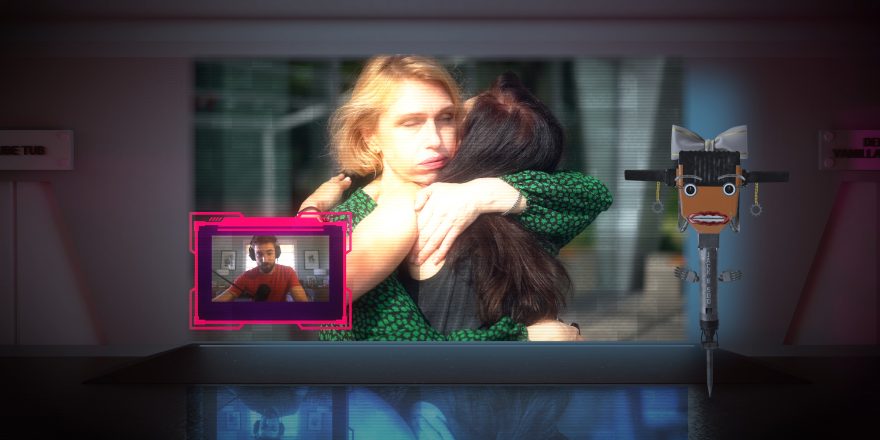
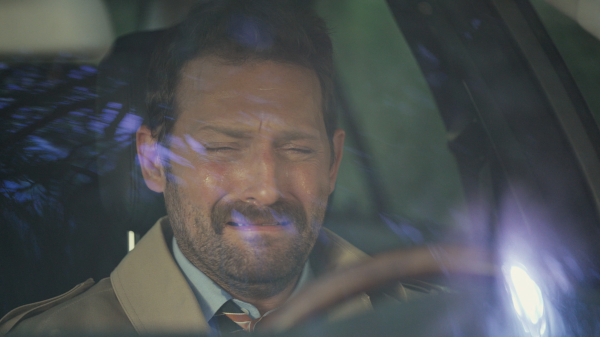
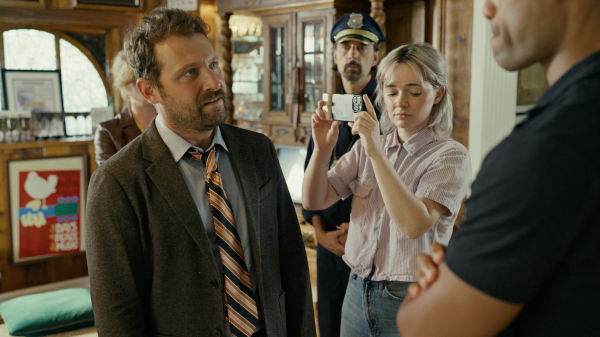
Casen Pointe: True Crime Detective is a broad comedy series about a YouTube detective who barges onto crime scenes with no qualifications or invitation.
I initially envisioned him in the “confident idiot” mold, but we realized it would be more fun if this guy wasn’t just stupid and in-the-way, but secretly a savant with zero social skills who loves to be the center of attention (a closet theatre kid with daddy issues).
Over the course of the next four weeks, we drafted an eight-minute pilot that was absurdist, joke-dense and created a playground for a brilliant performer we found from Groundlings, named Anthony Guerino.
After we finished an early draft, we both agreed this project was worth investing in, and we decided to self-fund the pilot.
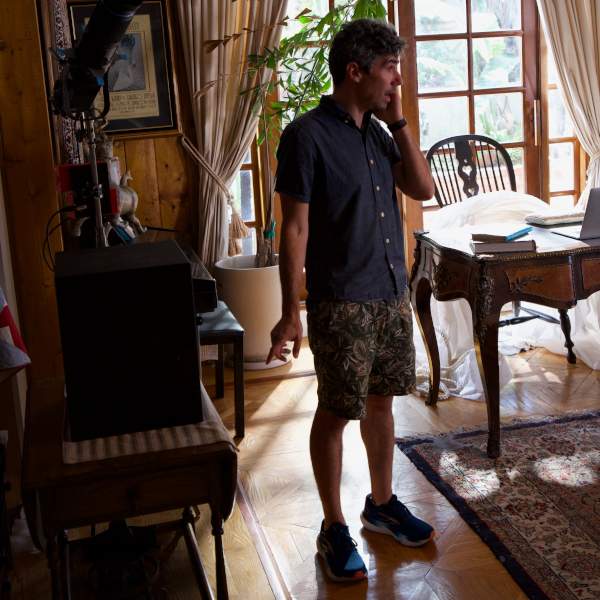
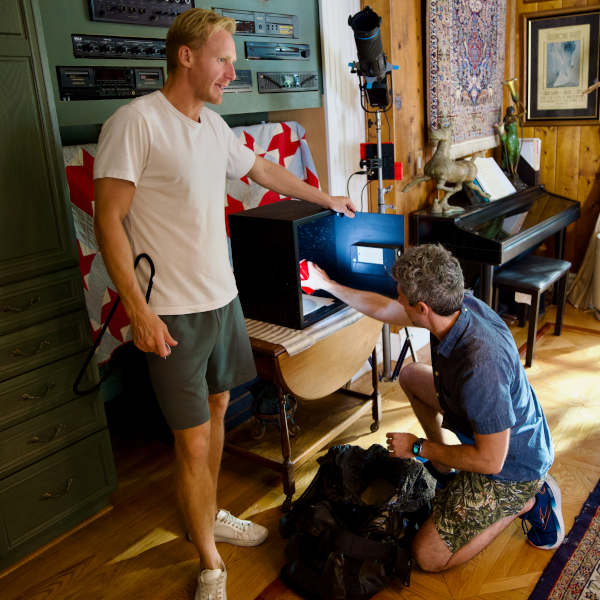
We set a shoot date, booked a non-refundable location through Giggster, brought in my talented D.P. friend Danny to shoot it, and we were off to the races.
I produced it, Bowen directed it, and we shot it over the course of one-and-a-half days in the middle of an August heatwave, for a total of $6,000, split between Bowen and me.
What’s important to note is that we weren’t thinking of what was selling. We both just loved the character and we were both proud of the script we had written for him.
Danny found an amazing post team (including Conan O’Brien’s Emmy-winning editor-producer Matt Shaw), and – soup to nuts – we had a finished cut within five months of me first pitching the idea to Bowen.
And – as of Tuesday, January 20 – the pilot is available to view on YouTube.
We also shot a second episode, which (as of the time of this writing) is almost through post and will release shortly after the pilot. And while we desperately want to make a third episode, we’re trying to figure out how to do so without losing more personal funds in the equation. But that’s neither here nor there.
I’m not going to claim that what we did is “the only way” of developing series or features, or even “the new way” of doing so. But I do think it’s a new option in creative development.
And that’s the point: As traditional media consolidates around us and there are fewer and fewer buyers buying a smaller variety of projects, it will be the creatives who drive disruption. Not because they want to, but – in order to fulfill the creative hole inside them – they must.
I didn’t use my newsletter to try and sell anything. I wasn’t writing – and I don’t continue to write – because I expect anything specific out of it.
But I do know that creative partnerships are increasingly forming in public, and by signaling my personal ethos through How Not to Be a TV Writer, I’m able to find the people I’ve always wanted to collaborate with, but just didn’t know existed.
And while this one shift isn’t going to dramatically alter the traditional media ecosystem, I know it’s going to open doors for creatives who wouldn’t have gotten the chance to prove themselves otherwise.
In other words: “The industry” still exists, but it’s no longer the only place where things begin.
The weird, unique story of how Casen Pointe came into being is not necessarily a repeatable formula.
But it does signal that things are changing for creatives who are using the internet to find their collaborators.
And I couldn’t be more excited about it.
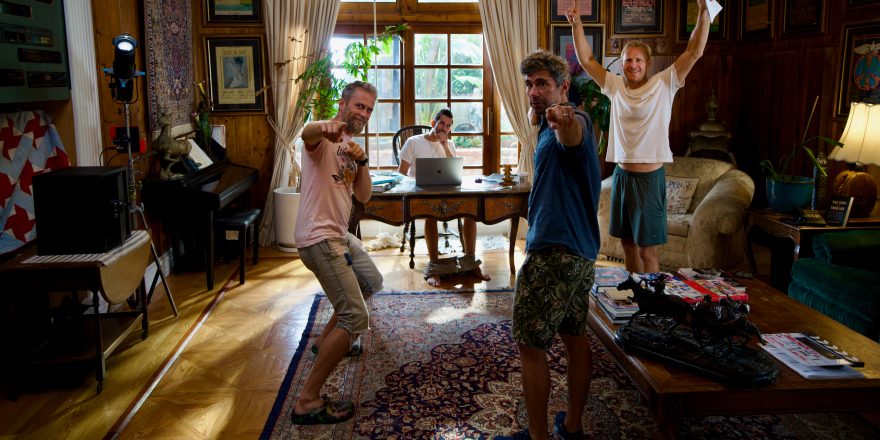
Featured image shows cinematographer Daniel Brothers, Jon Stahl, actor Michael Dominguez and Bowen Williams on the set of Casen Pointe: True Crime Detective; all images courtesy Jon Stahl.