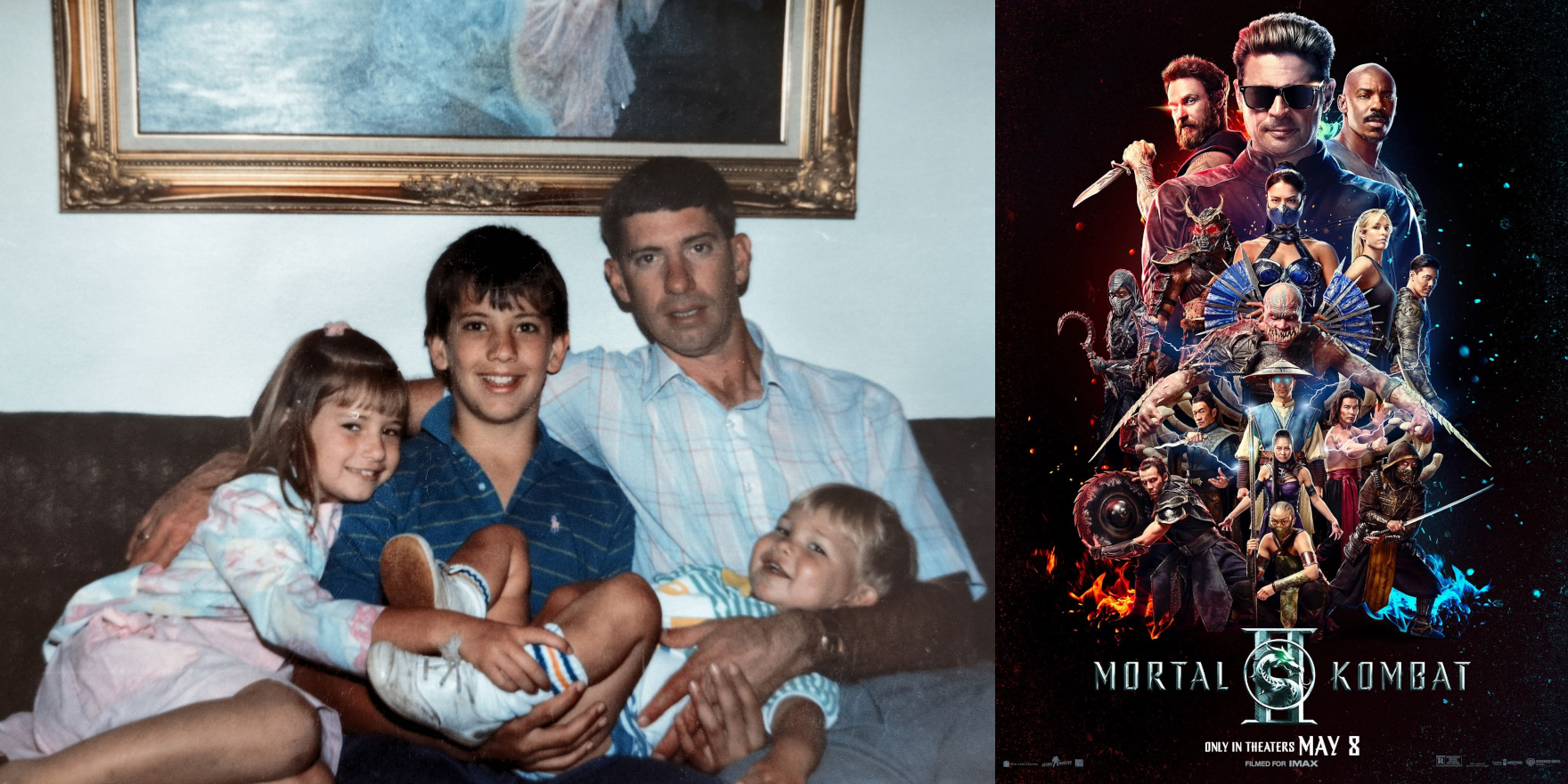
It’s 1993, and my dad doesn’t understand video games.
He’s tried a few times in the past. When I was eight, I stole a few bricks of Post-It Notes and left literally hundreds of notes hidden all over the house, each one saying, “Buy Jeremy a Nintendo.” There were notes hidden inside folded socks and boxes of cereal, notes tucked away into coffee mugs and wallets. It was obnoxious, and it worked. Eventually, I wore them down and they bought me a Nintendo Entertainment System for Christmas. Dad dutifully played a few games of Super Mario Bros. and Duck Hunt with me, but the whole experience left him more puzzled than anything else.
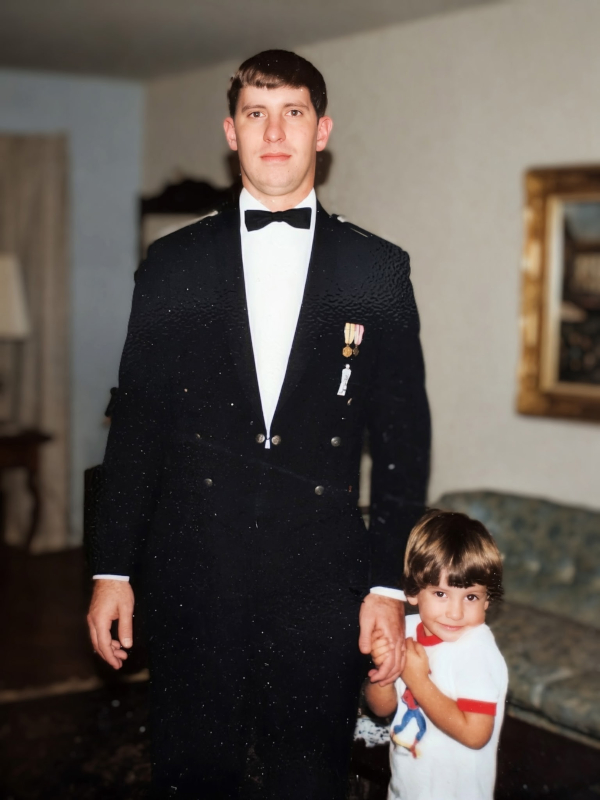
My dad didn’t really understand me, either. But to be fair, no one did. I was a withdrawn and weird child, the type who would spend hours dribbling a basketball in an aimless circle while I was busy building imaginary fantasy worlds in my head. On the inside, I was devising epic clashes between my Transformers and Ninja Turtles, or writing a Jaws sequel that conveniently starred a cool eight-year-old named Jeremy. But from the outside, I was just an odd kid walking in endless circles. I have to imagine that my parents weren’t exactly optimistic about my chances for future success.
—-//—-
It’s 2024, and I’m standing on the set of a video game adaptation that I wrote, and my dad is gone.
I wasn’t able to be on set for the principal photography of Mortal Kombat 2, mainly because I was worried about being stuck on the other side of the globe if his cancer took a sudden turn for the worse. But I had always been hopeful that I would be able to make it down to Australia’s Gold Coast for our week of additional photography, which was scheduled for a few months after the movie wrapped. I had written a handful of small character beats and a brand new coda for the movie that everyone was excited to shoot. I couldn’t wait to meet the cast and to watch our director Simon McQuoid work. I had seen the rough assembly of the movie, and even with the missing ending, it was already clear that we had something special on our hands.
Then Dad’s cancer came roaring back. He had been fighting it for several years at that point, and we had gone through the usual gamut of breakthroughs and setbacks, the small glimmers of hope and the runaway moments of crushing despair. Sometimes when we spoke on the phone, his voice would be strong and healthy, his memory clear, his sense of humor fully intact. Other times he would be a shell of himself, confused and exhausted, his voice a cracked whisper. But we had been through bad times before, and he had always managed to bounce back. This time would be different. I spoke to the hospice nurse on the phone, and asked for her honest option. She told me to get on the first plane I could find. I was back in Kansas that same night.
I called the studio and told them there was no way I could make it down to set.
Two days later, he died in my arms.
—-//—-
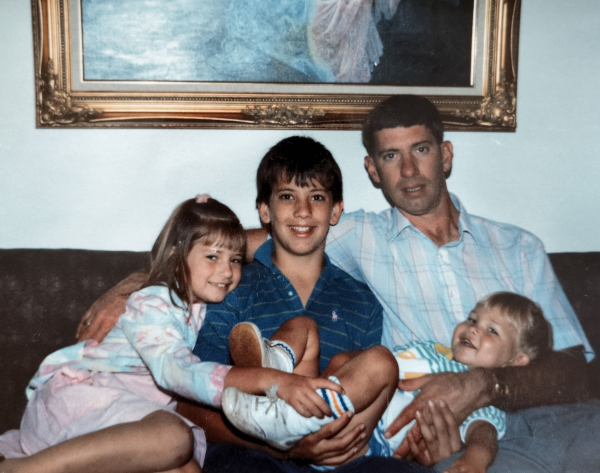
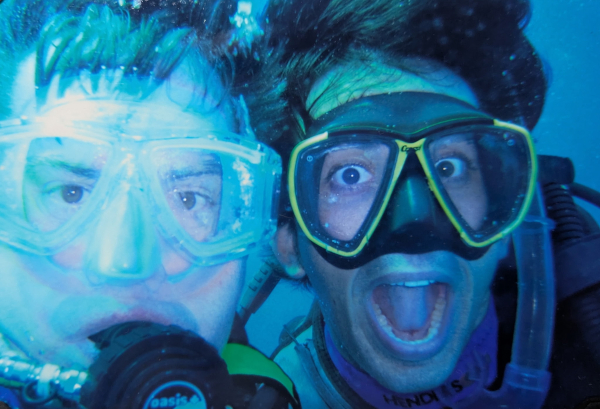
He was a military man and a daredevil, an Air Force fighter pilot who flew F-14 Tomcats until the G-forces blew out one of his eardrums and permanently grounded him. It was the sort of accident that would have washed out a weaker person, but Dad attacked his desk job with the same ferocity he had in the air, and he quickly rose through the ranks, helping to develop several revolutionary new weapons systems along the way. He loved scuba diving, hunting and fishing with his brothers, books about submarines, and movies with explosions.
I was a lonely teenage introvert who spent most of my days hiding from the world in my bedroom, escaping into Marvel comic books and Stephen King novels and practically any video game I could get my hands on. While other kids were socializing or playing sports, I was dumping thousands of hours into Mario and Sonic, Battletoads and Blaster Master. Here was a world that was nothing like school. This was a place where the rules always made sense, where it was OK to fail, because failing meant learning from your mistakes. At school, I was either bullied or ignored, but in the world of video games, there was no challenge I couldn’t overcome, no scenario I couldn’t master.
Dad and I had nothing in common. Except Contra III: The Alien Wars.
The game itself was pretty simple. Your musclebound soldier ran from left to right, gunning down an endless stream of alien bastards and battling enormous bosses that filled the entire screen. One day I was halfway through a run when I realized that Dad was standing in the doorway, watching me play.
“That one looks cool,” he offered up.
“Yeah, it’s Contra III.” I missed an easy jump and lost my last life, taking me right back to the start screen. I offered him the other Super Nintendo controller, already knowing the answer would be no. “You want to try?”
Sure enough, he shook his head. “I’d be terrible.”
“It’s got a two-player mode, though,” I urged him. “So I can help you. And there’s a code you can put in to get more lives.”
He hesitated. Then sat down beside me.
—-//—-
He wanted to die in his own bed, in his own house, on his own terms. The hospice nurse told us that after you remove the breathing machines and administer that first dose of morphine, a lot of patients tend to slip away in a matter of minutes. But Dad was always a fighter.
It took him eight hours to die. I held him for most of it. He was in tremendous pain. Sometimes, in my darkest moments, I’m right back in that room again.
I was broken afterwards. Couldn’t function. The grief came in nasty little waves, totally unpredictable, arriving out of nowhere and leaving me devastated in its wake. The thought of flying to Australia and spending a week on a movie set seemed obscene, like an insult to his memory.
The next few weeks passed in a dazed blur. “I’ll support you, whatever you want to do,” my wife told me. “But I think he would have wanted you to go. And I think you’ll regret it if you don’t.”
She’s always been smarter than me.
—-//—-
Dad wasn’t wrong; he was terrible at Contra.
To be fair, the game was fiendishly difficult. One moment you’re blasting along on a flying hoverbike, the next your character is dangling from the bottom of a speeding missile. Enemies swarm you from every direction, at every moment, and it only takes a single hit to kill your character. Even after punching in the famous Konami code (say it with me, fellow Gen-Xers: up, up, down, down, left, right, left, right, B, A, start), Dad would still burn through his allotment of 30 lives with almost comical speed. Once he was out of lives, I would gift him some of mine, transforming each run into a clumsy scramble to see how far we could get before he finally bled us both dry. Sometimes we wouldn’t even make it past the second level before getting booted right back to the title screen.
I didn’t care. I had finally found a game Dad would play.
Looking back, I’m sure it was all intensely frustrating for him. This is a guy who used to throw fighter jets through hairpin rolls at several hundred miles an hour, and now he was getting stomped by a giant mutant turtle while his teenage son gave him patronizing advice about how You’re actually supposed to avoid those fireballs, Dad, not run straight into them.
But he kept trying. And slowly but surely, he started to get a little better. Instead of crashing out after one or two levels, we started doubling that number. Once we even made it all the way to Red Falcon’s final lair, where we were killed by a giant alien mouth that spit out hordes of flying parasites. Dad threw his controller down in disgust. Then he stared at the screen for a few seconds longer.
“I want to kill that goddamn thing,” he muttered, picking up the controller. “Let’s go again.”
—-//—-
It’s 2024 and I’m standing on the set of a video game adaptation that I wrote, and my dad is still gone.
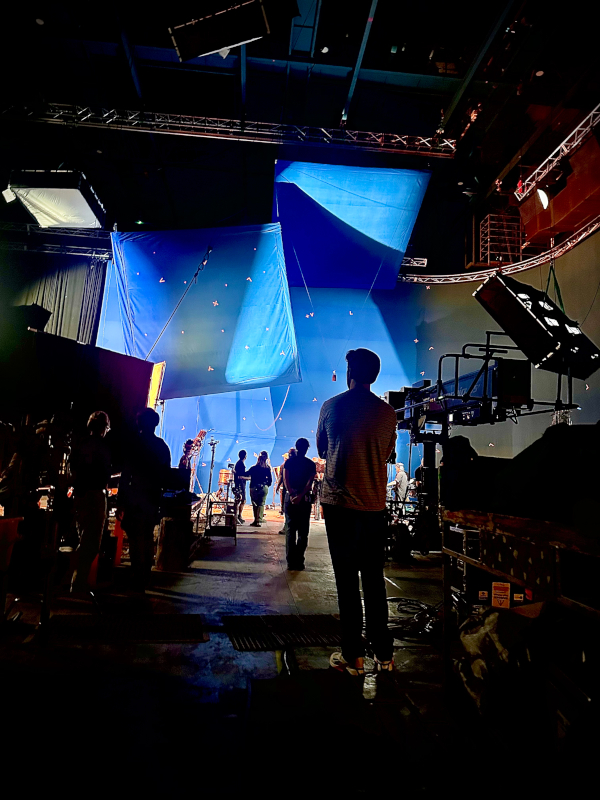
When I told New Line that I had changed my mind, my friends at the studio dropped everything to fly me down to set. Now I’m back at work, standing inside a massive soundstage decked out to look like an insane gothic castle, watching as director Simon McQuoid rehearses a particularly challenging stunt with his actors. I’m surrounded by some of the best craftsmen on the planet, all of them working tirelessly to bring my words to life.
“Action!” is called and a stuntman on wires is ripped across the stage, somehow executing a perfect Shadow Kick while hurtling through the air. It looks incredibly dangerous and impossibly cool. The whole crew applauds.
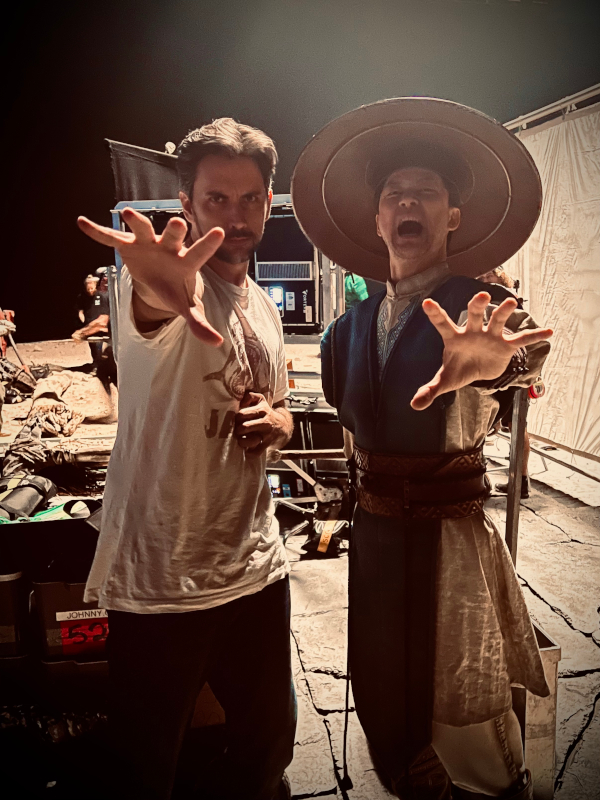
In between takes, I get to meet most of the actors and take pictures with them. I think back to that 14-year-old version of me, pumping endless quarters into a battered Mortal Kombat arcade machine down at the local laundromat, and try to imagine what he would think seeing his future self standing next to Lord Raiden himself, or posing with Johnny Cage. I think about how the only reason I’m here at all is because my parents agreed to send me to film school instead of forcing me to chase after a real job, because they supported me even when they didn’t understand me. I think about how much Dad would have loved this movie.
—-//—-
Sitting beside his hospital bed, I show him bits and pieces of Mortal Kombat 2, pulling them up on my laptop. He had always been a fan of action movies, and I was excited that I finally had my name on a good one. I show him Johnny Cage battling against Baraka, plus a sizzle reel of some of the craziest moments in the film.
He tries his best to focus, but his head is swimming with painkillers and he has trouble keeping his eyes open. So mostly he just listens to the fight scenes with a small smile. Every now and then he reaches out and pats the back of my hand.
He was proud. That was enough.
—-//—-
There’s a problem with one of the scenes, and I huddle with Simon and the actors until we figure out a solution. I write out the new pages while pacing with my laptop, and in the background Johnny Cage’s stunt double continues to get hurtled through the air.
I meet CJ Bloomfield in full costume, and tell him that Baraka was always my favorite Mortal Kombat character. The spiky-toothed monster gives me a giant bearhug and I almost burst into tears.
I finish the new scene and distribute the pages to the actors. They somehow nail it on the first take. Watching from behind the monitor, I pump my fist in the air.
Our fantastic producer Bennett Walsh walks me over to the prop house in between set-ups. There’s an entire bin full of prop weapons that are going to get recycled once the movie is over. “Take whatever you want,” one of the prop guys tells me. Big mistake. I walk out clutching an armful of rubber swords and spears and fans and giant bloody war hammers. It will wind up costing me over a thousand bucks to ship it all back to the United States. It’s worth every penny.
We finish the final shot of the movie, and the entire cast crowds around the monitors to watch the playback. The shot looks awesome. Everyone is cheering and laughing.
After the movie wraps, my wife and I will spend an extra week in Australia. We’ll visit the Crocodile Hunter’s Zoo, where we’ll get to pet quokkas and hold meerkats. We’ll go whale-diving in Brisbane, and we won’t see a goddamned thing. We’ll tour Sydney, and eat incredible meals, and explore a nature preserve filled with friendly kangaroos, and it’s all absolutely wonderful.
I’m still not OK. But I’m getting there.
—-//—-
He’s already taken his first shot of morphine, and we’re waiting for him to slip into unconsciousness. “One last sleep,” the nurse calls it. But for now he’s still lucid, still with us, at least for a little while longer. I hold his hand and we listen to his favorite Gerry Rafferty song on repeat.
“You remember that Nintendo game we used to play?” he asks abruptly at one point. “What was that thing called?” “Contra III,” I tell him.
“That’s right,” he says softly, smiling up at the ceiling. “God, that was fun.”
This one’s for you, Dad.