"It is right of the grandfather to tell the grandson later what was said while in the womb… It is the right of the grandfather to give the name that will serve as a life program to its bearer.”
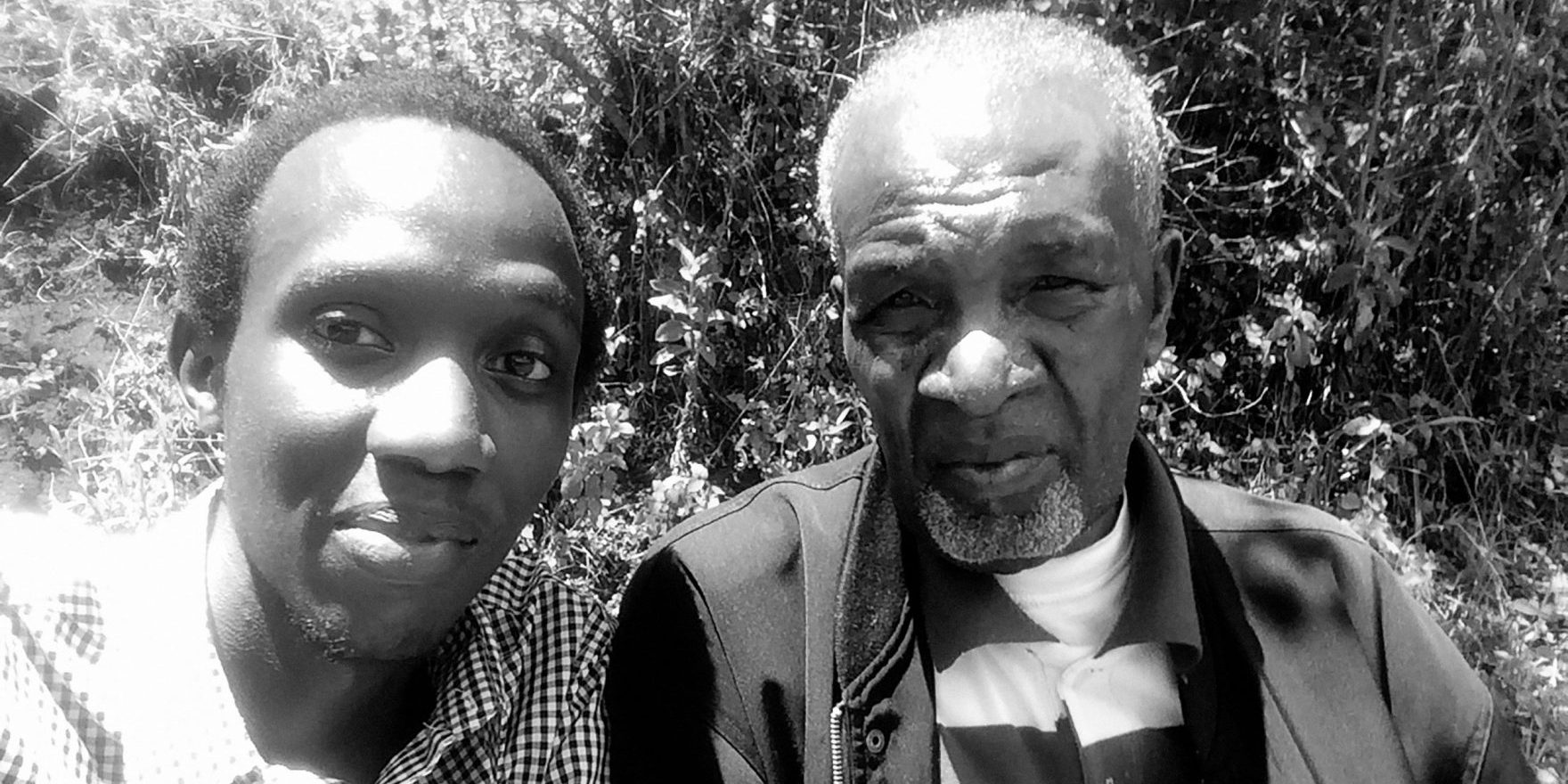
These words from Ritual: Power, Healing and Community by Malidoma Somé resonate with my idea of how my Gũka, my grandfather, Joseph Kamaru, spoke to me while I was still in my mother’s womb. A closeness was already brewing before I was born, and this connection is becoming apparent to me now more than ever through song.
Growing up, his music was so present. Although I knew him more as my grandfather, I was told stories about his life and his prominence in the country. When I was born and named directly after him, it felt like a sign that my parents and ancestors saw me as the rebirth of Kamaru. The Agĩkũyũ naming system is important: One partakes of the spirit of the person they are named after. As the second born male, I was named after my maternal grandfather. It’s rare to receive both of his names as I did — a mystery I still ask my parents about — but I remain forever grateful that it happened this way.
I began to understand my Gũka better as an artist when I was in high school. In my music classes, we studied folk songs and dance, and his music was part of the repertoire. Although I had grown up listening to him, studying his work in school gave me a deeper understanding of who he was in the context of Kenyan music history, as a monument of contemporary Gikuyu culture. This realization prompted me to visit him more often in his home, and talk with him about music and his life. I was only 15 then, and it was during this period that I started playing guitar, learning from him how to play along to his music. I visited him during my breaks between classes, as my school was close to his home, and I would have sleepovers at his home when my family visited, just to spend more time around him and learn from him. The same musician I was studying in school was also my immediate mentor.
I remember once he was interviewed on national television and was asked who would take his role, and he mentioned me. I hadn’t even started producing my own music at that point, but he already saw the potential in me. He was also enthusiastic about writing songs for my cousin and me as part of a new band he wanted to form.
This baton he handed over is still becoming. A special invisible apprenticeship that continues to take shape through an ongoing antiphonal dialogue. To me, his discography is an open journal, full of entries I return to throughout my life to understand him more deeply. For example, from his album Kamaru Hits of ‘60s, tracks like “Mbooco iri Mbuca” explain his work and the conditions of his life post-independence Kenya. On “Thina wa Kamaru,” the song describes when my grandmother, Kamaru’s wife, was hospitalized and how he coped with the situation. With last year’s reissuing of his music, as well as putting together the new compilation of his music, Heavy Combination 1966-2007, I’ve learned more about him than I ever knew as a child. He was elusive, both as a person and as a musician. Despite his popularity, he kept a low profile, especially when running personal errands. Whenever he traveled upcountry to Embu to visit his former bandmate and sister, Celina, he would often pose as his own chauffeur. He didn’t want to be seen driving himself.
The beauty of the process of learning about my grandfather is that he met and connected with many people. I've received archival materials, recordings, photos, even journal entries from people who met him throughout his life. He was always present, yet not entirely. That blurriness still lingers, and more keeps unfurling about him.
He always told me to protect the name Kamaru, and I’ve often thought of how best to do that. Names are given, but others are bestowed, and for me, Kamaru is more than simply a name; it’s a lineage. As Malidoma wrote, a name is “a life program to its bearer.” The life and legacy conferred upon me through my grandfather’s name is vast, and I have a responsibility to honor it. Yet through his music, there are always pointers to return to — a compass to help me navigate life as his reincarnation.
As a sound artist, my practice stands apart from my grandfather's life and legacy. What I've come to understand is that our lives are different, and I'm not trying to re-live his life, but learn from it. There are echoes between our paths, and in many ways the life I'm living now is a future past of my young grandfather. A different timeline, yet still one bound by sound, texture, and song.
I never imagined this would become my life: soaked in sound, touring, and living as an extension of my grandfather as “KMRU.” It feels like an ongoing, unconscious dialogue with him through this music. The beauty of it all is that he left so much knowledge to return to. Songs about life, politics, society, and Gikuyu tradition, written from his singular perspective, but relatable to all.
For me Kamaru is always present — like in Arabic, قمر (qamar), meaning moon, he’s always watching over me, a guiding force though the phases of my life. More than a mentor, he is a torch illuminating the path ahead. As my friend Neema Githere puts it: “Kamaru, protect your lineage. It’s beyond you.”