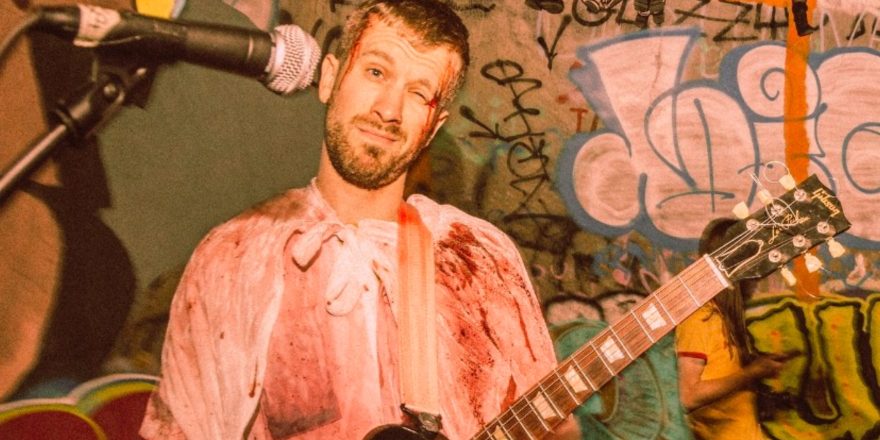




Sam Goblin currently lives in Tallahassee, FL and plays music with Mister Goblin and Deady. He hopes to never, ever, ever become a music writer.
Looking back, it’s hard to believe how fortunate I was to grow up within spitting distance of the greatest venue of all time, which is, of course, the Black Cat in Washington DC. On a given week night as a 16 year old (!), provided my friend’s older brother was down to scoop me, I could ride into the city to catch various early ‘00s legends in the best sounding, coolest looking room available. I could then get back with enough time to crash and wake up to catch the bus to school, still reeking of cigarette smoke with the X’s fading on the back of my hand like a secret I was just dying for someone to ask me about. I haven’t lived in the area for years, but Muriel Bowser can turn the Black Cat into a Sweetgreen over my dead fucking body.
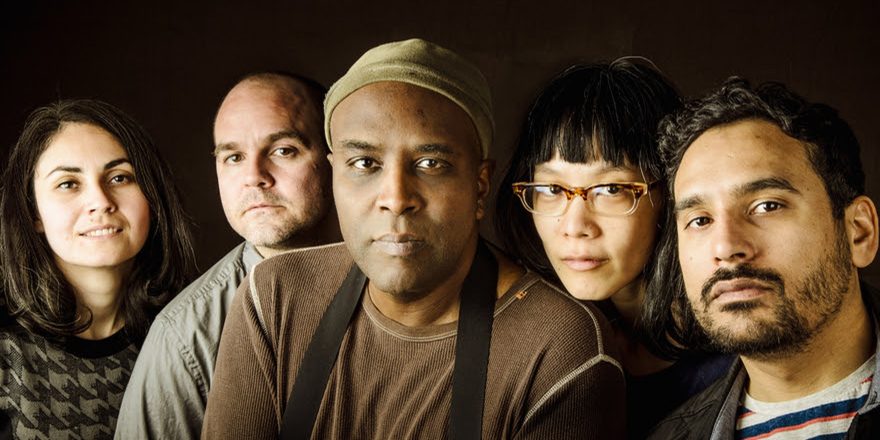
Seeing Beauty Pill at the venue all those years ago was deeply instructive, and to this day I can remember right where I was standing as I watched Jean Cook beat the shit out of an actual frying pan through the intro of “Rideshare.” These were songs I was still attempting to wrap my alt-rock-radio-warped brain around, but Beauty Pill’s music is very generous in its strangeness. As Chad Clark points out in our conversation, these are songs that want to be heard and understood. I remember at one show before they played “You, Yes You,” which should be on every single playlist ever made for a romantic interest, Chad said, “This is a straight up love song. Nothing wrong with straight up love.” Despite their reputation as obtuse or artsy, Beauty Pill’s music feels like an invitation in so many ways, and more than anything to me, feels like the DMV*; like home.
People from elsewhere love to weigh in on what DC has become. Depending who you ask, it’s a crime-ridden landfill that necessitates deployment of the gestapo, or it’s a fully automated frozen yogurt yuppie playground devoid of culture. I would argue that either narrative pushes the native population even further into the margins and minimizes the city’s incredible artistic past and present. As we talk about below, Chad Clark exists both in and outside DC’s history. Beauty Pill’s incredible now decade-old comeback record Beauty Pill Describes Things As They Are is too sonically and musically adventurous to map onto any particular scene, but is an undeniable and beautiful work that feels as immersive as the session in which it was recorded (the album was notably recorded before the public as an installation at Artisphere in Arlington, Virginia, more evidence of just how inviting this band is). Chad’s unfortunately ongoing struggles with viral cardiomyopathy are well-documented at this point, so I’ll just say this: He’s one of the greatest writers in a city of legends and has been thoughtful enough to come back to life several times so that we might appreciate that fact — the very least we can do is give him his flowers.
* Local slang for DC/Maryland/Virginia, not the car place.
Sam Goblin: Hey Chad! Good to see you, how’s it going?
Chad Clark: Well, my dog Stanley recently had a scare where we thought he might lose use of one of his legs. It was really inspiring to see though. When he started struggling he was just like, “I guess I’m a three-legged dog now.” My own health is precarious right now, and that’s just the honest truth. I’d been totally healthy after my heart transplant, but recently my heart started to kind of show rejection signals, and that’s scary. I’m trying to take on the Stanley mindset, like, This is just the deal.
Sam: When you say signs of rejection, how does that affect you? If you don’t mind me asking.
Chad: I just feel slowed down, like I’m running at half power. I’ve had a lot of adventures with my heart. My heart has been through many, many different phases. I could write a book on my relationship with my heart. I had a mechanical heart when I was making Describes, and then the moment that I had a living heart, a human heart, it was initially kind of uncomfortable. I wasn’t used to having a heartbeat, and it was kind of painful. I was like, “Man I can’t wait ‘til this stops.” And then I was like, “Oh, no, you don’t want that.”
There’s a reason we place so much importance on the heart as the center of emotion, but I think we overascribe value to it a little bit. I’m not a different person than I was when I had my first heart. I’ve changed through my experiences, but I don’t think that if I put someone else’s heart in you right now, that you’d become a radically different person. I think it’s your brain that makes you you, basically. But, yeah, it’s hard to deny that when your heart isn’t working, it kind of affects everything, you know? So that’s where I am right now. I’m struggling a little bit. But I’ll get through it. I’ll survive
Sam: I’m so sorry to hear that, Chad. I can’t imagine having to have that level of Stanley psychological flexibility around just health stuff for so long. I mean, you were originally diagnosed in the early 2000s, right?
Chad: That was 2008, actually. It has been a long journey, and my journey is rare and strange. It’s not like I have heart problems because I ate too much pizza, you know? My thing came out of the blue with a virus, and viruses almost never reach your heart, which is remarkably bare and unprotected. The consequence of all this is that I’m really fucking glad to be alive. That’s what I try to focus on. I’m going back to the hospital for a biopsy soon and I just wish I had my dog’s level of resilience.
By the way, I just listened to Frog Poems today. I didn’t even know it existed, I’ll be honest with you. I know about Bunny, but not this one. It’s really beautiful, it’s like a new thing.
Sam: Oh, thanks! Thanks for checking it out. So I know the 10 year nostalgia gap has become this kind of arbitrary marker of something, but what’s it like for you looking back at Describes at this point?
Chad: It’s a really good sensation, and not one that I have really experienced. Honestly, it was my first experience with people telling me that I was relevant. Do you know what I mean? Like someone actually says it to your face, and they’re meaning it as a compliment. It’s kind of like, Wait, what was I before? But, it was very pleasant to feel like there was a tug, a really good torque, kind of a friction between the band and that moment in music.
One thing people often say to me is that I’m ahead of my time. I know the people who say this are meaning to say something positive, but it’s not my favorite compliment. Honestly what it ultimately says is this is not your time and someone is coming to you to go, “Too bad about that.” There’s only one time, which is now, and I want this to match up. So with this record, people were actually responding to it as a modern work at that moment, and it was a nice feeling. It’s not a hit record, but it felt like it landed and was as understood as something that ambitious could be. I’d made records where people told me years after the fact, “Oh, that was amazing,” but this was a moment where it felt like this music was right on time. I am a human being, it’s nice to feel like I’m in communication, you know? I would like to be understood.
Sam: Going back to the record before this, the song that really hit me the hardest was “Near Miss Stories.” That piano over the bassline at the end is so great, and the message of the song just reminded me a bit of what you were saying at the beginning. Just a beautiful song.
Chad: Thank you. “Near Miss Stories” is the most unvarnished sort of singer-songwriter mode song we have. It’s really just me, maybe in a slightly corny way, talking to the audience which is not usually my mindset. I’m not often thinking about me, Chad, the person, when I’m writing. Usually I’m writing through a kind of persona that’s hard to explain, but “Near Miss Stories” is the most obviously personal song on the record and also has that breaking the fourth wall and talking directly to the listener thing. I don’t know what that is, but I do it every once in a while.
Sam: “Terrible Things” too, right?
Chad: Yeah, right, I do that at the end of that one too. You can’t do that too much though, otherwise you’re gonna lose credibility. I’m aware that for whatever reason, people receive me as being darkly acerbic, or whatever. To me it was kind of radical to be like, “Hey, life’s not so bad. Let’s all be grateful for what we have.” It’s really a corny, hippie kind of positive sentiment that people may not associate with me (especially in the Smart Went Crazy days) but it’s in there. That spirit is in there.
Sam: I was going back and looking at the response to Describes, and there were all these comments where people are saying things like, “This is academic music,” or, “This is graduate student stuff.” I’m like, What are you talking about? To me, these are just great songs. Maybe they have a certain esoteric quality but I feel like you could put them on in any context and they would just go, you know what I mean?
Chad: You know, I think we have something in common in that you gravitate to surprising chord changes in your music. Sometimes people really don’t like that, where the listener is not prepared for the new kind of geometry that you’re gonna present in the bridge or whatever. Surprises are kind of intrinsically unpleasant. We like it when we know exactly how the chorus is gonna go. There are people who are brilliant at that, Taylor Swift being an example, where the chorus does exactly what you want and to do and she makes it happen just as you imagined.
I’ll make this observation about my bandmate Devin [Ocampo] specifically: I wasn’t able to see his old band Faraquet reunite, but I texted him the morning after and he was so euphoric about the show and the band. He was high. He was very high, and it was awesome. Devin is also someone who will tell you, fiercely, he does not give a fuck about the audience. Like, he’s tough about it, too. His idea of artistic integrity is absolutely no pandering what-so-fucking-ever, you know? But the next day he was all lit up, like a bouncy Sesame Street character. It was just so nice to read the text and to see that everybody loved the show and had a great time. It’s just nice to register within a group of other human beings.
Sam: That’s awesome, I love that.
Chad: Here’s a question for you: Looking back at the sweep of the last 100 years of music, let’s say, do you think the strongest work has come out of scenes or from people outside of those scenes? In terms of your own subjective valuation.
Sam: That’s a really good question. I think the songwriters I gravitate toward the most are associated with a scene but cut against the grain in some way? I think of somebody like Nina Nastasia who was on this sort of noise rock label and recorded with Steve Albini, but has nothing to do musically with that world. I guess there’s still a tie there or some kind of group mentality there but yeah, I love her.
Chad: I mean, that’s a very fascinating example, because you could see her both ways. Like, this is clearly an outsider but also clearly someone who is tapped into a community. Alright, then let’s take Prince. I mean, definitely not of a scene and at least as in the way that I think about it. He was one of these people just doing their own thing and leading the charge and spawning other people who were doing a similar thing. You could say I have a very strong connection with DC and the Dischord world, and from that standpoint I am part of a scene, but I self-identify as an outsider. Whether that’s true or not, that’s the way I feel. It kind of feels like I’m in a wilderness, and it’s a little scary in that way. We’re working on a new record now and I’m not gonna characterize this music as radical, but I can imagine detractors for what we’re going to do.
You know what I’m tired of though? Nostalgia. Nothing wrong with it, and I appreciate that a lot of bands are getting their due 10 years down the line or whatever. I mean, that’s why we’re having this conversation, but at some point it’s like — just make something dope. Just make something dope.