


Lily Lady is an artist from New York City. Lily’s journalism can be found in Office and Dirty Magazine. Their latest poetry collection is NDA (Far West Press, 2024) and their feature film, Sam’s World, is available digitally on Tubi, Amazon Prime and more platforms via Factory 25. (Photo by Max Lakner.)
The film Modern Whore, which premiered at the 2025 Toronto International Film Festival, is based upon the experiences of former sex worker Andrea Werhun. Modern Whore in all its iterations – a short that premiered at SXSW in 2020, a memoir by Werhun, and now the feature – has been called by its director, Nicole Bazuin, “a rare sex work narrative told and performed by the sex worker herself.”
I mean … really? The market is oversaturated with sex-worker narratives told by sex workers. And this is coming from a sex worker who made a movie starring … guess who? Me!
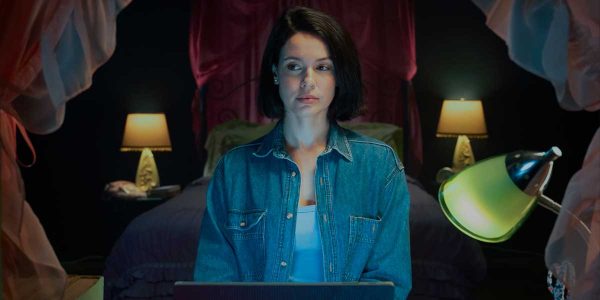
Rare or not, Modern Whore brings Wehun’s experiences as an escort and stripper to the foreground, alongside the voices of other O.G. Toronto sex workers. The film is stylized with big colors and eye-popping stage sets, but relies on flat, direct-to-the-camera testimonials.
In one such camera address, Werhun says that sex workers are “supposed to keep [their] secrets. And that includes the secret of how [clients] truly behave. And that’s why we experience so much violence from people. Because there’s this assumption that we’re not going to tell anyone…[that] we don’t have anyone to turn to…”
In another section, we hear a voiceover from Werhun: “It goes without saying that the strip club is a booze-drenched environment. It is a bar, after all.”
If it goes without saying, why say it?
Sean Baker supercharges Modern Whore with an executive producing credit. The TIFF invite was surely informed at least in part by his association with the film; major press coverage has underscored Modern Whore as a Baker-backed project. It’s unclear how much creative influence he had, or how much his association with sex worker auteurs is a hedge against criticism of his own contributions and relative outsider status in the industry.
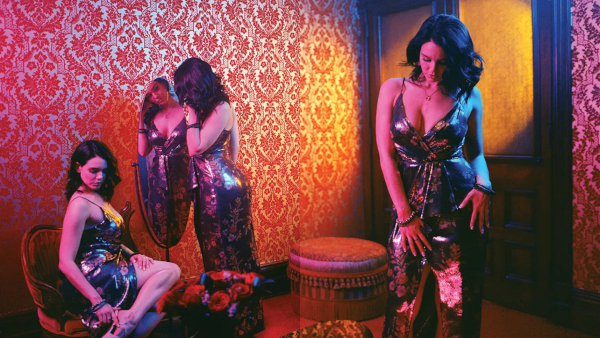
The early reviews of Modern Whore have lauded the “diversity of the sex worker interviewees: diverse body shapes, mixed races, disabled, and neurodivergent.” Indeed, Werhun assembles an intersectionally diverse roundtable. It feels so self-consciously Diverse™ – especially amid a film which is otherwise entirely The Werhun Show – it comes across as shoe-horned into a vanity project.
Many within the industry, however, loved Modern Whore. Diney – the Toronto-based CEO of Stripper News – called the premiere “like Christmas” for Toronto strippers.
“The most important thing about this film is [that] it’s so Andrea. It really embodies who she is as a person and as a performer,” Diney tells me.
“We’re seeing so many different films by sex workers and it’s important to see that every style varies and we express ourselves in ways that are true to us. I find that very empowering. All of our ways of storytelling differ…” she continues.
Perhaps the crux of the matter for me is simply that Modern Whore is not to my personal taste. Yet there’s a distinctly off-putting marketing strategy deployed for recent films by and about sex workers. The messaging is as follows: sex work is simultaneously culturally normalized but also extremely stigmatized. Being a sex worker is uniquely exceptional, but sex workers are also completely normal people. Oh, and it’s also the very first film to show any of this onscreen.
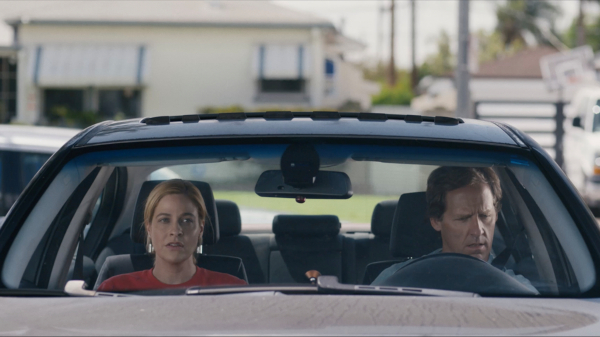
In a moment of oversaturation and marketing contradictions, a few recent offerings explore the world of sex work from alternative perspectives with a less pedantic and more irreverent nature. One such entrant is the pilot episode of Bulldozer, a fictionalized account of a woman reeling post-breakup. Created by the brother-sister duo Andrew and Joanna Leeds, in Bulldozer’s opening scene, the protagonist confronts her boyfriend after he cheats on her with a sex worker.
The main character, played by Joanna, asks her former partner if “the hookers” ate her protein bars. Was the dog crated when they came over? How did he even find the women? When he confesses that he searched by ethnicity – mostly looking for nonwhite escorts – she declares offhandedly, “OK, well that actually makes me feel better. I can only compete with Caucasians.”
A character who uncovers that their partner secretly hired someone for sexual services is a perspective I’d actually like to hear more from. That type of real-time processing isn’t something I’ve seen onscreen much. The dialog in Bulldozer is uncomfortable, often funny, and introduces complex issues about how the romantic partners of clients relate to the industry.
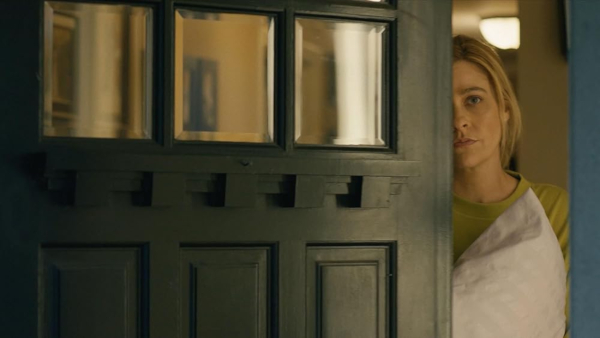
Bulldozer isn’t perfect. But it doesn’t claim to present a perfect protagonist. When the main character expresses concern that she has a “disease that’s still incubating,” I shifted uncomfortably in my seat. The stereotype that sex workers carry STIs at higher rates is outdated; sex workers are more likely to get regular STI testing and be more informed about sexual health than the average civilian. Nevertheless, I’d rather see a civilian take a big swing to get me to laugh in an otherwise pretty quippy pilot episode than have to sit through a self-congratulatory slogfest.
Where does all this leave us? The Anora landslide at the 2025 Oscar still looms large over the industry, potentially ushering in more and more sex worker-related projects. Maybe sex work is still stigmatized. Or maybe it’s fully normalized. It’s probably a mix, depending on where you are and who you ask. But can the barometer for good entertainment be that it’s entertaining again? Can we please, please, please (finally) live in a Postmodern Whore era? I’d like to think so.