


Matteo Liberatore is a visual artist and composer who performs as Molto Ohm. The latest Molto Ohm record, Reality Pills, is out February 2026.
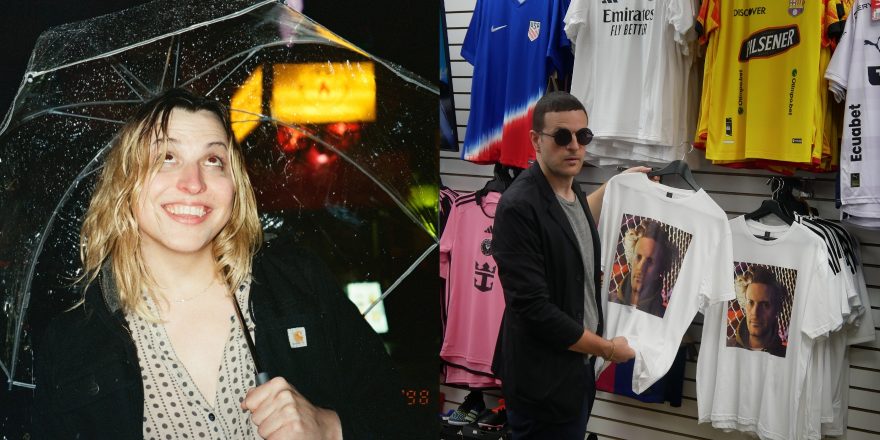
(Photo Credit: Brianna DiFelice)
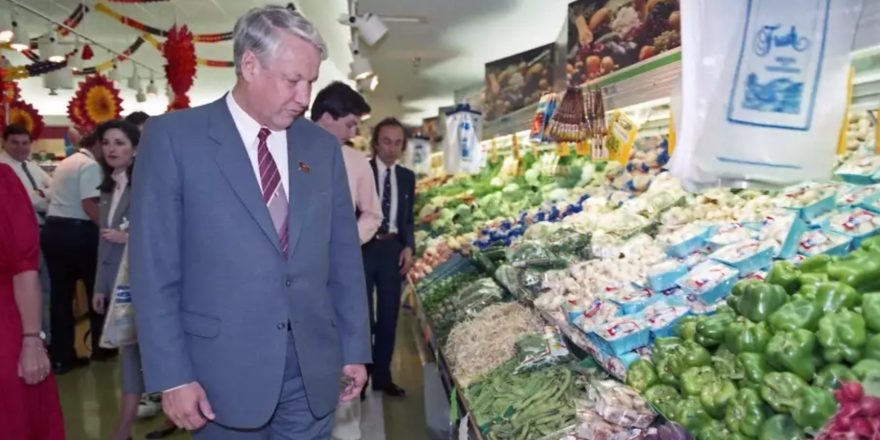
I remember a story from my childhood about Mikhail Gorbachev visiting the US, walking into a grocery store and crying in the aisle of cereal boxes and canned foods. I didn’t fact check that story until recently. It turns out it was actually Boris Yeltsin, the other ‘80s Russian leader, who visited Randalls #30 on El Dorado Boulevard in Houston, Texas, during his 1989 US trip. He didn’t cry at the store, but as an aide said, it was then that “the last vestige of Bolshevism collapsed” inside him.
That Randalls had 30,000 unique products. Yeltsin went on to transform the failing Russian state-capitalist empire into a broken free-market one. Abundance and choice won, solidifying their status as symbols of Western freedom.
I was a child growing up in a village nested in the mountains of central Italy while Yeltsin was on that trip. My dad’s parents were farmers. I have memories of walking into their house, the dubbed American movies on the TV, the smell of elderliness — a mix of decaying flesh and growing wisdom. Between stories of the war, my grandfather would take us to the garage where they kept the tractor, the heavy tools, and il raccolto — the harvest. I remember the stairs and the silence surrounding our steps. I remember the smell of produce reaching me before I could see it, not one crop in particular, but the intense chorus of them all, the smell of the earth entering my big Italian nostrils. My dad and I would choose what we wanted for the week, hug nonno Domenico, and go home.
I often think of those memories while walking through the overflowing supermarket aisles of New York City, my adult home. Unlike Yeltsin, the spectacle baffles me; a stand-in for the American dream implanted in my youth, a dream that has been unraveling ever since.
The abundance I experience here is of a different kind from what I saw in my grandparents’ garage. This abundance is engineered for corporate profit, and choosing among endless variations of the same products elicits, at best, a short-lived excitement. At worst, it causes anxiety, depression, and self-judgement, especially when you are not in a financial position to afford making mistakes.
As Anglo-American governments sold us the enterprise model of “freedom as individual responsibility” while cutting societal safety nets, we became the lonely protagonists of our destinies. With so many choices available, messing up can only be our personal failure.
The smartphone era has further intensified these dynamics. We are lured to choose and consume 24/7 and from anywhere, even from our beds, late at night, our tired bodies and wired brains jittering as the pulse of glowing data calls to us.
As an economic credo, choice and abundance were never meant to free us, but rather to push us into a growth-obsessed economy that depends on us buying back the extraordinary amount of products we produce. The only way to sustain the cycle is to persuade us that the products will make us happy. Corporations, with the help and blessing of governments, spend billions every year to keep this belief alive. The advertisement industry, as their Trojan horse, creates the fantasy: the imaginary, beautiful world we can’t help but aspire to inhabit, a world that is always just one more choice, one more tap, one more credit loan away. It’s a system that runs on faith, and our dissatisfaction is its main gospel.
Unfortunately, the steps we take to alleviate this overload have been commodified as well. Think of the tech hijack of Zen practices via the flurry of apps that further increase our phone usage, or the explosion of the wellness industrial complex, or the companies promoting mindfulness workshops with the covert goal of increasing employees’ productivity. Or think of the rise of music and video streaming services, which broke free from the constraints of physical media and fixed showtimes and transformed us into passive users — content with content, perfect music in our ears and the latest show in our eyes — commodifying the human need for art and, in the process, devaluing working artists and pushing those who don’t fit the algorithmic flow into digital oblivion. Even genuine movements like the push for a more minimalist lifestyle get reabsorbed into the market and sold back to us as “trends.” And focusing solely on self-work risks turning it into another goal oriented, self-optimizing project, something to feel bad about when we do it wrong.
The truth is that many of our problems are not individual, but societal. We are just statistics on consumer report spreadsheets, overworking and overspending to save the economy, with little time to nurture what’s left of our souls.
What we need is a seismic change, a mainstream conversation on how to move away from a system that hurts the global north, devastates the global south, and eats away at our only planet. We need action on the ground along with public debates on a national scale on how to redirect abundance toward land, water, housing, energy, education, clean air, art, and communities, rather than greed-driven overproduction of useless goods and misplaced dreams. The freedom I dream of is not checking my bank account before going to the dentist, not worrying how I will survive old age, not wondering where I could possibly live if I lose my rent-controlled apartment.
Battling an ideology that reinforces itself a million times a day through movies, media, holidays, supermarkets, economics courses, personal relationships, etc. might feel insurmountable. Capitalism is excellent at appearing inevitable. But no ideology lasts forever. The cracks are already there. I hope to live long enough to see a new world coming out of them, blossoming like the carrots that my grandparents’ hands ripped out of the earth to feed me.
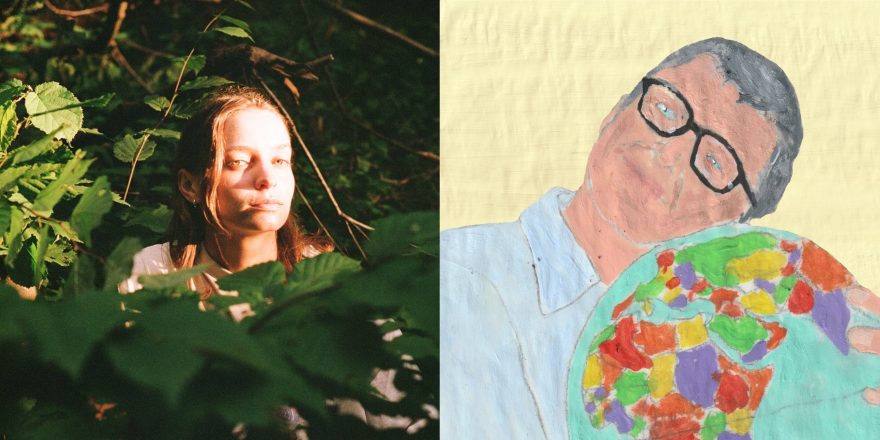
(Photo Credit: Houston Chronicle)