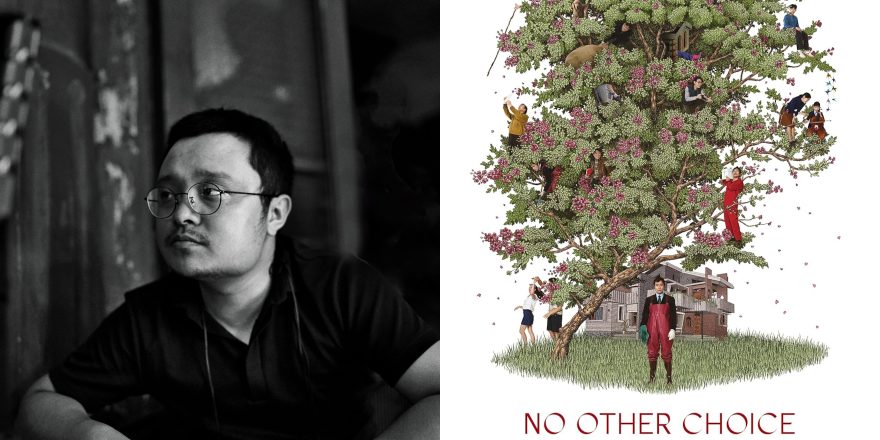



Park Chan-wook’s latest film, the dark comedic thriller No Other Choice, hits theaters on Christmas Day. A South Korean film director, screenwriter and producer who is among the most acclaimed auteurs in the world, he is perhaps best known for his “Vengeance Trilogy,” consisting of Sympathy for Mr. Vengeance, Oldboy and Sympathy for Lady Vengeance. His other acclaimed films include the vampire drama Thirst (2009); Stoker (2013), his Hollywood debut; the psychological thriller The Handmaiden (2016); and the Hitchcockian Decision To Leave (2022), for which he won Best Director at Cannes. He also directed and executive produced the BAFTA-winning series The Little Drummer Girl (2018), and was the co-showrunner of The Sympathizer (2024), an HBO Series starring Robert Downey Jr., based on the Pulitzer Prize-winning novel of the same name.
Due to all the interviews and events going on around No Other Choice, no matter how much I wanted to watch other people’s movies in the past year, it was really hard. I haven’t seen a single one.
In thinking about older films I’ve seen in 2025 that stand out, Yasujirō Ozu’s Tokyo Twilight immediately comes to mind. I loved it because of its pessimistic and tragic sentiments, which are more repressed or hidden in his other work. It is a film where emotions are laid bare, and I was deeply overwhelmed by the tragedy of its sadness. It was my first time seeing it. I’ve seen most of Ozu’s other movies, but for some reason, I’d previously missed this one. It’s not a particularly well-known film, and Ozu himself apparently wasn’t particularly fond of it, perhaps because he was hurt by the poor reception Tokyo Twilight got from critics at the time. That’s maybe why I hadn’t watched it before, but when I finally saw it, I loved it.
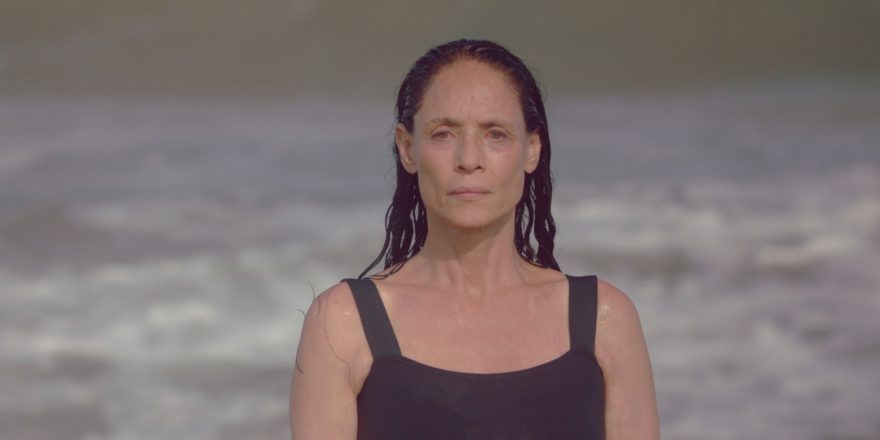
Another movie I really enjoyed that I saw this year was Neighboring Sounds, which I recently saw while going around film festivals. It’s by Kleber Mendonça Filho, the same director who did The Secret Agent. It’s a few years old, but I found it really refreshing. I liked the structure. I liked the rhythm of the film. It’s very different from the predictable, clichéd movies with three-act structures that people watch every day, and this one felt like I was surrendering to an incredibly free-flowing narrative that defied expectations, which was really enjoyable.
I’m seldom the type to watch movies in the build-up to making a movie, but it does happen occasionally. When we were preparing to make Thirst, I recommended that the female lead, Kim Ok-vin, should watch Andrzej Żuławski’s Possession, but that’s a rare case. Before making No Other Choice, though, I did watch a lot of different films with my cinematographer, Kim Woo-hyung, mostly a lot of color films from the ’70s, made in Europe, America and Japan. With this film, we had no choice but to shoot digitally, since we don’t have access to a film development facility in Korea, but I wanted to recreate the celluloid look as accurately as possible. For that reason, I watched a lot of different films to find a look that would serve as a reference. I didn’t pinpoint a specific film amongst the ones we watched, and say, “Let’s follow this look,” I just wanted to look at a wide range of movies and establish the feel of films shot on celluloid at that time.