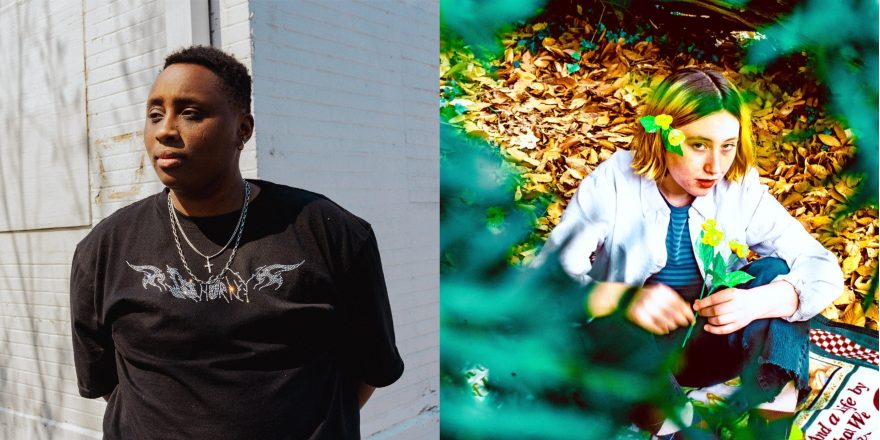


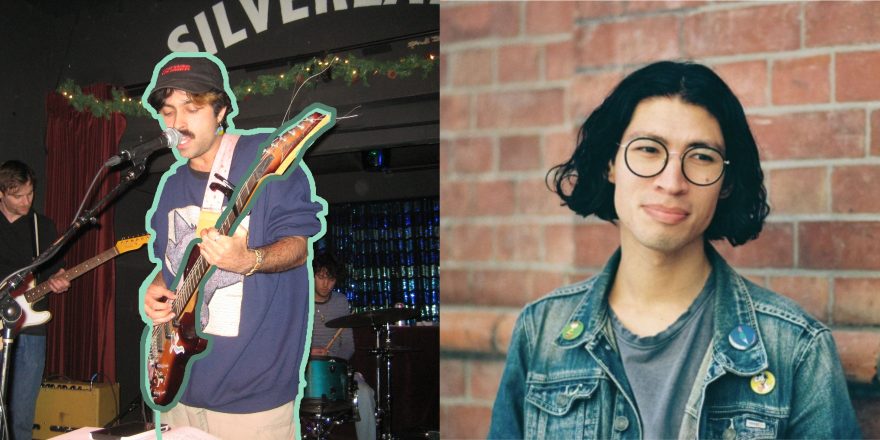

Pickle Darling has always existed just outside of the periphery. In a heightened time of fast music, algorithmic consumption and rapid virality, Lukas Mayo (they/them) has remained focused on the album. Their discography is a reflection of their creative evolution, and they deliberately look for ways to push sonic boundaries from release to release. Since debuting with Bigness in 2019 followed by Cosmonaut in 2021, Mayo has curated a catalog that is deeply personal and strangely tactile, where tiny, unexpected details — an off-kilter loop, a whispered aside, the warmth of an old Casio—become as crucial as melody itself. Their latest record, Bots, is out now on Father/Daughter
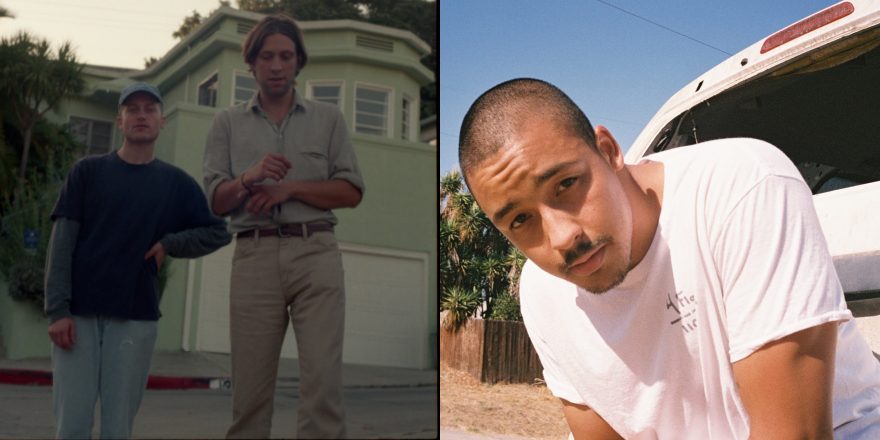
Dylan Gamez Citron is the LA-based artist who records and performs as Bedbug; Lukas Mayo is the New Zealand artist behind Pickle Darling. The new Pickle Darling record, Bots, came out last week on Father/Daughter, so to celebrate the release, Dylan and Lukas got on a call to catch up about the state of bedroom pop, and much more
— Annie Fell, Editor-in-chief, Talkhouse Music
Dylan Gamez Citron: I’m in my attic. I just moved.
Lukas Mayo: Like, you moved today?
Dylan: No, I moved over the summer. But I’ve never recorded in here or done anything, really. It hasn’t been really used yet.
Lukas: Moving sucks.
Dylan: I know. I purchased a house.
Lukas: Really? With that sweet Bedbug money?
Dylan: I get probably between $500 and $1500 a year from Bedbug. Sometimes if I release something, I could get a good $3K.
Lukas: I don’t know how much I make from music. I think with music, there’s so much random income and it just gets absorbed into your life. I’m probably doing it wrong — I’m probably not meant to absorb it into my life
Dylan: I think I’m probably losing money, because I bought an OP-1 last year.
Lukas: Wait, what’s that? I don’t know anything about gear. How much are they?
Dylan: This one was, like, $700.
Lukas: That’s, like, half the income of Bedbug.
Dylan: I know, that’s half a year of Bedbug. I figured it was fine because I’m investing Bedbug into Bedbug. But this was my biggest piece of gear that I’ve ever purchased. Normally I get, you know, Craigslist, eBay. Normally I don’t spend over $100, $200 on anything music related.
Lukas: Do you think about gear a lot?
Dylan: Yeah, all the time. That’s my big thing, because I don’t use a DAW, really. I use Logic, but I don’t use any plug-ins. None of my albums have ever used any plug-ins or soft synths.
Lukas: That’s so interesting. That makes sense, because I’ve always wondered how, listening to all your albums, there’s obviously lots of MIDI, but it never feels like it’s directly going into—
Dylan: I’ll take it a step further: there’s no MIDI ever. I’ve never done anything MIDI on the computer.
Lukas: So how are you recording?
Dylan: I have these synthesizers, and I would plug it into an amplifier — like my guitar amp, or something. I would take a keyboard, like a Casio keyboard or something, and I’d plug it into an amp. I’d set a microphone in front of the amp, like you would to record a guitar, and then the microphone would be attached to my cassette recorder. I’d hit record, and I would then take that layer and put it into Logic and then just build up.
Lukas: Everything is just layers of audio.
Dylan: Everything’s layers of audio. And, on top of that, after that first layer, you can’t get it to sync up, right? Because I can’t record and then record again. So what I have to do is I have to monitor my cassette recorder. So this is the real big secret — it’s not actually the tape that you’re hearing that makes everything sound like it’s recorded onto tape — for all of Bedbug, always, it’s always been the preamp in the cassette recorders that sounds really warm and vintage that are giving you that real tape compression and hiss. It’s not the actual cassette that’s giving that to you. It’s the monitor in the cassette recorder. I’m essentially using cassette recorders as pedals to give me preamp.
Lukas: This is blowing my mind. We do everything complete opposite because me, everything is done in the DAW. Everything is imported. There’s like nothing real.
Dylan: I can tell — and it sounds awesome. I just discovered that I can use a compressor in a computer, and I don’t have to do the preamp, and compressors can kind of make things breathe in their own world. A little bit of reverb, a little bit of compressor, can really make things fit together. But for a really long time I would record onto a DAW, and it would literally sound like someone was like sending direct signal into my ear and there was no space to breathe, and everything sounded like a hospital.
Lukas: I know exactly what you mean. It’s so hard to get things to not sound sterile when it’s all MIDI. You have to have something that sounds wrong. You have to add something that sounds bad.
Dylan: That’s exactly what it is. It sounds so sterile. And you nail it every time. It always sounds so clean, it sounds so nice. It sounds cleaner than what I’m doing, but it still sounds really warm and comfortable. When you do it, it sounds the way I want it to sound, but also it sounds really clean, which mine don’t normally sound. Because, again, mine are audio files I’m playing. So since it’s not MIDI, if I fuck up a little bit, that’s what you get. Because I can’t go back and edit those notes.
Lukas: It’s a very natural sounding album.
Dylan: I know. A bunch of teenagers started emulating it.
Lukas: Do you feel like people copy you?
Dylan: No. Not anymore. I’m washed up.
Lukas: I feel like I copy you. You’re not washed up. What does that mean?
Dylan: I played a show the other day and I was saying I’m washed up — because that’s my bit — and one of the people was like, “You’re not washed up!” And I was kind of saying, “Oh, no, the only reason those people even really like my music is because they’re looking for a really rare Last.fm scrobble.” I feel like I’m an Easter egg for a Spotify Wrapped. That’s the people that are listening to my music now: people that would love to be listening to whatever indie band is big, but they want that niche…
Lukas: It’s cooler to like Bedbug.
Dylan: It’s that clout. It’s like a rare drop.
Lukas: Well that’s a better way to think of it than being washed up: You’re still a secret. I still feel like a secret.
Dylan: [Laughs.] I think it’s both.
Lukas: I was listening to, I think it was a Bonnie Prince Billy podcast, and he talked about the value of limited reach, which is something I think about a lot. He’s like, “You make more of an impact if fewer people are in your audience.”
Dylan: Well, he’d have to say that, because he’s got kind of a limited reach.
Lukas: [Laughs.] But when you think about the best concerts you’ve ever been to, I feel like it’s more likely to be the smaller ones. Because you’re like, Oh, I’m actually a part of this.
Dylan: There’s some level of personalization. I think that’s fair. That’s why I’ve intentionally destroyed my audience — I don’t want an audience, because it’s more impactful for those people that want a rare drop.
Lukas: So this is all by design…
Dylan: Do you get rock-ognized?
Lukas: No. I feel like more people know me through my job — I work in a record store, and I’ve worked there for over 10 years. I feel I’m becoming just as recognized there for being that person.
Dylan: The person at the record store. I say this with the most graciousness: I get rock-ognized all the time, but only from teenagers. I can’t keep a fan past the age of 20. The second they hit 20, they’re like, “I’m on to Mac DeMarco.”
Lukas: [Laughs.]
Dylan: I feel like lo-fi music and bedroom music is kind of dead. I think it’s a dead genre.
Lukas: What do you think bedroom pop is? Because I feel like there’s two definitions of it, and one is wrong and one’s right.
Dylan: I feel like it’s easy to look at the influences, and it’s also easy to look at the era, but neither of them are actually a description of the genre. Because you could say, “I think it’s music that’s inspired by Daniel Johnston and The Microphones and recorded onto tape and an offshoot of outsider music and Sung Tongs,” you know what I mean?
Lukas: For some people, Billie Eilish is bedroom pop.
Dylan: It’s the Billie Eilish distinction: It’s when someone doesn’t record in a studio, they record in their bedroom and they make pop music, and therefore it’s bedroom pop. Lorde would be the same way. Clairo is the same way. She’s right on the cusp.
Lukas: They’re trying to ride our wave. Billie Eilish wants to be like Bedbug.
Dylan: I saw her at the climbing gym — she was there, and she had her little posse with her. It was pretty embarrassing because I was really stuck on one and she was able to do it.
Lukas: Did that feel like kind of a metaphor?
Dylan: It felt literally exactly the same. I was like, She took everything. But I do think that is kind of when it started to die out, when it got really mashed up and it became really hard to search for it. It stopped being an internet secret for the real music heads. I think that was the death.
Lukas: I think part of it was also the internet becoming just less nice in general. Those days of the Bandcamp bedroom pop thing, or even Twitter — I mean, obviously there was always shitty elements to it, but there was a time when I made a lot of connections on there.
Dylan: That’s dead now.
Lukas: There’s nowhere.
Dylan: I made a lot of local connections on Facebook, and that’s pretty gone as well. But I think it’s also the method: We found a lot of music through Bandcamp, through Twitter, and it’s a lot harder to make those connections on Instagram. And I think the way people are finding underground music this these days is just on TikTok.
Lukas: I’m not really on TikTok.
Dylan: Neither am I. That’s why I think I’m going the way of the dodo bird. [Laughs.] I think people are finding music algorithmically. They’re finding it on Spotify, they’re finding it through TikTok, and I think that is hard as an underground musician, because it really creates a lot of randomness. I feel like an industry that was already really based on luck, but was also based on your connections, the people that you knew, you could get by. I think that there was a moment where if you had a record on a DIY tape label, a cassette label, you could become popular just from being signed to a roster of a label that was buzzy.
Lukas: Yeah. Or even with music writers and stuff.
Dylan: Exactly. When I was a kid, I used to ride on anything that Pitchfork or Tiny Mix Tapes says. There’s no tastemaker in that way anymore. And there are some tastemakers, but they’re all on TikTok, they’re all making video content.
Lukas: That’s what they all are. Where do I find these people?
Dylan: You’re asking me.
Lukas: Not that I would call myself “successful,” but the amount of success I’ve had was, I was writing a lot of waves. I feel putting out something on on Z Tapes, I rode the wave of you and In Love With A Ghost.
Dylan: I feel the same way about Z Tapes with Fox Academy, or In Love With A Ghost. That was the benefit of having a label like that — you have these bands that would be “riding waves,” quote-unquote, but they would find their own loyal fan bases, and then the next band after them would be like, “Well, I’m riding that person’s wave.” I’m sure that there were a lot of bands that were riding your wave, and I felt like I was riding a wave as well. That was the beauty of DIY labels, that I feel like it doesn’t have a comparison right now.
Lukas: I wouldn’t know how to start now. I would have no clue. All of your releases have come out on small labels, right?
Dylan: Yeah. I love a label. I hate mailing things, I hate handling merch. I know at this point I could just do it on my own, but I also really miss the times when labels felt like a bit of a community, like you had a relationship with the other bands because you were both on the same label. I feel like that vibe is dead. I don’t feel like people really feel a lot of camaraderie on their label anymore.
Lukas: Yeah, I love being like, “I’m on this team. I’m on team Father/Daughter.” I guess technically we could do it ourselves and deal directly with the algorithms, but for me, growing up as a music fan, my fantasy about making records was never about being successful on my own, it was always about being part of that world, part of that conversation.
Dylan: When I was a kid and I was like, “I’m gonna make some music,” never was there something factored into it where I was like, “I’m so excited to make short, 15- to 30-second videos to get people to respect me.” That was never part of the equation.
Lukas: Yeah, it’s hellish. Did you have a TikTok moment? Not to go back to TikTok…
Dylan: I wish. I’ve never had a TikTok moment, and I’ve never had one of those YouTube viral [video moments] — I was never like David Dean Burkhart.
Lukas: I guess because your stuff doesn’t sound like anyone else, I’m surprised you haven’t had a TikTok moment.
Dylan: I haven’t had a moment of virality in any way. Have you?
Lukas: I don’t think so.
Dylan: I think this is what separates us from the big dogs these days.
Lukas: I was thinking recently, a younger version of me would look at myself now and probably think I was incredibly successful.
Dylan: I think you are. You’re on a cool label. You’ve toured more than me, I think.
Lukas: I’ve haven’t toured at all!
Dylan: I’ve never toured. You’ve played shows outside of your city. You’ve released records. I’ve only really released tapes.
Lukas: I would love to have those first Bedbug albums on vinyl.
Dylan: You and 10 other people would love them, and I would lose a lot of money.
Lukas: I don’t necessarily feel successful. I’m trying to feel more successful.
Dylan: You are successful. I believe!
Lukas: [Laughs.] I appreciate that.