

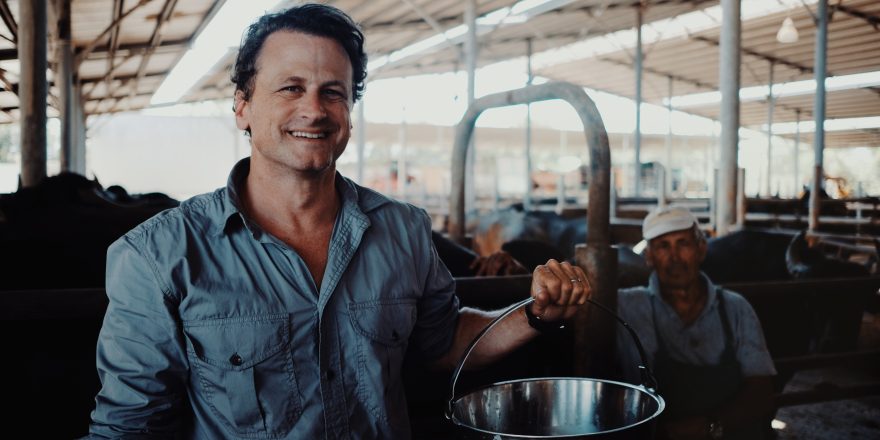

David Moscow is the co-creator, executive producer, and host of From Scratch. David made his feature film debut at age 13 in Big, starring as the young Tom Hanks; years later, he starred with Christian Bale in Newsies. He has appeared in over 40 films, television shows, and theater productions in his 40-year career. Most recently, David founded the production company The Hubris. He has executive produced more than 20 feature films, including Under the Silver Lake, To Dust, Strawberry Mansion and Wild Nights with Emily. David also develops mixed-income sustainably green apartment buildings. He lives in Los Angeles with his wife, Karen Moscow, and two children.
A very short and young-looking kid with a lot of energy and a loud mouth, vaguely reminiscent of Tom Hanks. What might be hurdles in elementary school are strengths as a child actor. And directors and producers have to listen when you bug them for advice.
I grew up in a family of community activists, much more likely to go to a march than to a movie. So, when I got a part in the movie Big as young Josh Baskin, it sent us all on a journey into the unknown. By the age of 12, I had auditioned for more movies than I had actually seen. There was always the question floating around, “How do I use my work to be of service?” And I would come back to this question throughout my early career.
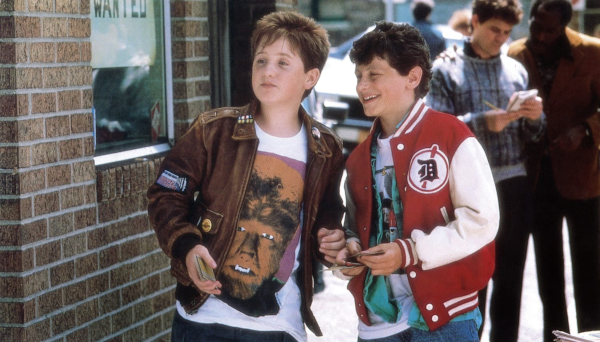
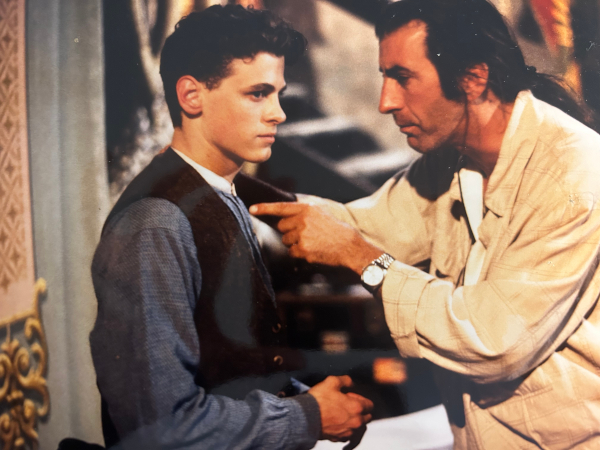
From Big to Newsies, and some TV series and movies in-between, my youthful coy smile earned me many a paycheck. But as I never studied acting, my tool box was lacking, and finally on a Broadway stage, there was nowhere to hide. The producer of What’s Wrong With This Picture?, starring Faith Prince, Jerry Stiller, Florence Stanley and Alan Rosenberg, expected me to cry at the end of the play, and I couldn’t. I was to turn to the apparition of my dead mother and usher her out the door, saying, “How can I ever miss you if you never leave?” But I never shed a tear. Not through rehearsals or previews. I was too busy thinking of what I was going to have for dinner after the show. The acclaimed director Joe Mantello was, needless to say, stressed.
But with a week to go, I came upon an article about Sean Penn and how he pretends to be his characters all the way through production. Something called “Method Acting Adjacent.” So I decided to be my character, Artie, from the moment I woke up for as long as this play ran. On press night, I said goodbye to my mom and sobbed. Fat wet tears. And finally the blue hairs in the front row could release their feelings as well. I got a standing O and a nice review in the Times and a newfound desire to get me more of that.
I would be a New York theatre actor, so it seemed. But when you make plans, the universe laughs …
When you live in New York, sometimes your actor friends just disappear. I was flying out to Los Angeles for a week to hang out, and my agent asked if I wanted to go on an audition while I was there. For tax purposes, but also for Seinfeld. A dream come true. And when I walked into the casting office, there they all were. About 10 of my missing compatriots, New York actors who had made the leap to the left coast. So here is where they had all gone! Big hugs all around and plenty of Aye Yous, until someone walked out of the audition room and said, “Jerry’s in there.” A hush fell over the room as everyone’s stomach leapt into their throats.
Inside, you fantasize about a room like that. An audience like that. Jerry and the other writers laughed and laughed at their very funny jokes.
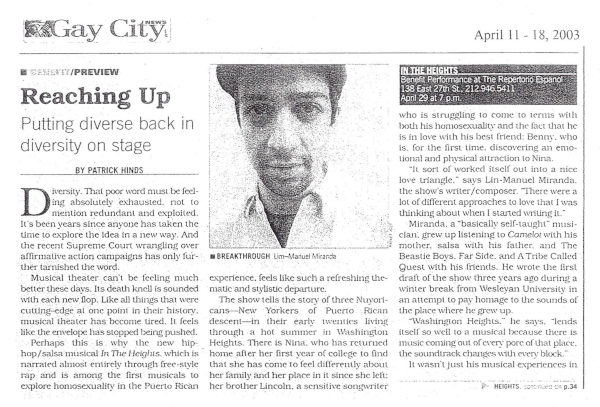
My dad called me up and asked if I would watch 20 minutes of a musical his friend Luis’s kid had written as his college thesis and maybe help produce it. This was problematic, as there is nothing worse than bad theatre. But they were family friends and the kid had ridden the school bus with me, so against my better instincts, I said yes.
He and his college friends got on stage at a basement theatre company and 10 minutes later, I said, “Lock the door, this is amazing!” I called up my friend Jill Furman, whose dad produced The Book of Mormon, and my friend Bernie Telsey, who cast Rent. “You gotta meet this kid.” His name was Lin, the show was called In the Heights, and I was now a producer.
As a producer, I’ve had movies at Sundance, play in competition in Cannes and win awards at Tribeca … but recouping was another matter. Life as a creative person often comes with the struggle to make a living doing something that you would likely do for free. So I always try to remember that it’s show business, not show hobby.
I had been kicking around the idea for a documentary about tacos and margaritas and the hard work that goes into harvesting and making them. We would follow Oaxaca’s subsistence corn farmers to make masa, and Jimadors in Jalisco as they harvested agave to steam and grind and ferment into tequila. To show how connected we all are by food and how it’s pretty hard to hate someone who keeps you fed and drunk. My agent asked, “Who is paying for this?” I said, “My investors.” “So what are you gonna do with this doc, maybe go to Sundance, maybe get picked up by HBO, maybe a few thousand people see it? But if it’s the pilot of a show about how food gets to your plate and then the next week you visit another culture and another meal, well, then you have a TV show. And your investors might even recoup.”
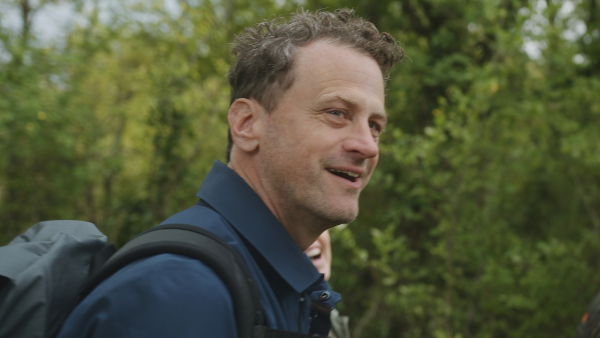
And that’s how I found my purpose and the best job I have ever had with From Scratch.
True essential workers are the folks who farm, fish and feed us. Each week I hold a microphone up to them and try to change who the world views as heroes.
The bright lights and the big life of being an actor in the ’80s, ’90s and 2000s were seductive. There were premieres, parties, gift bags and just a general excitement that goes with all that. I sometimes miss the actor life. But I still get to visit it – now I am an actor pretending to be a host posing as a journalist making meals from scratch.
But now I finally know I am being of service.