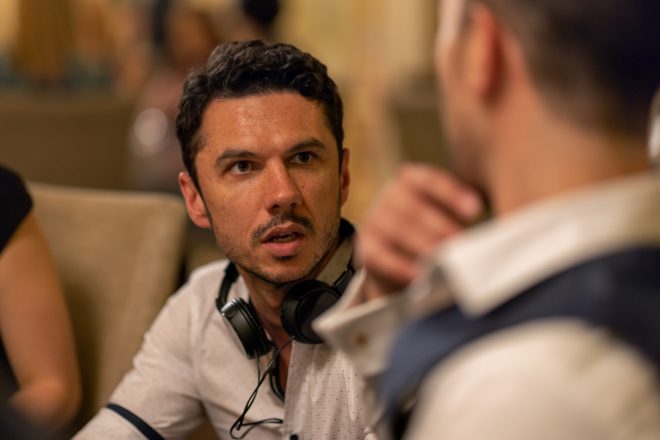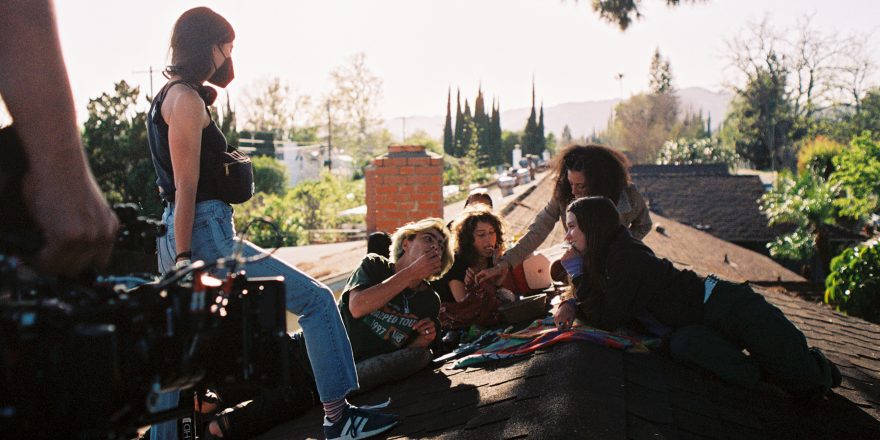


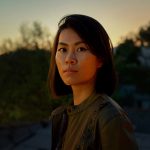
Siyou Tan is a Los Angeles-based filmmaker originally from Singapore. Siyou’s short films Cold Cut (2024), Strawberry Cheesecake (2021) and Hello Ahma (2019) premiered at festivals such as Cannes, Berlinale, Toronto, Locarno, among others. She is an alumna of Berlinale’s Talents Tokyo, Busan’s Asian Film Academy and Universal’s Director Initiative. She studied film and art at Wesleyan University, before going on to a directing fellowship at the American Film Institute. Her debut feature film, Amoeba, has its world premiere at the 2025 Toronto International Film Festival on September 9. (Photograph by Danielle Krudy.)
The first time I noticed it, it was a small old home behind our school. A faded blue single-story house, with a pink door and a zinc roof. My desk was by the window and I often stared out the iron bars during class, until my classmates gave me the nickname “jailbird.”
I went to an elite all-girls middle school in Singapore in the 2000s, a time when the nation was striving industriously towards economic growth by becoming an international financial hub. We sweltered in our starched school uniforms under the tyranny of fierce Chinese-speaking teachers. We sang the Pokémon rap while queuing up for McFlurrys. In between cramming for exams on Shakespeare, Stalin and Sun Yat Sen, we took turns playing Icy Tower on the class computer.
When the old home disappeared overnight to be replaced by a square of dust, I wondered what had happened to it. But there were other things on my mind, because I was trying to break every strange rule in this school, a place that demanded we inhale the culture of unquestioning obedience. No colored bras, no watches bigger than a 50 cent coin, no hair below the collar. No hugging, no piercings, no roller skates, no MTV. No sleeping or eating in class, no rolling of eyes. Enforced by Discipline Mistresses who shouted about being “good citizens” and building “moral character,” the fear of punishment perfumed every monitored corridor.
The next time I noticed a disappearance, it was a magnificent rain tree on the way to the bus stop. Days later, the cranes came in.
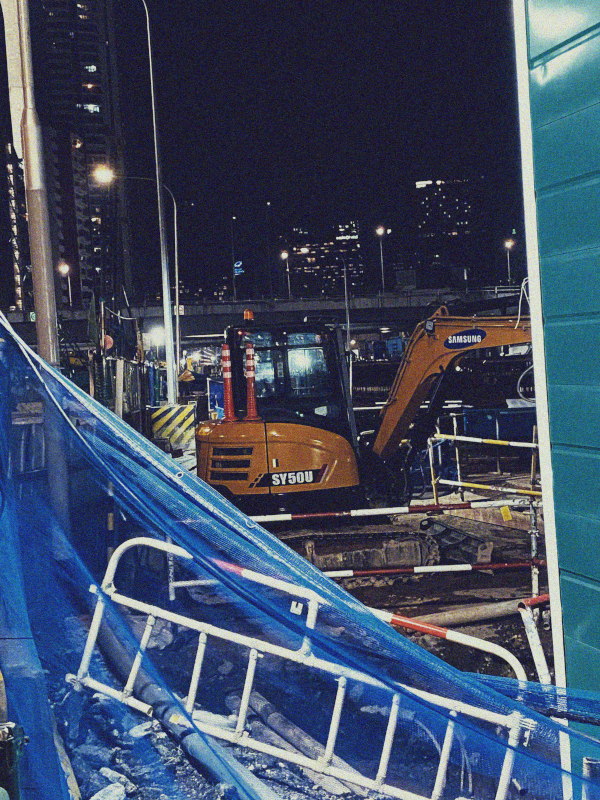
In land-scarce Singapore, every millimeter of land is planned, calculated for its potential for capital and growth, maximized. When buildings turn 99 years old, they are demolished. Same goes if they’re not tall enough or in any other way inadequate. The city-state destroys itself, to rebuild itself taller, glassier, shinier. More synthetic, more productive. All around me, the attitude was, “That’s the way it is.” We’re only 42 kilometers west to east and 21 kilometers north to south. We are trying to become a first-world country. We must continually Progress, Forward, Upwards. What’s good for the nation, is also good for us. The destruction was swift and the violence was silent. No mourning or fighting to save it. No discussion. Because we are not allowed to protest.
Not my childhood home that disappeared under a new highway.
Not the grassy field where we ran wildly with kites in our hands, exhilarated by the sensation of flying. Disappeared to make way for a shiny new mall, identical to the one next to it.
Not the neighborhood sundry shop, host of our favorite after-school activity: trawling through its messy, overcrowded aisles to discover new snacks. Replaced by a chain grocery store.
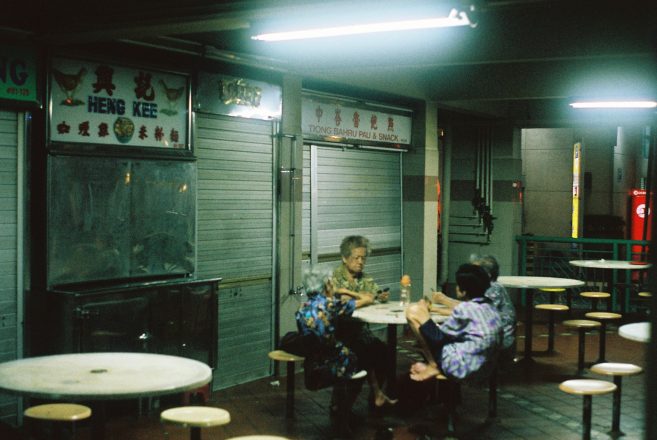
Not the eatery where we wrote and rewrote our sappy rebellion poems on sticky tables and swore to be frenz 4lyf and 2gether 4ever in our defiance. Bulldozed. A Tech and Innovation District took over.
Not the overhead bridge where I’d first felt my hands get clammy gazing at the swish of her ponytail. Disappeared. The entire curved road straightened overnight.
Not the temple by Grandma’s house, where I’d looked up at the incense sky one Sunday and mused to my invisible ancestors about studying filmmaking. Evaporated. In its place, shiny new condos.
Does growing bigger mean the world starts to narrow? A girl in the next class disappeared after she failed her exams. After that, I, like everyone around me, internalized it, too. The construction sites continued to take over, and my unproductive, undesirable emotions were buried. Along with all my forbidden desires and childish dreams.
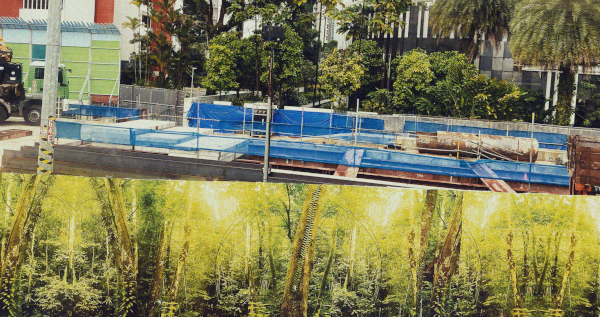
Now, as an adult living and working overseas, going back home is surreal. The Singapore I knew disappears and reappears in a different form, and jungles are moved indoors to climate-controlled malls. The pool parlor where I learned how to chalk my cue from a basketball senior I had a crush on. Vanished. The empty secluded road by the beach, where we’d abscond with her parents’ car and scream into the night wind. Vanished. The long swing by my childhood home, where I’d listen to the cicadas and cackle as I pushed my sister higher and higher up. Vanished. The indie cinema where I’d sit amongst strangers and be transported into other worlds. Vanished.
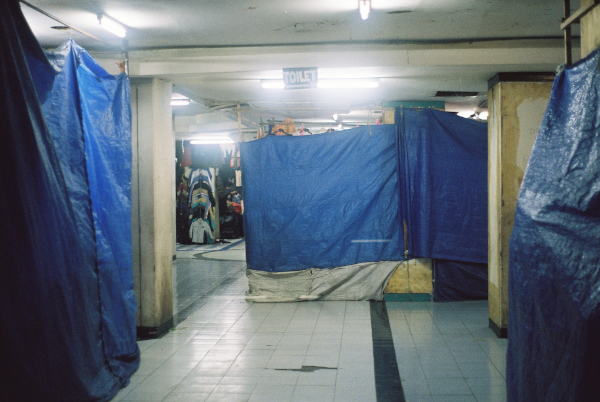
When I started working on my new film, Amoeba, I dug into our history to look beneath the glossy Singapore presented to the world. To explore the feeling of what it’s like to grow up under its authoritarian hand, and the narrow capitalist dream that it prescribes. And I saw that the disappearances were not just about the places that were dear to me. Gangsters were disappeared. Activists disappeared. People’s stories and histories were scrubbed, as though they’d never lived. Living under this thin air, questions, challenges and opposing views slowly disappeared too. Even our few mountains disappeared, their carcasses used as raw material for our roads.
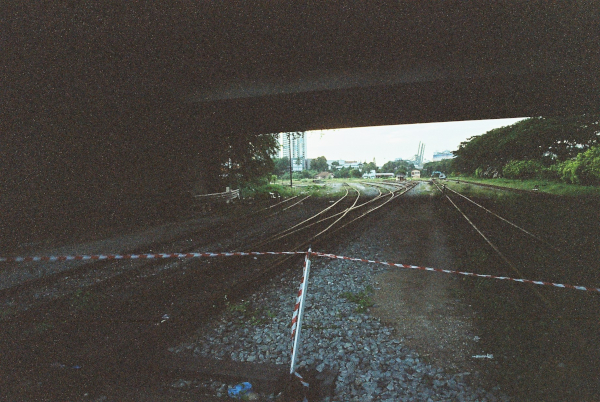
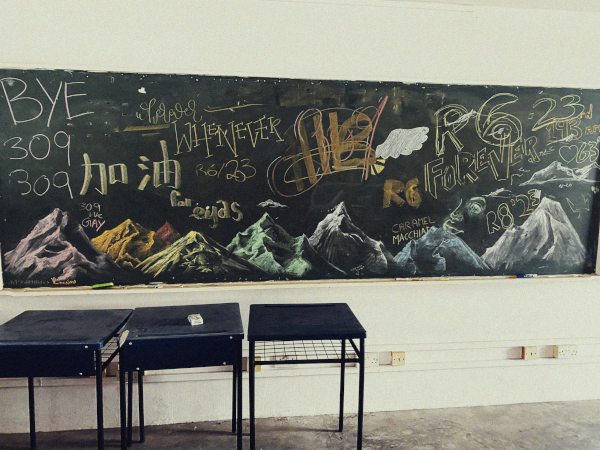
Production always feels like this intense pop-up that surges and recedes. I am aware of its impermanence, but all around us were reminders of just how fleeting it all is. While scouting for locations, we met an old man with red eyes who gave us things – a vase, books, artwork. We took some for props gratefully, and I tried to convince him to let us shoot in his space. He brushed me away brusquely without a reason. The next week I went there again, thinking I could persuade him. It was empty except for a “For Sale” sign. Every location we shot at had a construction site (or four) surrounding it. The school we shot in was an abandoned school, slated for redevelopment. Its blackboards frozen in time, the chalk still bearing imprints. As we packed up and left on our last day, it hit me that this might be the last time I see it, and the last time all of us would be together.
Amoeba became a way for me to rescue the things that disappeared. As the film slowly took shape, memories of this girls school came back to me like phantom limbs. The secret stairwells where we exchanged origami missives with older girls. A broom closet behind the science block, where we bought contraband chewing gum. The cubicle in the haunted fourth floor toilet that we all squeezed into to skip “Good Citizen” class. The tucked-away conference room that we snuck into, for an air-conditioned picnic to escape the sticky, tropical heat. I recall the pure, free feeling of being young. Our friendships the antidote to repression, our fierce joy the weapon against suffocation. I did not revive the big beautiful tree, or my childhood home, but a kind of forever finally appeared.
All images courtesy Siyou Tan.