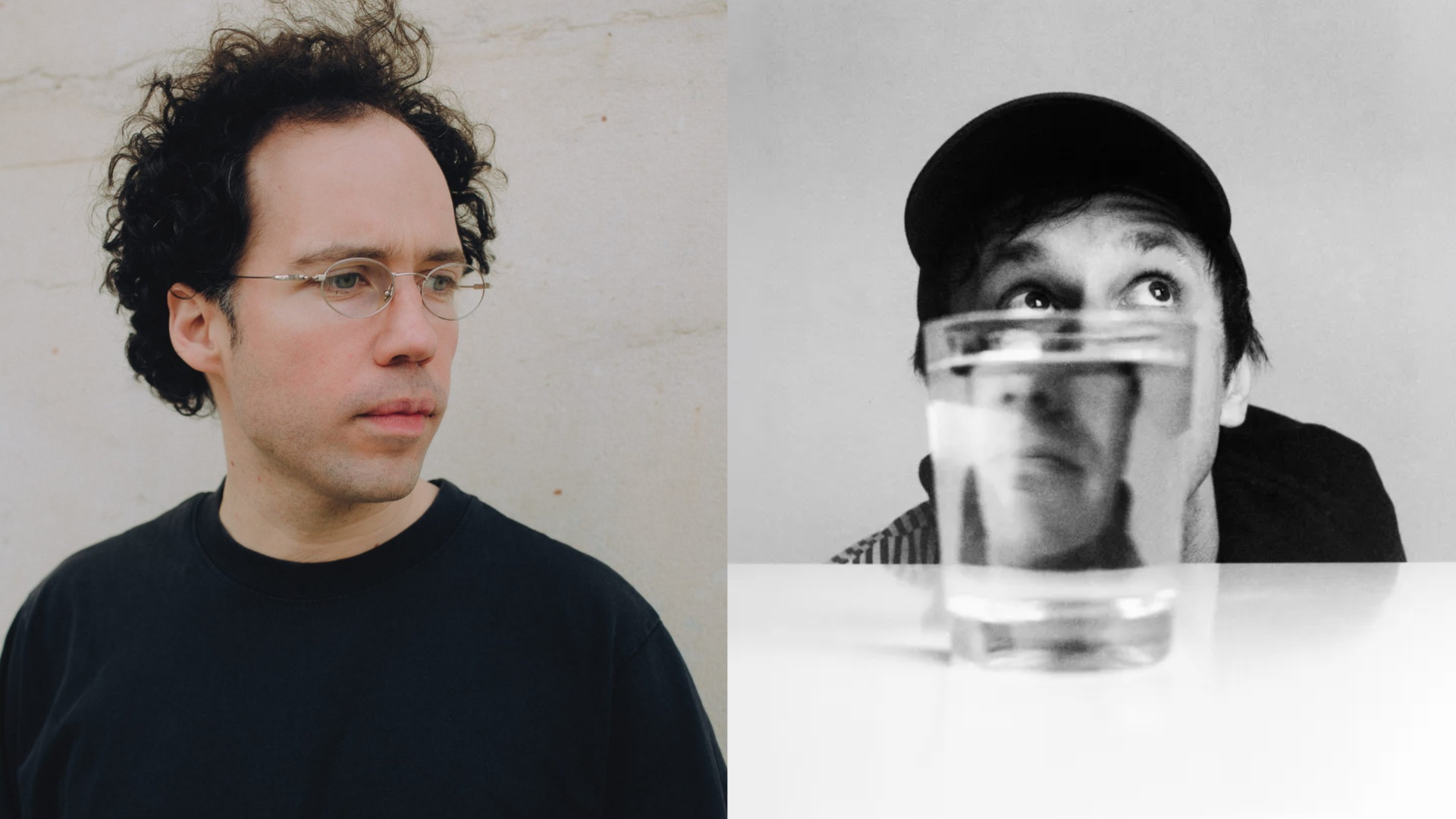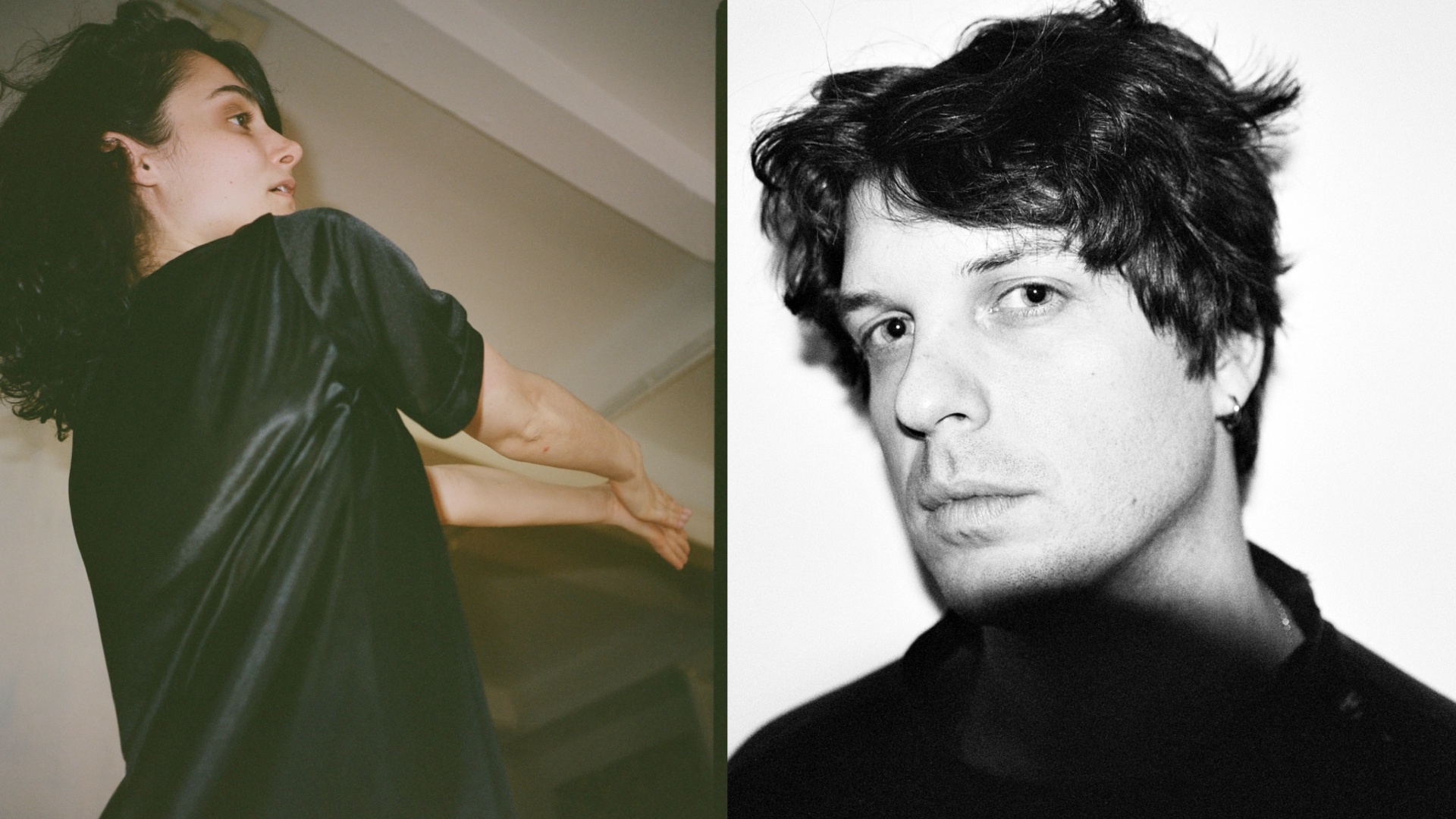
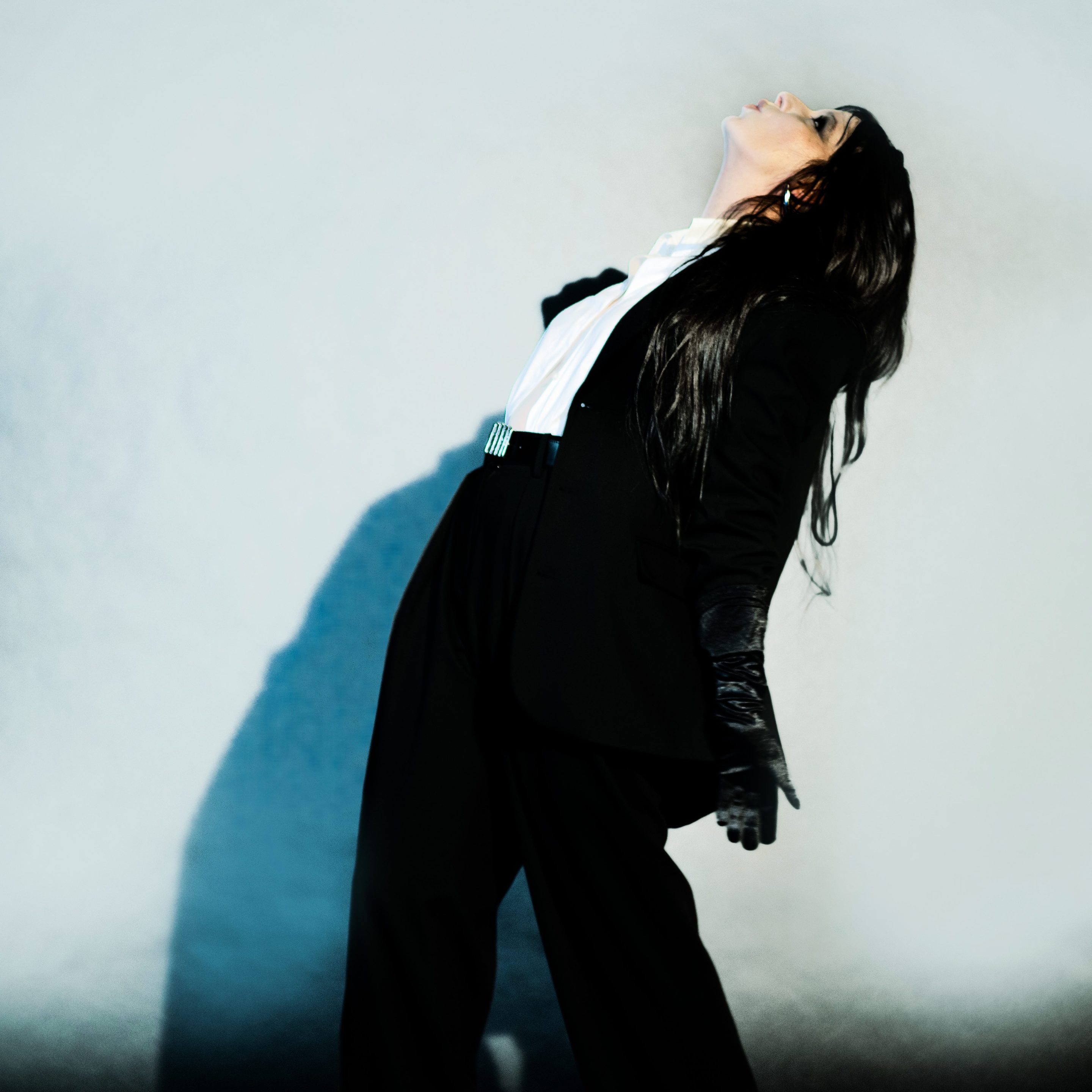
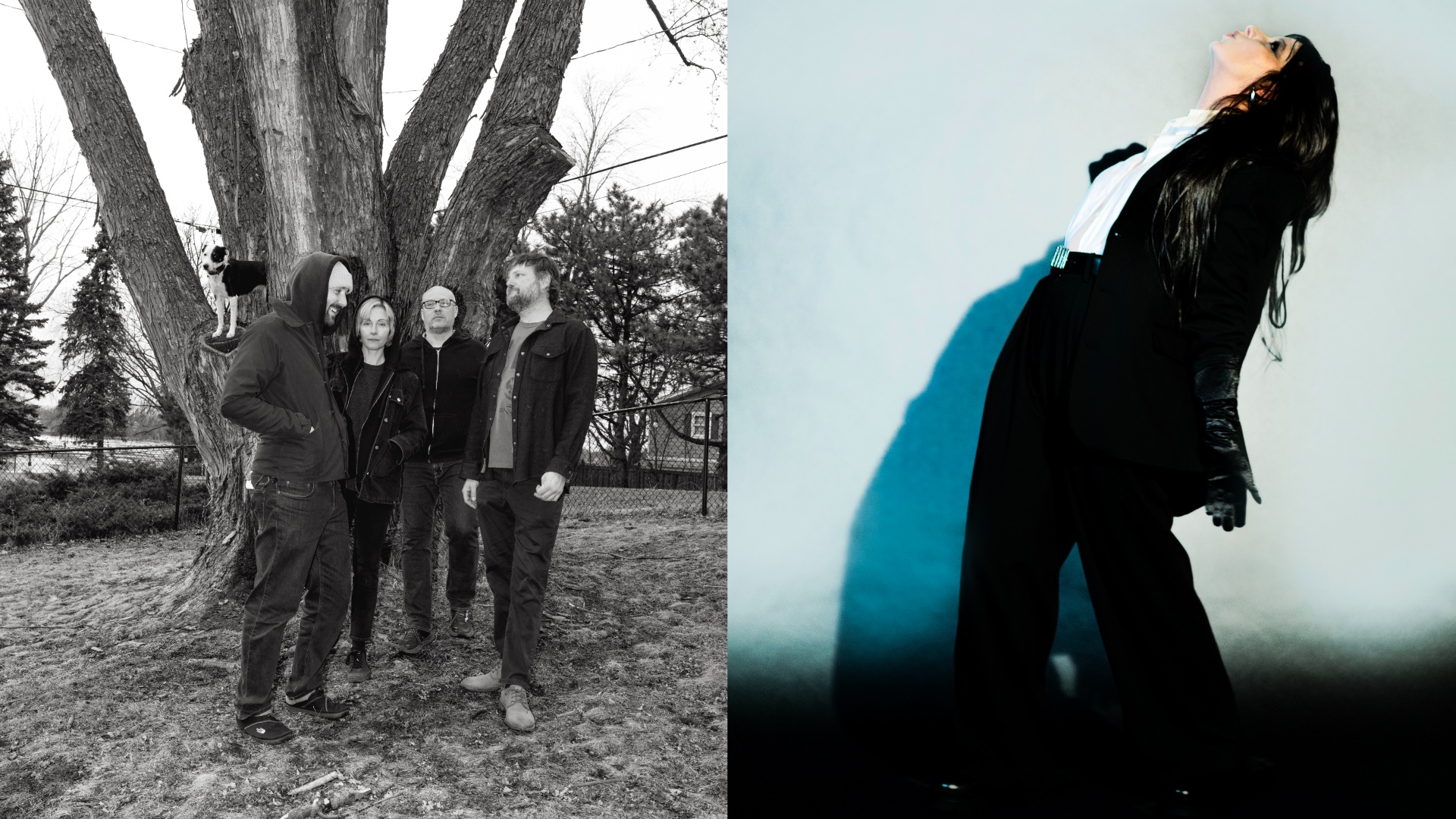
Haley Fohr is a Minnesota-based singer-songwriter who performs as Circuit des Yeux; Channy Leaneagh fronts the Minneapolis band Poliça. Circuit des Yeux and Poliça will be playing a show with Alan Sparhawk at Knockdown Center in Queens, NY on June 18. Ahead of it, Haley and Channy got on Zoom to catch up about their writing processes, Midwestern music scenes, and more.
— Annie Fell,
Haley Fohr: So, the reason why we're doing this is to get the word out about a really cool show that we're doing together with Alan Sparhawk, Poliça, and Circuit des Yeux. I love it in that Alan and Drew [Christopherson] both play in my band, Drew plays with you, Alan's got his thing going on. So it's like this round table, musical chairs thing, that I don't think is really perceivable on the global or New York scale, but that we know about behind the scenes, which really lends itself to the way things work in the Midwest.
Something I wanted to talk about was, you put out a record last year, but then you just released another record via Bandcamp [Better Live] that was this sort of live residency thing. I'm wondering what sparked the inspiration for this.
Channy Leaneagh: That feeling after I put out our record Dreams Go, and sort of the let down of, That's not how I wanted it to go — getting stuck in the negativity of putting out a record — it felt bad in the process of putting it out. So I wanted to try something to have fun, condense all the things that I love about making a record, [like] the song creation and the performance of it, along with getting to play that out in front of a crowd where you have that energy and that pressure of needing to write quickly. Because it usually takes us about two years to write a record. Could we do it in two weeks, knowing that it wouldn't be the same level of quality? Could I do that in front of a crowd? We have two drummers in Poliça, and they often get left out of the record-making process, because Ryan, the producer, will end up collaborating with tons of different beat makers and then the drummers have to learn those parts, so this was an opportunity for the drummers to write their own parts. So I wanted to have a different feeling in writing it instead of just being like, I didn't like how that went. I wanted to have a little more control and feel what that felt like. And Minneapolis is a good place for us to do that because the audience is very supportive. They're willing to sit through us playing eight songs twice back-to-back. I'd stop and start the songs quite a bit. But overall, it was a blast.
Haley: You mentioned something about how the quality wasn't as good because of the time frame. Can you elaborate on that?
Channy: Yeah. Even just talking about myself, one song in particular, I wrote the lyrics the day before we ended up recording it. Where sometimes over a two year period, I might edit lyrics, just keep going back and whittling them down. So not being able to do that, at the same time, there's great things about that because it was more like the first response to me hearing the music. The lyrics are very raw. But I realized in a stanza I repeated “bone” — I used “bone” to rhyme with “bone” — and I realized some of my tropes of words that I repeat a lot. Because the record was written from an improv, so you're kind of noticing, Oh, this is my grab bag, mood and words. And that's interesting to see too. But if I had more time, I probably would have whittled away some of my cliches or overused words. I wasn't able to craft. It was just sort of like, “This is what I thought of right away. This is what's inside of me, I guess.”
Haley: We all get a set of resources to make something, whether it's money, time, people. For me, I just had a kid, so time is a resource that is fleeting for me. So I have been kind of writing new music in between taking care of a newborn, and I similarly have this thought process of first idea in terms of song and lyrics, and the least refined lacks quality or some kind of professionalism. Or like you said, there's certain words I sing all the time, because I think my voice feels best with certain vowels. But I'm wondering on the wide scope if maybe that stuff, even though it makes me cringe, what if that's closer to my artistic identity? Throughout my discography, I've kind of torn things apart and made them larger, which feels like a bigger stage and more exciting and dramatic. But I'm curious if I'm eclipsing some kind of honesty within myself.
Channy: Yes. I think motherhood is an opportunity — you're in this liminal phase when you're a new parent. You're more tired than you have ever been, and you're meeting this new person, but you're also becoming this new version of yourself, discovering all these new things about yourself. So it's such an interesting time to write, yet you lack the energy. [Laughs.] So worn down. But it's also that time to get at that rawness of yourself, and to tap in when you can.
Haley: Yeah. In some ways I'm more forgiving, writing on acoustic guitar like, This is enough. But then in the same instance, I'm very confused about who I am. [Laughs.] I noticed on Dreams Go that there is one acoustic song called “She Knows Me.” Do you usually write on acoustic guitar, or whatever's around?
Channy: Yeah, I usually write with Ryan sending me a skeleton of a song. That song, it was during a period where we lost a core band member; he's fighting brain cancer. So we lost a little bit of how we usually write. And during that time of us trying to write Dreams Go and figure out how we would do it, I started playing acoustic guitar more, because we weren't performing as much. I had always played acoustic guitar a little bit, because I started out as a folk singer, but it was an opportunity for me to be able to work on music on my own while we were figuring out what Poliça was going to do. When I play by myself with acoustic guitar, if I play around town or something, that's the most stripped down. If I do a house show, there's not even reverb, and it's so naked and kind of uncomfortable. That song, we ended up liking the demo that I sent Ryan. That was a song that we jammed on with electronics, and then I started playing it on my own on a long break.
How do you guys usually write songs? Does it start with you writing alone?
Haley: Yeah, I write everything pretty much on a 12-string acoustic guitar and then kind of break it open with string parts. And in the past, I've delegated, for better or worse, certain parts. But this last album I did with Andrew Broder was way more collaborative. I think that's why it sounds so different than everything else I've done. A lot of it was, Andrew would send me some beats that he just had left over from other projects, and ones that spoke to me, I’d just sing over them and loop parts until something clicked. It was way more fun. I don't know if I'll ever do it again. But it wasn't as hard to excavate. Sometimes writing the way I usually do can be tumultuous. There's some really heavy moments, where I go back and forth if something's even good or not. I find my best songs are usually written when I'm extremely confused or searching for some kind of solace. So I've got a lot to work from right now, you could say. [Laughs.]
Channy: Yeah, definitely. And are you finding you need time to adjust to a new city of writing in? Does that affect you that much?
Haley: Yeah. The Chicago scene I come from is an intersection of noise, jazz, experimental, post-punk. It's pretty cathartic. There's a lot of traffic and sirens and sounds. And out here, it's so quiet and almost like an Andrei Tarkovsky film where it's just very little movement and everything's widescreen. I can feel it infecting the way I am. Something I do miss is live shows. I used to go to see so much awesome music. And the only way to really get that dose is to drive to Minneapolis, which is 2.5 hours away. I was just talking with a friend about how — I wonder what you think about this — in my younger years I listened to music all the time, and then I kind of only listened to my favorite things. And now I'm having a hard time listening to anything to the point where I'm wondering if listening to mediocre music is dangerous. I mean, mediocre to my tastes, of course… There's kind of an influx of a certain type of music up here, and finding professional musicians is harder than in somewhere like Chicago, I'm finding.
Channy: Yeah. Even going to a live show, you don't want to just listen to anything. You don't want to put anything into your soul, into your ears, especially when you have less opportunities to do that. I wish I listened to more music, but I oddly find it very overwhelming. But I do love when I can go out to see music. I feel like with the noise of kids and city, I usually have a song that I'm listening to on repeat that I'm comforted by at that moment. Or I'm learning a song, so I'm listening to covers that I need to play the next week for some set.
But I hear you, I have such a different relationship with music. My 17 year old daughter is just at that discovery stage and is listening to a lot of music and reminding me of music that I used to listen to — she loves the Cocteau Twins right now, and I'm like, “Oh, I haven't even heard this before.” [I’m] seeing it from that perspective and realizing I do want to have some relationship, I just have to figure out what that is after writing for so long. My husband makes movies and there's certain ways that he watches a film that it's just constantly talking about the shot or this or that thing. It feels like [a similar thing]. Just having to abstract and study every song gets exhausting.
Haley: Yes. Very few songs take me out of that mindset, honestly. Usually they're from 30 years ago, for whatever reason.
Channy: Yes, exactly.
Haley: There's something there, I think, in terms of not being able to have the space for other music, especially in this day and age with promotion. You mentioned that when Dreams Go came out, it didn't go the way you wanted. I think for me, even when you release a record and you have pictures and promotion, it's hard to feel like it's really cemented in anything. It just gets whisked away or something.
Channy: IThat’s a good articulation of it.
Haley: But it's interesting to me that the antidote for you was to make something even more seemingly ungrounded.
Channy: Yeah. I did have a slight feeling where when it was done… I'm not a documentarian. I don't like to videotape my work. Sometimes I play shows with people and they always have someone there filming it and recording the sound. And that's totally fine, but I just noticed there's something in me that’s like, “It's just for those that were here.” That is not a very sound business practice though. [Laughs.] It's not marketable. But that's OK. So that is more I think what I was going for, just denying any ability to build a campaign around something, but just to focus in on, what are the parts of it that I really like? And feel that, even though it was so impermanent.
Haley: You say it's not marketable, but I do think it's a feeling and a mystery that's missing in a lot of music right now. And people are hungry for it. Cindy Lee is a musician that's got a lot of buzz right now, and she didn't put her album on any streaming platforms. You have to go seek it out, and [it’s] cutting out all these middlemen. Something that I'm learning to really love about live music — you spend so much time posting stuff online, and then you get to the stage, and the people are there and you're like, Holy shit, this is actually a person-to-person experience. There's people behind the screen names and the comments. I think it's really fucking punk and cool what you did with this live album.
Channy: Thank you. It was good for us as a band. One of the drummers, Ben [Ivascu] — it's a lot to ask for the band to improv and then learn parts and play them well by the third week, and it seemed like up to the show day, he wasn't really learning his parts. Which is fine, but I was like, I don't know how this is going to go. But then the show happens, and actually — we panned both of his performances — we played it back-to-back on the third night, and he ended up playing them almost perfectly the same each set. So that was also revealing about how everybody plays music in the group. I don't know how he just snapped into it. So it was like, you play with people for 10 or 15 years and then you get to celebrate them again and be like, “Wow, that's really cool.”
Haley: That's amazing. I work more in a project where I'm like a dictator, for lack of a better term. Or a queen. [Laughs.] So it's cool to hear about reaping the benefits of having a collaborative relationship with someone for over a decade, and that's the result. It pays off.
Channy: I do like to say that too — “There's only one one person that's allowed to be a diva and that is is me.” [Laughs.] No, I'm just kidding.
Haley: I'm curious, for the show, what kind of set are you guys preparing?
Channy: More of our down tempo songs, is what Drew was hoping we could do. Some things a little bit moodier and less bright. So not a lot of our oldest songs, but a few of those, and a couple of the brand new ones from the live record. Really looking forward to it.
Haley: Yeah, me too. It's nice to finally speak. And I look forward to meeting you in New York!
(Photo Credit: left, Zoe Prinds-Flash; right, Dana Trippe)